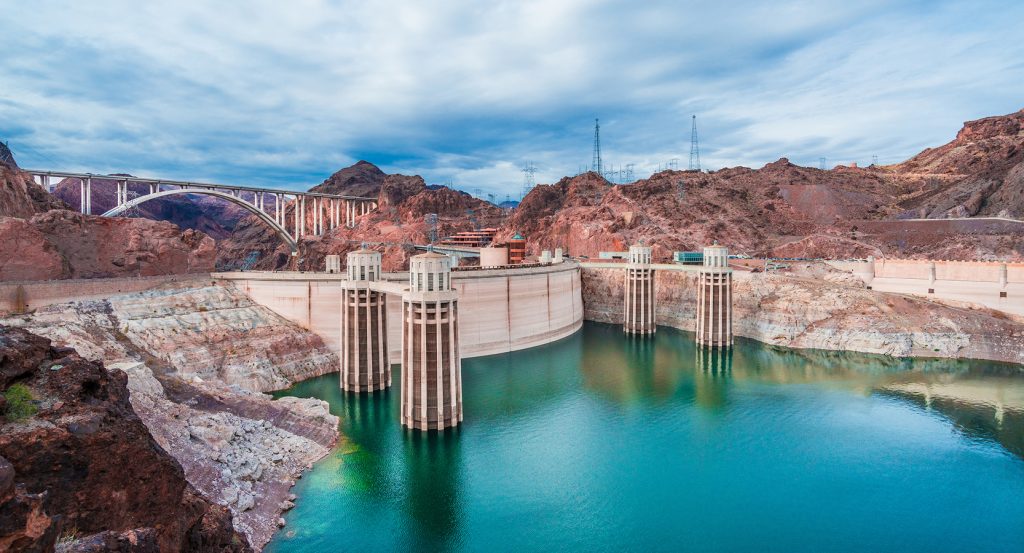
Why you should experience Mike O'Callaghan-Pat Tillman Memorial Bridge in Las Vegas, Nevada.
Mike O'Callaghan-Pat Tillman Memorial Bridge, or Hoover Dam Bypass, offers a rare marriage of human audacity and natural grandeur.
Standing more than 900 feet above the Colorado River, it's not merely a feat of engineering but a viewpoint that defies comprehension. As you walk across its pedestrian walkway, the dam unfurls beneath you like an ancient monument carved into the desert canyon, and the blue ribbon of Lake Mead glimmers in the distance. The wind hums with the echo of history, from the Great Depression laborers who built the dam below to the modern engineers who dared to construct this arch across a chasm. Unlike many landmarks, the Bypass Bridge doesn't compete with Hoover Dam's majesty; it enhances it, framing the scene in a way no drone or photograph ever could. Standing here, the scale of America's ambition comes into sharp focus, this is not just an overlook, but a confrontation with the sublime.
What you should know about Mike O'Callaghan-Pat Tillman Memorial Bridge.
Mike O'Callaghan-Pat Tillman Memorial Bridge required as much courage as creativity.
Completed in 2010 after a decade of perilous work, the bridge spans 1,905 feet, making it the longest concrete arch in the Western Hemisphere. The workers who built it faced extreme conditions: 115-degree heat, unpredictable canyon winds, and the ever-present drop into the gorge below. The design is deceptively elegant, its twin-rib arch distributes weight with such precision that it appears to float, even though it holds thousands of tons of reinforced concrete. Few visitors realize the bridge was conceived as a safeguard: before it existed, all cross-country traffic traversed the narrow, winding road atop Hoover Dam, causing dangerous congestion. The Bypass Bridge not only eased transport but restored tranquility to the dam itself. The memorial plaques at its midpoint honor both O'Callaghan and Tillman, symbols of service, sacrifice, and unity, grounding the structure's grandeur in a deeply human story. When viewed at sunrise, the arch glows with a soft amber light, turning concrete into poetry.
How to fold Mike O'Callaghan-Pat Tillman Memorial Bridge into your trip.
To fold Mike O'Callaghan-Pat Tillman Memorial Bridge into your trip, time your visit for early morning or late afternoon to avoid the desert's punishing midday heat.
Drive from Las Vegas, just 45 minutes away, along US Route 93, and pull into the free parking lot before walking the short trail that leads to the bridge's pedestrian overlook. Bring a hat, water, and your camera, because the views here are among the most arresting in the American Southwest. Pair your visit with a guided tour of Hoover Dam itself, explore the power plant turbines, art deco engravings, and tunnels carved deep into the canyon walls. For the full experience, make it a half-day excursion: stop at Lake Mead for a picnic or short boat cruise afterward. If you're returning to Vegas at sunset, watch as the light fades behind the mountains, the bridge silhouetted in crimson and gold, and let the image etch itself into your mind. Mike O'Callaghan-Pat Tillman Memorial Bridge isn't just a crossing; it's a reminder of how far imagination can carry us when we dare to build against the impossible.
Where your story begins.
Foresyte Travel reveals places that feel extraordinary long before you arrive.
Experience premium editorial crafted for luxury travelers.