
Why Bergdorf Goodman matters.
Bergdorf Goodman is a distinguished fashion house where Midtown's luxury retail tradition meets Modern Classical architecture, designer fashion and a 5th Avenue address shaped by nearly a century of New York style.
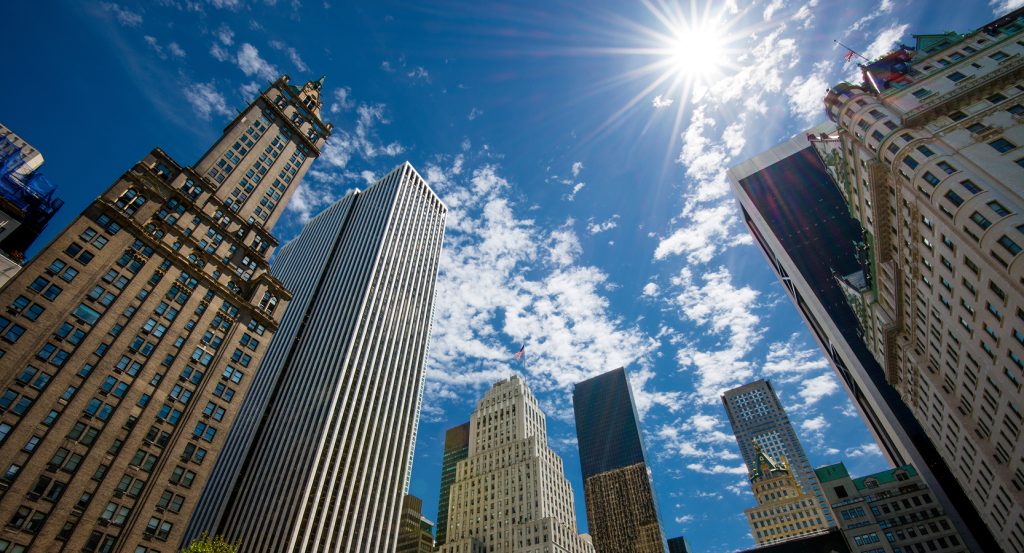
Set along 5th Avenue near West 58th Street and just steps from Pulitzer Fountain, the store occupies the southern end of Grand Army Plaza on the former site of the Cornelius Vanderbilt II mansion. Ely Jacques Kahn conceived the 1927-28 complex as separate but visually unified buildings, using French classicizing forms to relate the new commercial block to the architecture surrounding the plaza. White marble elevations rise above lower storefronts through restrained window bays, bronze detailing and upper setbacks, preserving the measured proportions of Kahn's composition above decades of retail alteration. Bergdorf Goodman gradually expanded through the interconnected complex until its women's store occupied nearly the entire blockfront, leaving Van Cleef & Arpels at the southeast corner. The result is a fashion institution whose marble architecture, Grand Army Plaza frontage and long occupation of Kahn's unified complex anchor one of 5th Avenue's most consequential retail corners.
What defines Bergdorf Goodman.
Bergdorf Goodman is best known for developing from Herman Bergdorf's late nineteenth-century tailoring business into a fashion institution transformed by Edwin Goodman's merchandising and successive moves north along 5th Avenue. Bergdorf founded the business in 1899, and his young apprentice Edwin Goodman acquired an interest two years later, creating the Bergdorf Goodman name in 1901. Goodman bought Bergdorf's share soon afterward and moved the operation uptown, eventually establishing a shop near the future Rockefeller Center. Bergdorf Goodman's own corporate history credits Goodman with becoming the first American couturier to bring ready-to-wear into his business in 1914, a major departure from the custom clothing on which the house had been built. By the 1920s, his son Andrew had left the University of Michigan, trained in Paris at Jean Patou and returned to join the family firm as its expansion accelerated. Contemporary reporting from 1934 placed Andrew in charge of ready-to-wear and his sister Ann over sportswear, with Ethel Frankau handling Paris buying and exerting substantial influence over the store's fashion selections. Edwin's decision to remain concentrated in a single New York store helped preserve a highly personal merchandising model even as the business reached national stature. Andrew succeeded his father during the early 1950s, and the Goodman family retained control until selling the company in 1972 to the enterprise that became Carter Hawley Hale Stores. Bergdorf Goodman and Neiman Marcus subsequently became part of Neiman Marcus Group in 1987, carrying the family business into a larger American luxury organization.
The store's relationship with designers and fashion production supplies a separate chapter extending well beyond the Goodman family's ownership. The Metropolitan Museum of Art's Costume Institute holds a Bergdorf Goodman sketch collection spanning 1929-1952, including 83 digitized sheets devoted to Christian Dior designs from 1947 through 1949, preserving a direct artifact trail between the 5th Avenue store and the Paris house during Dior's first years. Dior had presented his first haute couture collection at 30 Avenue Montaigne on February 12, 1947, the collection in which the Corolle and En 8 lines prompted Harper's Bazaar editor Carmel Snow to coin the “New Look” phrase. Fur designer Emeric Partos, who worked at Dior after World War II and helped develop understructures supporting the full skirts of that period, later joined Bergdorf Goodman in 1955 and built another influential design career through experimental work with luxury pelts. Andrew Goodman simultaneously broadened the institution under his presidency, opening the Miss Bergdorf Shop in 1955 and adding antiques, a beauty salon and an art gallery directed by his wife, Nena. The men's business moved into a standalone store across 5th Avenue in 1990, freeing additional space for women's fashion in the original building and creating the two-store arrangement that continues on the avenue. New York City designated the women's building in 2016, formally recognizing both Kahn's architecture and Bergdorf Goodman's role in 5th Avenue's commercial development.
How Bergdorf Goodman fits.
Bergdorf Goodman works as the anchor for a 5th Avenue outing connecting Gilded Age public sculpture, Beaux-Arts urban design and one of New York's great private art collections.
Begin at William Tecumseh Sherman, commissioned by the New York Chamber of Commerce from Augustus Saint-Gaudens in 1892 and developed across a decade in his New York, Paris and Cornish studios. The gilded bronze composition places Sherman astride Ontario behind Victory, modeled by Hettie Anderson, an African-American artist's model who studied at the Art Students League and also worked with Daniel Chester French and John La Farge. Charles Follen McKim designed the pink-granite base, and the 24-foot-high monument was dedicated on May 30, 1903 after years of debate over its placement. Saint-Gaudens's unusual decision to cover the outdoor bronze in gold made the work one of only two exterior sculptures for which he adopted that treatment. Continue to Grand Army Plaza, redesigned after Joseph Pulitzer left $50,000 in 1911 for a memorial fountain near the Plaza Hotel. Carrère and Hastings won the 1912 design competition with a scheme dividing the entrance into two symmetrical islands 59th Street, pairing the Sherman composition on the north with a new fountain on the south. Thomas Hastings designed the fountain architecture, and Karl Bitter sculpted Pomona, the Roman goddess of abundance, above five stepped basins and two horns of plenty. The south plaza was completed in 1916, with subway construction delaying completion of the northern counterpart until 1921. Conclude at The Frick Collection, commissioned by industrialist Henry Clay Frick from Carrère and Hastings in 1913 as both a family residence and the future home of his art collection. Frick spent $5 million including land on the 5th Avenue property and intended from the earliest plans for the house to pass into public use after his family's occupancy. Following Adelaide Frick's death, John Russell Pope added galleries, a music room, entrance hall and Garden Court before the museum opened in 1935; its holdings now encompass 1,800 works spanning European painting, sculpture and decorative arts. Selldorf Architects directed the institution's first comprehensive renovation in nearly ninety years, and the 5th Avenue museum reopened in April 2025 with public access extended into the historic second-floor rooms. The progression moves from Saint-Gaudens's gilded Civil War memorial through Hastings and Bitter's Beaux-Arts plaza and culminates in Frick's purpose-built residence and collection, tracing sculpture, urban design and private patronage along the 5th Avenue corridor surrounding Bergdorf Goodman.
Where your story begins.
Foresyte Travel reveals places that feel extraordinary long before you arrive.
Enjoy editorial crafted for luxury travelers.
Foresyte may earn a commission when you book.







































































































