
Why Hungarian National Gallery matters.
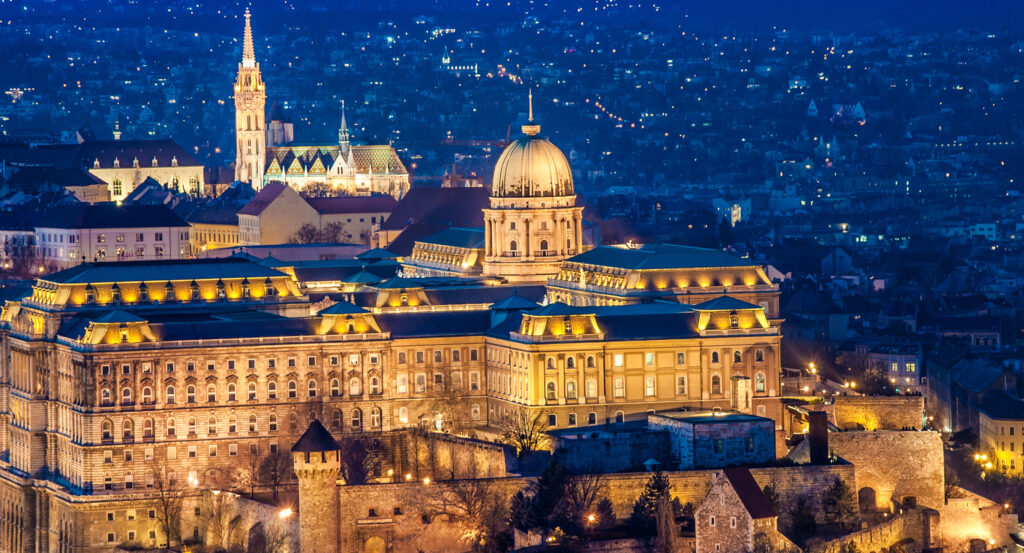
The Hungarian National Gallery isn't just a museum, it's a cathedral of national identity, suspended between heaven and history atop Castle Hill.
Housed within the regal walls of Buda Castle, it commands one of the most majestic positions in Europe, where art and architecture merge with the panorama of the Danube. Step through its grand arched entrance and the hum of the city disappears, replaced by a stillness that belongs only to places that remember everything. Inside, centuries of Hungarian artistry unfold, from medieval altarpieces glowing with gold leaf to avant-garde canvases vibrating with rebellion. The museum's collection spans a thousand years, mirroring the country's own odyssey through conquest, creativity, and rebirth. Each room feels like a revelation, Gothic Madonnas glowing in candlelight, Romantic landscapes soaked in melancholy, Modernist visions shattering old traditions with fierce independence. To stand within these walls is to feel the pulse of a nation that has fought to define beauty even when the world tried to silence it.
What defines Hungarian National Gallery.
The gallery's roots lie in resilience, its founding in 1957 marked a reclamation of cultural character after decades of upheaval.
Before finding its permanent home in Buda Castle in 1975, the collection was scattered across several buildings, a fragmented mirror of a divided past. The move united the nation's artistic heritage under one roof, the roof that once sheltered Habsburg monarchs and Hungarian kings. Among its treasures are Gothic winged altars rescued from war-torn churches, 19th-century Romantic masterpieces by Benczúr and Munkácsy, and groundbreaking modern works by Tivadar Csontváry Kosztka and Lajos Vajda. But the gallery's heart beats strongest in its depictions of the Hungarian landscape, endless plains, blue hills, and flickering village life, scenes that define the national soul as much as any political history. Few visitors realize that the dome above the gallery doubles as a symbolic crown: its interior frescoes are visible from the upper levels, encircling visitors like a halo of sovereignty and spirit. Every brushstroke here tells a story not just of artistic evolution, but of survival, a tribute to Hungary's enduring creative fire.
How Hungarian National Gallery fits.
Begin your visit through the grand courtyard of Buda Castle, where the bronze Turul bird, a mythic guardian of Hungary, spreads its wings above the city.
Enter through Building D and allow two hours to explore; the collection's breadth rewards patience. Start with the medieval and Renaissance galleries to appreciate the roots of Hungarian sacred art, then move upward to the Romantic halls where sweeping canvases capture the drama of revolution and freedom. Pause often, not only for the paintings, but for the castle windows framing the Danube and Parliament in living tableaux. If you crave modern energy, the upper floors house the 20th-century collections, bold, abstract, and rebelliously Hungarian. Don't miss the ascent to the dome terrace, among Budapest's most striking vantage points, where sunlight spills over Pest like a benediction. Visit late in the afternoon to watch the city glow beneath you, then descend for an evening stroll across the cobblestones toward the Fisherman's Bastion. The Hungarian National Gallery isn't simply where art is displayed, it's where a nation's heart beats in color.
Where your story begins.
Foresyte Travel reveals places that feel extraordinary long before you arrive.
Enjoy editorial crafted for luxury travelers.
Foresyte may earn a commission when you book.





































































































