
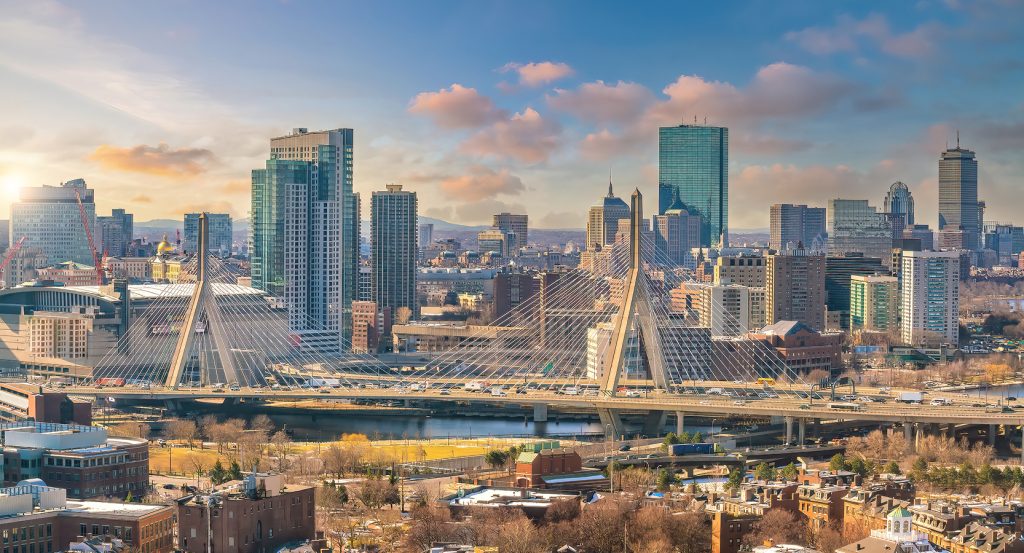
Why you should experience Chestnut Street in Boston, Massachusetts.
Chestnut Street is an elegant corridor where Beacon Hill's Federal-era heritage, architectural refinement, civic legacy, and residential character define one of Boston's most distinguished streets.
Running through Beacon Hill between the West End and the Boston Common area, the corridor links impeccably preserved brick rowhouses, intimate streetscapes, historic churches, and generations of civic institutions that embody the neighborhood's enduring identity. Each successive block reveals finely crafted red brick façades, black shutters, wrought-iron railings, granite lintels, gas-style lanterns, and brick sidewalks that reinforce a remarkable sense of historical continuity. The defining moment arrives as the corridor's harmonious proportions and meticulous craftsmanship reveal why Beacon Hill remains one of the nation's finest surviving Federal-era neighborhoods. The result is an experience defined by architectural distinction, historical depth, and one of Boston's most graceful corridors.
What you should know about Chestnut Street.
Chestnut Street is best known for emerging during Beacon Hill's early nineteenth-century residential expansion after developer Charles Bulfinch established the neighborhood's influential plan following the reduction of Beacon Hill's original summit. Residential construction accelerated between the 1810s and 1840s, producing an exceptional concentration of Federal and Greek Revival townhouses distinguished by Flemish-bond brickwork, granite stoops, brownstone lintels, wrought-iron fencing, elliptical fanlights, and refined door surrounds that continue defining the corridor's architectural identity. The street became home to merchants, attorneys, physicians, politicians, and civic leaders whose residences reflected Boston's growing commercial prosperity and whose careful stewardship preserved the neighborhood's historic fabric through successive generations. Uniform building setbacks, mature street trees, original granite curbing, and consistently scaled façades reinforce the disciplined urban composition that has characterized Chestnut Street for more than two centuries. Collectively, the corridor's early planning, Federal-era architecture, accomplished masonry, and longstanding residential continuity established Chestnut Street as one of Beacon Hill's defining historic corridors.
The Nichols House Museum, preserved within an 1804 Federal townhouse, provides an unusually complete record of domestic life along Chestnut Street through original furnishings, decorative arts, family archives, and period interiors that illuminate the corridor's residential heritage. Historic New England and the Beacon Hill Civic Association have documented and supported the preservation of architectural details including brick masonry, wood windows, ornamental ironwork, granite steps, and traditional streetscape features that remain central to the street's character. Skilled masons, carpenters, blacksmiths, and restoration specialists continue maintaining historic façades, slate roofing, iron railings, and wood trim using preservation techniques compatible with the corridor's early nineteenth-century construction. Together, these collections, preservation organizations, and specialized building crafts demonstrate how Chestnut Street continues expressing the enduring architectural standards that define Beacon Hill.
How to fold Chestnut Street into your trip.
Chestnut Street works as a walk through Beacon Hill's architectural and cultural heritage.
Begin at the Massachusetts State House, where Charles Bulfinch's celebrated design establishes the civic and architectural context that shaped the surrounding neighborhood. Continue to Louisburg Square, where impeccably preserved Federal townhouses deepen appreciation for Beacon Hill's residential character and refined streetscape. Conclude at the Museum of African American History, where powerful exhibitions exploring Beacon Hill's abolitionist movement and Black community provide the historical payoff that broadens understanding of the neighborhood's enduring significance. The progression moves naturally from civic architecture to residential refinement before culminating in one of Beacon Hill's defining chapters of American history.
Where your story begins.
Foresyte Travel reveals places that feel extraordinary long before you arrive.
Experience premium editorial crafted for luxury travelers.







































































































