Why you should experience Club Quarters Hotel Embarcadero in San Francisco, California.
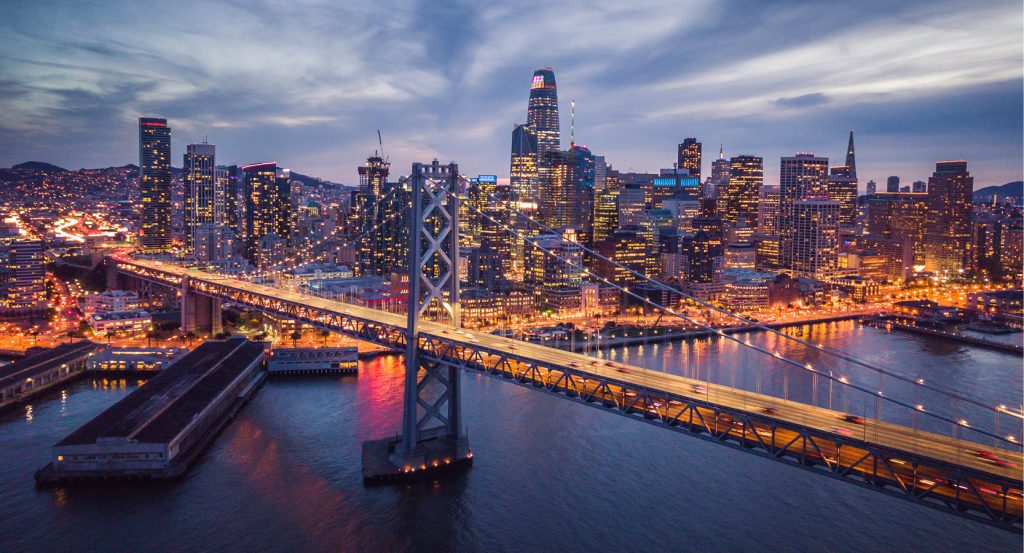
Club Quarters Hotel Embarcadero is a purposeful urban hotel where Financial District's Gold Rush inheritance, mercantile ambition, corporate culture and enduring appetite for reinvention converge near the buried shoreline of Yerba Buena Cove.
Set along Clay Street near Battery Street and just steps from Portsmouth Square, the hotel belongs to a hospitality concept created by former Cunard executive Ralph Bahna, who founded Club Quarters in 1994 and opened its first property on West 45th Street in Midtown around a membership model originally conceived for employees and guests of participating companies. Bahna brought an unusually international hospitality background to the concept after leading Cunard, where his commercial innovations included combining transatlantic crossings with British Airways Concorde flights, before Club Quarters expanded beyond New York into business centers including London, Chicago, Boston, Philadelphia and Washington, D.C. San Francisco became part of that network as the company carried its private-club-inspired approach westward into a district historically shaped by banks, shipping companies, insurance firms and corporate headquarters. Ralph Bahna, Cunard and Club Quarters consequently connect Financial District's commercial character with a hotel concept itself born from the changing habits of international business travel.
What you should know about Club Quarters Hotel Embarcadero.
Club Quarters Hotel Embarcadero is best known for rising in 2003 as an 11-story Heller Manus Architects project whose original architectural program contained 200 guestrooms above commercial and retail space while construction simultaneously uncovered the 126-foot Gold Rush storeship General Harrison beneath the site. Heller Manus composed the exterior around brick, faux stone across the first two floors and corner bay windows referencing established San Francisco building forms, then commissioned local artist Gyöngy Laky to create a sculpture specifically for the Clay Street façade. The property subsequently expanded to 346 guestrooms and underwent renovation in 2014, giving the present hotel a substantially larger accommodation program than the 200-room structure described in Heller Manus's original commission. Heller Manus, Gyöngy Laky, the 11-story composition, 200-room original program, brick-and-faux-stone envelope, corner bay windows, 346-room contemporary configuration and 2014 renovation establish a modern hotel whose architectural authorship was deliberately calibrated to the older masonry fabric of Financial District.
Archaeologist Allen Pastron and Archeo-Tec opened an entirely different chapter in the property's history in September 2001 when construction exposed General Harrison at the northwest corner of Clay and Battery streets, allowing Pastron's team to map the 126-foot vessel before the hotel rose above it. General Harrison had become a Gold Rush storeship before the May 1851 fires burned the vessel to the waterline, after which expanding landfill buried the surviving hull within what became Financial District. National Park Service interpretation now places General Harrison among San Francisco's buried Gold Rush vessels, while an outline embedded in the sidewalk marks the ship's position and the hotel itself preserves the name through a 540-square-foot meeting room paired with East Niantic and West Niantic rooms referencing another famous buried vessel. Allen Pastron, Archeo-Tec, General Harrison, the May 1851 fire, the 126-foot hull and the hotel's General Harrison and Niantic room names turn an archaeological discovery made during construction into a coherent historical layer embedded directly within Club Quarters Hotel Embarcadero.
How to fold Club Quarters Hotel Embarcadero into your trip.
Club Quarters Hotel Embarcadero works as the anchor for an afternoon tracing financial ambition, nineteenth-century urba character and the architectural institutions that emerged around San Francisco's former waterfront.
Begin at Transamerica Pyramid, where developer John R. Beckett commissioned architect William Pereira for the 853-foot tower completed in 1972, its tapered profile rising from a site associated with the nineteenth-century Montgomery Block and permanently reshaping the skyline of Financial District. Continue to Jackson Square Historic District, where surviving brick commercial structures escaped much of the destruction of the 1906 earthquake and fire and preserve an unusually concentrated record of the warehouses and mercantile buildings that developed near the Gold Rush waterfront. Conclude at Ferry Building, completed in 1898 to architect A. Page Brown's design with a 245-foot clock tower inspired by Seville's Giralda, creating the principal ferry gateway through which enormous volumes of commuters entered the city before the Bay and Golden Gate bridges reordered regional transportation. The progression moves from Pereira's twentieth-century corporate skyline through Jackson Square Historic District's Gold Rush-era commercial fabric into A. Page Brown's grand transportation architecture, revealing the successive economic worlds surrounding Club Quarters Hotel Embarcadero.
Where your story begins.
Foresyte Travel reveals places that feel extraordinary long before you arrive.
Experience premium editorial crafted for luxury travelers.