
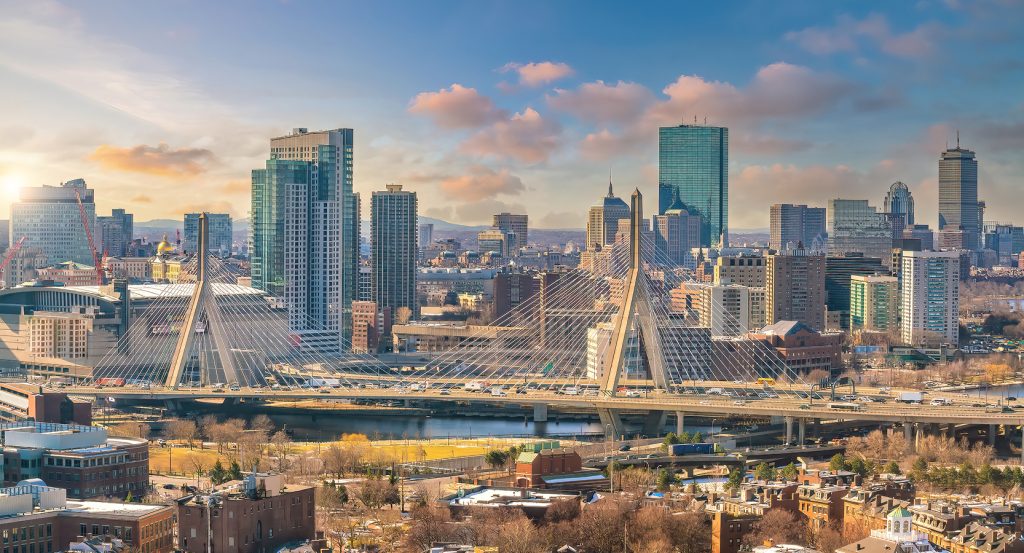
Why Columbus Avenue matters.
Columbus Avenue is a historic South End corridor where architectural elegance, cultural diversity, and artistic innovation converge along one of Boston's most distinguished boulevards.
Running through the South End between Copley Square, Massachusetts Avenue, Jackson Square, and Roxbury, this graceful corridor connects landmark performance venues, historic brownstones, architecturally significant churches, thriving neighborhood restaurants, beautifully landscaped public spaces, and celebrated cultural institutions that collectively showcase Boston's remarkable blend of Victorian planning and contemporary urban life. Elegant tree-lined streets, thoughtfully preserved brick rowhouses, welcoming pedestrian environments, energetic local businesses, celebrated civic landmarks, and enduring neighborhood traditions create an urban landscape where generations of artists, immigrants, architects, entrepreneurs, residents, and visitors have shaped one of New England's defining urban corridors. Columbus Avenue has continually evolved while preserving the South End's celebrated architectural character and multicultural identity. The result is a corridor defined by architectural distinction, cultural vitality, and lasting historical significance.
What defines Columbus Avenue.
Columbus Avenue is best known for housing Symphony Hall, opened in 1900 as one of the world's greatest concert halls, whose acoustics were scientifically engineered by physicist Wallace Clement Sabine and remain a global benchmark for orchestral performance.
Designed by McKim, Mead & White, Symphony Hall became one of the first buildings in the world to incorporate architectural acoustics as a scientific discipline rather than relying on trial and error. Sabine's pioneering calculations produced an auditorium celebrated for its exceptional clarity, warmth, and balance, attracting the world's leading conductors, composers, and orchestras for more than a century. Today, it remains the home of the Boston Symphony Orchestra and continues to be regarded by musicians and acousticians alike as one of the finest performance spaces ever created. That extraordinary acoustic achievement has established Columbus Avenue as one of the world's most significant cultural corridors.
How Columbus Avenue fits.
Columbus Avenue works as an exploration of Boston's performing arts, architectural heritage, and energetic South End.
Begin along Columbus Avenue, where the elegant boulevard immediately establishes the corridor's defining identity. Continue toward Symphony Hall, where one of the world's greatest concert halls provides broader perspective on the avenue's extraordinary cultural legacy. From there, make your way to the Museum of Fine Arts, Boston, where one of the world's leading art museums provides a memorable conclusion while celebrating Boston's enduring commitment to music, architecture, and artistic excellence. Along the way, you'll encounter architecturally significant Victorian buildings, welcoming neighborhood cafés, thriving cultural institutions, beautifully preserved public spaces, celebrated performance venues, and energetic gathering places that reveal the South End's exceptional depth. The progression moves naturally from a distinguished urban boulevard to a world-renowned concert hall to one of America's premier museums, demonstrating how Columbus Avenue connects artistic innovation, community life, and historical discovery.
Where your story begins.
Foresyte Travel reveals places that feel extraordinary long before you arrive.
Enjoy editorial crafted for luxury travelers.
Foresyte may earn a commission when you book.







































































































