Why Four Seasons Hotel Las Vegas matters.
Four Seasons Hotel Las Vegas is a distinctive Strip hotel where Paradise's casino corridor meets a private non-gaming arrival, high-rise desert views and Las Vegas's first AAA Five Diamond lodging distinction.
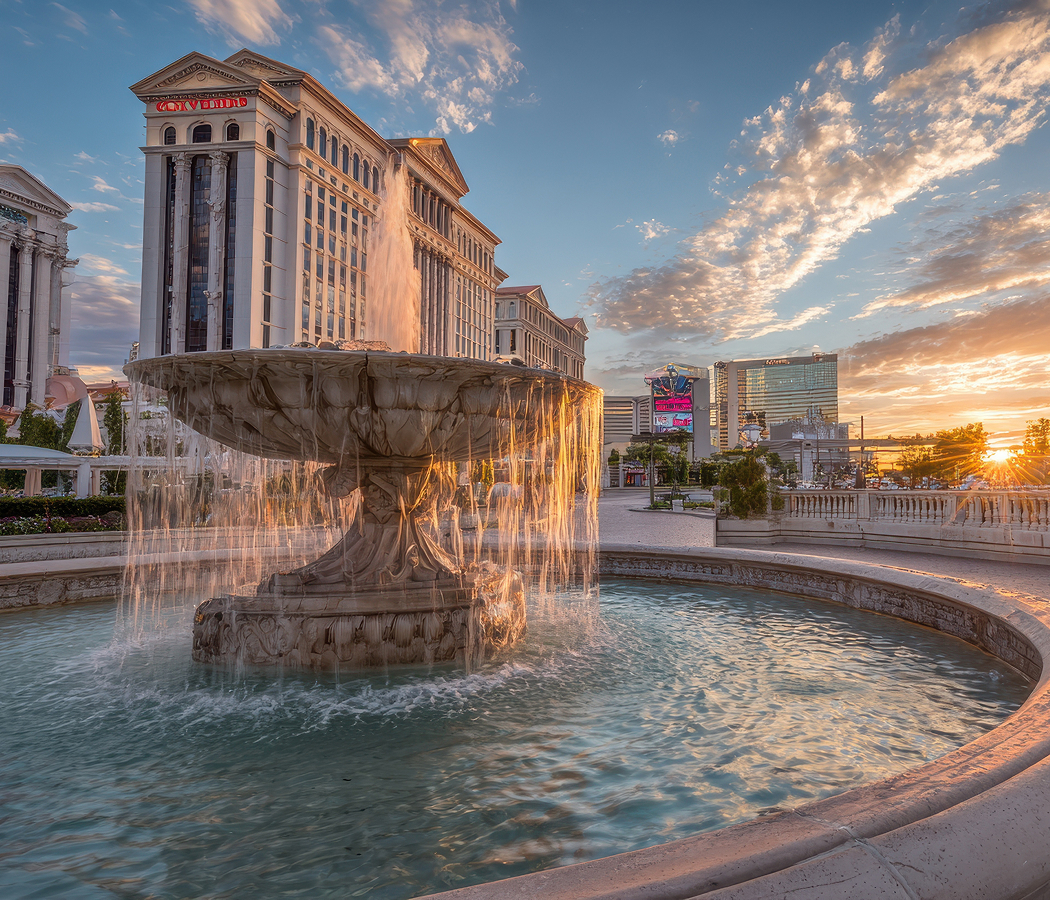
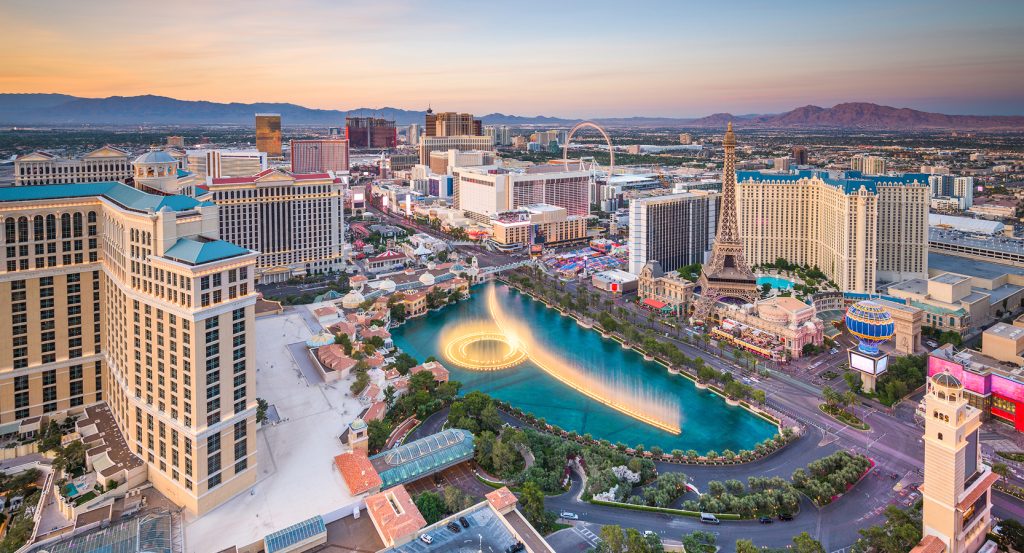
Four Seasons Hotel Las Vegas opened in March 1999 within the same tower as Mandalay Bay, occupying its upper five guest floors through an operating model that placed a separate luxury hotel inside a vast gaming resort. Set atop the Mandalay Bay tower along Las Vegas Boulevard near Russell Road and just steps from Shark Reef Aquarium, the hotel occupies floors 35 through 39 above the southern resort corridor, facing the Mojave Desert, airport approaches and mountains enclosing the Las Vegas Valley. A dedicated entrance, lobby and elevator system give the hotel an independent arrival sequence, even as interior connections lead directly into Mandalay Bay's restaurants, entertainment venues and gaming spaces. KES Studio's 2023 room redesign translated the Mojave's morning light and undulating horizon into pale woods, layered textiles, curved furniture and a residential palette that becomes warmer as sunlight crosses the valley. The result is a hotel defined by an architectural contradiction resolved with unusual clarity: it participates in one of the Strip's largest resort complexes but preserves a distinct scale, visual language and non-gaming character above it.
What defines Four Seasons Hotel Las Vegas.
Four Seasons Hotel Las Vegas is best known for introducing a separate non-gaming luxury hotel into the upper floors of a major Strip casino tower. Circus Circus Enterprises formed its partnership with Four Seasons during development of Mandalay Bay, the resort built on the former Hacienda site at the southern end of the Strip. Klai Juba Architects designed the tower, and Mandalay Bay and Four Seasons opened together in March 1999. Four Seasons received floors 35 through 39, an independent entrance and dedicated public rooms, giving the property physical autonomy. That arrangement provided direct access to the larger resort's entertainment infrastructure through controlled interior connections. AAA awarded the hotel Five Diamond status within six months of opening, making it the first Las Vegas lodging property to earn the distinction. MGM Mirage acquired Mandalay Resort Group in 2005, placing the surrounding complex within the company later renamed MGM Resorts International. A 2023 redesign by Kara Smith and KES Studio addressed all 424 rooms and suites in two phases, including twenty specialty suites and penthouse parlour areas. Smith used the desert sunrise as the project's governing visual fact, replacing stronger ornamental contrasts with sand, clay, cream and muted metallic tones. Floor-to-ceiling windows connect the interiors with mountain ridges, runways and the broad valley beyond the Strip.
Avenue Interior Design reshaped Veranda in 2025 as a California brasserie led by executive chef Michael Goodman, sous chef Jason D'Angelo and pastry chef Maruschka Ang. Co-founders Andrea DeRosa and Ashley Justman organized the dining room around a sculptural olive tree, dividing a large sunlit volume into smaller communal and intimate areas. A botanical mural based on Northern California orchards and vineyards extends the restaurant's geographic premise beyond decorative color. Hand-cut zellige tile, terracotta accents, layered woods, marble tables and brass details connect that mural with a material program built around cultivation and craft. Goodman directs the kitchen through seasonal produce, restrained sauces and shareable preparations associated with coastal California dining. D'Angelo carries that direction through breakfast, lunch and weekend brunch, giving the restaurant a continuous daytime identity. Ang's pastry work develops familiar American desserts through exact contrasts of fruit, spice, chocolate, marshmallow and gelato. PRESS continues the hotel's quieter social scale through a garden-facing bar removed from the casino floor. Veranda's reconstruction responds directly to the hotel's unusual position: its cooking, art and interiors turn toward daylight and landscape inside a resort culture historically organized around enclosed gaming rooms and artificial illumination.
How Four Seasons Hotel Las Vegas fits.
Four Seasons Hotel Las Vegas works as a starting point for examining how southern Las Vegas preserved its roadside culture through a relocated chapel, an uncopyrighted sign and an operating collection of coin-fed machines.
Begin at Little Church of the West, a cedar building designed by Zick & Sharp and constructed in 1942 as part of the Last Frontier Hotel complex. Late Gothic Revival details gave the chapel a pioneer form suited to the resort's Old West premise, and its early wedding ceremonies connected matrimony with the commercial theater of the developing highway corridor. The building survived the disappearance of its original resort through several relocations, including a move near the Hacienda before that casino's demolition. The chapel entered the National Register of Historic Places in 1992 for its architecture and its place in the Strip's commercial development. Continue to Welcome to Fabulous Las Vegas Sign, the twenty-five-foot roadside composition Betty Willis designed for Western Neon in 1959. Willis placed seven silver-dollar circles behind “Welcome,” tilted a diamond between its supports and crowned the composition with an eight-pointed red star. The reverse reads “Drive Carefully, Come Back Soon,” giving departing traffic a companion message. Willis left the design uncopyrighted, allowing the sign to migrate across souvenirs and advertisements even as the original remained in the boulevard median. The sign entered the National Register of Historic Places in 2009 after five decades as Las Vegas's principal roadside graphic. Conclude at Pinball Hall of Fame, where Tim Arnold's collection preserves playable machines built across successive eras of American amusement. Arnold began collecting as a teenager, operated Pinball Pete's in Michigan and brought close to one thousand machines to Las Vegas in the early 1990s. The museum concentrates on coin-operated tables from the 1950s through the 1990s, retaining their painted backglasses, mechanical scoring systems, bells, bumpers and later electronic displays. Moving the collection to Las Vegas Boulevard placed these working machines near the sign whose visual style helped define the same roadside entertainment culture. The progression moves from a chapel repeatedly transported to survive redevelopment, through a graphic design reproduced without restriction, to mechanical amusements preserved through continued operation.
Where your story begins.
Foresyte Travel reveals places that feel extraordinary long before you arrive.
Enjoy editorial crafted for luxury travelers.
Foresyte may earn a commission when you book.