Why Four Seasons Hotel Seattle matters.
Four Seasons Hotel Seattle is a waterfront luxury hotel where Downtown's Pacific Northwest character meets Four Seasons service, regional art, Elliott Bay views and a 2008 opening that connected the city's cultural core with its evolving central waterfront.
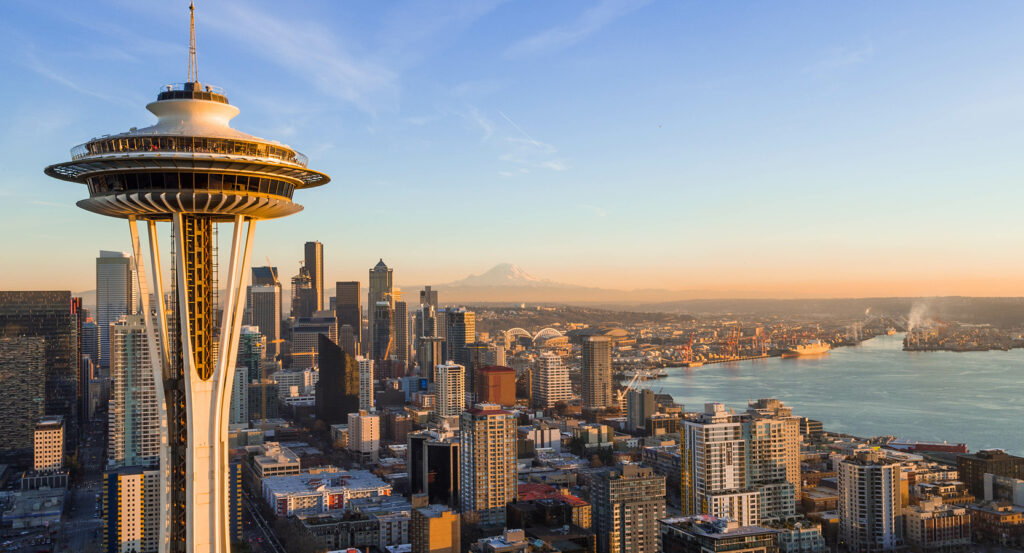
Set along Union Street near 1st Avenue and just steps from Benaroya Hall, the hotel occupies Downtown's waterfront edge between the Elliott Bay shoreline, the retail blocks climbing toward Pike Street and the office towers extending east toward 5th Avenue. The physical setting is distinctive because the city grid drops toward the bay while the Olympic Mountains define the western horizon beyond the water. The hotel is encountered through a sequence of street-level arrivals, Pacific Northwest artwork, Goldfinch Tavern, residences, spa facilities and an outdoor terrace above the shoreline. Heated water, fireplaces, whirlpool seating and floor-to-ceiling windows extend the maritime setting into the property's interior and upper levels. The result is a hotel whose relationship with Elliott Bay, Downtown and regional design gives the waterfront a composed Four Seasons expression.
What defines Four Seasons Hotel Seattle.
Four Seasons Hotel Seattle is best known for combining a November 2008 opening with a 21-story mixed-use building that places hotel rooms, private residences, Pacific Northwest art and waterfront amenities within one downtown composition. The hotel occupies floors one through ten, while 36 residential units rise from the eleventh through the twenty-first floors. NBBJ designed the building, giving the property a clean modern form shaped by Seattle's urban grid and maritime setting. BraytonHughes Design Studios and NBBJ developed the original hotel interiors around natural hues, Asian-inspired millwork, wood, stone and abundant views. The 147-room program contains 134 guestrooms and 13 suites, creating a substantial luxury presence within the city's cultural core. Susan Marinello Interiors designed the residences, extending the property's design language into a separate long-term living environment. Wimberly Interiors reworked the guestrooms in 2019, bringing a later layer of material refinement into the rooms. Original works by Pacific Northwest School artists form the largest collection of Pacific Northwest artwork outside a museum. That collection gives the hotel a direct relationship with the region's visual culture rather than relying on generic luxury decoration. The outdoor terrace places a heated infinity-edged pool, fireplace and whirlpool above Elliott Bay, turning the waterfront outlook into a central architectural component. Four Seasons Hotel Seattle developed as a vertical ecosystem in which accommodation, residences, art, water and regional materials operate together. Its character rests on the interaction between the Pacific Northwest landscape and a contemporary hotel structure designed to frame that landscape.
Goldfinch Tavern gives the hotel its principal culinary character through a restaurant that opened in June 2015 with consulting chef Ethan Stowell. The restaurant's reinvented brasserie format connects Seattle ingredients with a broad program of breakfast, lunch, dinner and drinks. Jason Morris leads the current kitchen, while Danielle Grogan directs the pastry program through desserts shaped around the Pacific Northwest's produce and seasons. The dining room seats 124 guests and the bar adds 45 places around a central social setting. Two private dining rooms create smaller environments for gatherings of up to 20 guests. Floor-to-ceiling windows place the Seattle Great Wheel and Elliott Bay directly into the restaurant's visual field. A wrap-around bar, dual-sided fireplace and Wine Gallery add distinct architectural zones to the dining room. Live music from Thursday through Saturday extends Goldfinch Tavern into an evening program that combines food, sound and waterfront outlooks. The Spa at Four Seasons Hotel Seattle adds eight treatment rooms, a couples' suite, steam rooms, a Himalayan salt-block sauna and a relaxation lounge with a backlit Himalayan salt wall. The 10-metre indoor swimming pool uses a skylit enclosure and an upstream current generator to connect recovery with physical movement. Four Seasons Hotel Seattle builds its public character through a progression from regional art and waterfront dining to thermal care, swimming, fitness and evening music. Goldfinch Tavern, the spa and the outdoor terrace turn the hotel into a social and restorative extension of Downtown rather than a private accommodation tower alone.
How Four Seasons Hotel Seattle fits.
Four Seasons Hotel Seattle works as a refined base for a culturally coherent day that begins with Seattle's public art institution, continues through the city's century-old market economy and concludes beside Elliott Bay in a sculpture park built from former industrial waterfront land.
Begin at Seattle Art Museum, whose institutional history began in 1933 as Seattle's principal center for visual art and public cultural programming. The downtown museum developed into one of three major Seattle Art Museum facilities, alongside Seattle Asian Art Museum in Volunteer Park and Olympic Sculpture Park on the waterfront. Its collections connect Pacific Northwest art with African, Asian, European, Indigenous, modern and contemporary traditions. The museum's downtown position places international art within Seattle's commercial center rather than isolating cultural collections in a distant campus. Exhibitions, education programs and public galleries extend the institution's role from collection display into civic participation. Seattle Art Museum provides the itinerary's opening because it establishes the city's relationship with visual culture before the route turns toward food, commerce and public space. Continue to Pike Place Market, created in 1907 after Seattle City Council designated the newly planked Pike Place as a public market where residents could buy produce directly from local growers. The market opened on August 17, 1907, responding to dissatisfaction with food prices and the influence of commission houses over farmers. Fishmongers, farmers, merchants, craftspeople and independent businesses later turned the market into a dense commercial district connected to Seattle's working waterfront. Urban-renewal plans threatened the market during the twentieth century, but a citizen campaign led by Victor Steinbrueck helped preserve its buildings and public function. Richard Haag designed Market Park at the north end of Pike Place in 1982, adding a landscape component to the preservation effort. Pike Place Market advances the itinerary from institutional art into the food systems, civic activism and small-scale commerce that shaped Seattle's public identity. Conclude at Olympic Sculpture Park, a waterfront landscape operated by Seattle Art Museum and opened in 2007. The park transformed former industrial shoreline into a nine-acre public setting for large-scale modern and contemporary sculpture. Its paths descend through planted terrain toward Elliott Bay, creating changing relationships between art, city infrastructure, mountains and water. The park's sculptures occupy an outdoor environment where the public realm and the natural horizon remain inseparable. Olympic Sculpture Park provides the strongest conclusion because it joins Seattle's museum culture to shoreline recovery and open public space. The progression moves from Seattle Art Museum's institutional art program through Pike Place Market's century-old relationship with food and civic commerce, then culminates at Olympic Sculpture Park's waterfront synthesis of sculpture, landscape and urban renewal, revealing how Seattle's cultural character developed through public access, regional exchange and the recovery of its shoreline.
Where your story begins.
Foresyte Travel reveals places that feel extraordinary long before you arrive.
Enjoy editorial crafted for luxury travelers.
Foresyte may earn a commission when you book.