
Why Gansevoort Street matters.
Gansevoort Street is a spirited Meatpacking District corridor where industrial heritage, adaptive reuse, contemporary culture, and architectural innovation converge at the crossroads of one of Manhattan's most influential urban transformations.
Running through the Meatpacking District between the Hudson River waterfront and Greenwich Village, this distinctive street weaves together restored brick warehouses, Belgian block paving, celebrated public spaces, acclaimed restaurants, luxury boutiques, and internationally recognized cultural destinations into one of New York City's most compelling pedestrian environments. Historic industrial architecture, thoughtfully integrated public plazas, and lively streetscapes create an atmosphere where the neighborhood's working waterfront past seamlessly intersects with its contemporary creative identity. The result is a corridor defined by architectural preservation, cultural vitality, and exceptional urban design.
What defines Gansevoort Street.
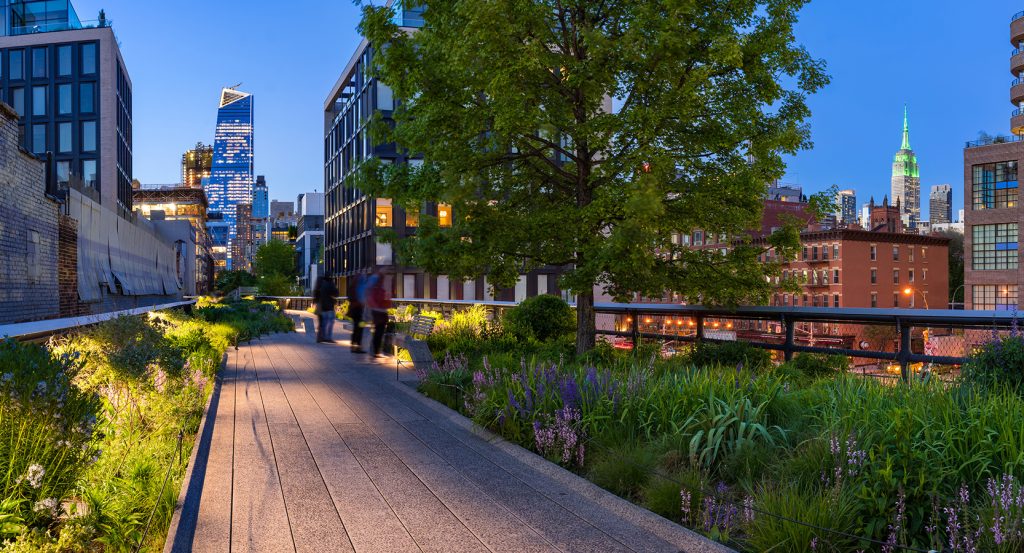
Gansevoort Street is best known for serving as the historic heart of Manhattan's Meatpacking District, a neighborhood named after Peter Gansevoort, a Revolutionary War colonel and grandson of early New York landowner Harmen Harmense Gansevoort, whose family helped shape the area's nineteenth-century development. During the late nineteenth and early twentieth centuries, the corridor became the epicenter of New York's meat distribution industry, eventually supporting more than 250 slaughterhouses, packing plants, refrigeration facilities, and wholesale meat businesses that supplied much of the metropolitan region. The completion of the New York Central Railroad's West Side Elevated Line between 1929 and 1934 allowed freight trains to enter warehouses directly through upper floors, dramatically improving industrial efficiency while eliminating dangerous street-level crossings that had earned 10th Avenue the nickname “Death Avenue.” Following decades of industrial decline beginning in the 1960s, preservation efforts accelerated after the Meatpacking District was designated a New York City Historic District in 2003, protecting 100 historically significant buildings characterized by brick warehouses, cast-iron façades, and Belgian block streets. The corridor's transformation intensified with the opening of the High Line between 2009 and 2019, the arrival of the Whitney Museum of American Art's Renzo Piano-designed building in 2015, and the redevelopment of the adjacent Gansevoort Peninsula into Manhattan's first major new public beach and expanded Hudson River Park facilities. Today Gansevoort Street represents one of the world's most widely studied examples of adaptive urban regeneration, where industrial infrastructure, historic preservation, landscape architecture, contemporary retail, hospitality, and cultural investment have collectively reshaped an entire neighborhood while preserving its historic character.
The architectural experience unfolds through a rich collection of nineteenth-century warehouse buildings, preserved Belgian block paving, adaptive reuse projects, and internationally acclaimed contemporary architecture that collectively demonstrate more than 175 years of urban evolution. Ground-floor markets, destination restaurants, luxury fashion houses, rooftop hospitality venues, galleries, and year-round cultural programming continually activate the corridor while reinforcing its role as one of Manhattan's most dynamic public environments. Every block demonstrates how historic preservation, transportation infrastructure, landscape architecture, and thoughtful redevelopment can transform an industrial district into one of the world's most successful examples of human-centered urban revitalization.
How Gansevoort Street fits.
Gansevoort Street works as part of a curated exploration through the Meatpacking District's celebrated architecture, contemporary art, and waterfront landscapes.
Begin at the Whitney Museum of American Art, where one of the world's foremost collections of American art establishes the neighborhood's cultural significance before stepping onto Gansevoort Street. Continue to The High Line, whose celebrated elevated park reveals the industrial infrastructure that helped shape the corridor's history. Conclude at Little Island, where imaginative landscape architecture and sweeping Hudson River views provide a fitting finale celebrating the remarkable transformation of Manhattan's western waterfront. The progression moves naturally from contemporary art to industrial heritage before concluding within one of New York's most inventive public parks, revealing why Gansevoort Street remains the defining corridor of the Meatpacking District.
Where your story begins.
Foresyte Travel reveals places that feel extraordinary long before you arrive.
Enjoy editorial crafted for luxury travelers.
Foresyte may earn a commission when you book.







































































































