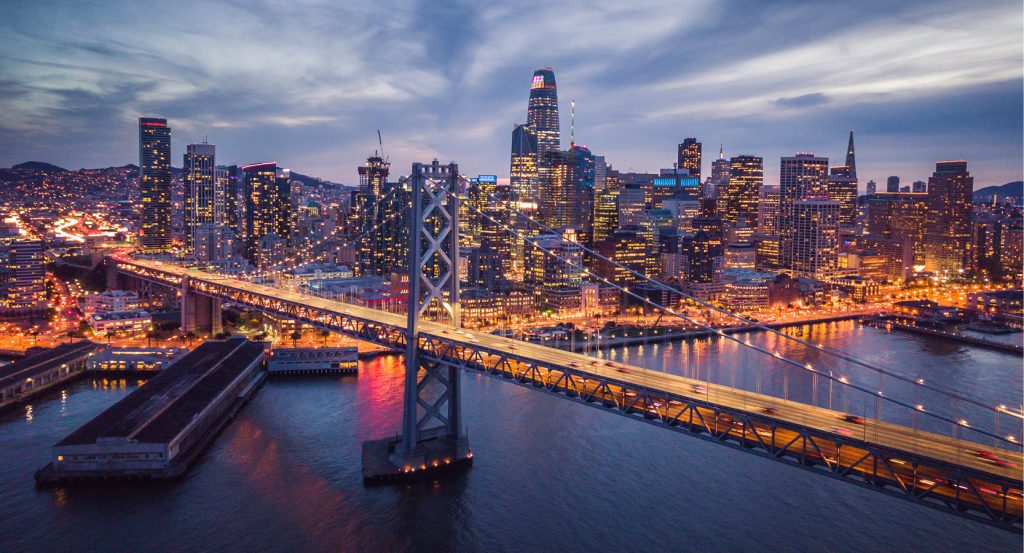
Why you should experience Kasa La Monarca San Francisco in San Francisco, California.
Kasa La Monarca San Francisco is an independent-minded hotel where Nob Hill's architectural patina, century-old lodging culture, steep-street character and contemporary appetite for unconventional hospitality converge inside a 1915 Sutter Street building.
Set along Sutter Street near Taylor Street and just steps from Grace Cathedral, the six-story property dates to 1915, giving La Monarca a physical history more than a century older than the technology-led operating model now inside it. The building has passed through several lodging identities across that lifespan, including Hotel Glenwood and Hotel De Luxe, before the La Monarca name introduced a markedly different chapter at 717 Sutter Street. Kasa now operates the 35-room property within a nationwide portfolio built around digitally managed accommodations, placing a technology company founded in San Francisco back inside one of the city's surviving early twentieth-century hotels. The result is a hotel where a 1915 structure, successive lodging identities, 717 Sutter Street and Kasa connect Nob Hill's century-old hospitality fabric with a distinctly twenty-first-century operating philosophy.
What you should know about Kasa La Monarca San Francisco.
Kasa La Monarca San Francisco is best known for translating the hospitality model developed by Kasa founder and chief executive Roman Pedan into an unusually intimate 35-room hotel arranged across six floors at 717 Sutter Street. Kasa was founded in San Francisco in 2016 as a technology-enabled accommodations company and has since expanded beyond its hometown to more than 75 properties, 40 property partners and more than one million room nights, making La Monarca a small-scale expression of an operating system deployed nationally. The property eliminates the conventional reception desk in favor of self check-in, private access codes and a 24-hour Virtual Front Desk reached by mobile device, while the building's communal lower level consolidates a kitchen, lounge and laundry into a shared residential environment. Kasa's combination of Roman Pedan's technology-led operating model, a 35-key inventory and a 1915 San Francisco building makes La Monarca a particularly concentrated example of the company's attempt to merge independent lodging with centralized digital hospitality.
Kasa's corporate evolution gives the Sutter Street property a second factual thread directly connected to the company operating it, with Pedan joined by founding-team executive Craig Minoff and a leadership structure spanning product, commercial strategy, operations and engineering. The company's portfolio now encompasses more than 250 team members alongside those 75-plus properties, allowing the comparatively tiny La Monarca to operate within infrastructure considerably larger than its six-story physical footprint suggests. Kasa's accommodation model extends across both multifamily and hospitality properties, with real-estate owners supplying the buildings while Kasa applies its technology and operating platform to create independently branded stays such as La Monarca. Together, Roman Pedan, Craig Minoff and Kasa's national portfolio place the 1915 property within a San Francisco-born hospitality company whose defining contribution to 717 Sutter Street is an operating architecture built around technology, remote service and independent accommodation.
How to fold Kasa La Monarca San Francisco into your trip.
Kasa La Monarca San Francisco works as the anchor for an afternoon tracing ecclesiastical architecture, mechanical invention and metropolitan public culture through Nob Hill and the blocks immediately below it.
Begin at Grace Cathedral, where the present structure was begun in 1927 under architect Lewis Hobart, opened sufficiently for use by 1934, stalled during the Depression and finally reached consecration in 1964 after construction resumed under Bishop James Pike and Dean Julian Bartlett, later hosting figures including Martin Luther King Jr. and Duke Ellington. Continue to Cable Car Museum, established in 1974 inside the Washington-Mason barn and powerhouse, where operating engines and winding wheels still pull the system's underground cables and three nineteenth-century cars include Clay Street Hill Railroad No. 8, the sole surviving car from San Francisco's first cable railway. Conclude at Union Square, set aside as a public park in 1850 and later associated with pro-Union rallies before Robert Aitken's Dewey Monument arrived in 1903, crowned by a bronze Victory modeled on Alma de Bretteville, later Alma Spreckels. The progression moves from Hobart's decades-long cathedral project through the still-functioning machinery of San Francisco's cable system into Aitken and Spreckels's civic composition, revealing the architecture and urban invention surrounding Kasa La Monarca San Francisco.
Where your story begins.
Foresyte Travel reveals places that feel extraordinary long before you arrive.
Experience premium editorial crafted for luxury travelers.