Why Lake City Way matters.
Lake City Way is a enterprising corridor where Lake City's commercial heritage, transportation legacy, neighborhood diversity, and entrepreneurial spirit create one of North Seattle's most enduring arterial streets.
Running through Lake City between Maple Leaf and Cedar Park, the corridor connects long-established commercial districts, neighborhood businesses, civic institutions, residential enclaves, and professional offices that collectively reflect more than a century of continuous urban growth. Early brick storefronts, mid-century commercial buildings, reinforced-concrete structures, contemporary mixed commercial architecture, Douglas firs, western red cedars, Pacific dogwoods, ornamental maples, and mature roadside plantings establish a streetscape where commerce and community have evolved together across successive generations. Throughout the corridor, generations of merchants, physicians, manufacturers, restaurateurs, and local entrepreneurs have cultivated an atmosphere defined by resilience, opportunity, and neighborhood continuity. The result is an experience distinguished by commercial vitality, architectural variety, and one of North Seattle's defining corridors.
What defines Lake City Way.
Lake City Way is best known for following the alignment of the historic Bothell Highway, completed during the early twentieth century, whose connection between Downtown, Lake City, and Snohomish County transformed the surrounding district into an important commercial gateway long before suburban expansion reached North Seattle. Commercial development accelerated throughout the 1910s, 1920s, and 1930s, producing automobile dealerships, service stations, motels, neighborhood business blocks, warehouses, and retail buildings distinguished by reinforced-concrete framing, structural steel, brick masonry, glazed terra cotta, steel sash windows, and broad storefront glazing designed for an increasingly automobile-oriented economy. The corridor matured alongside family-owned grocers, automobile businesses, medical offices, wholesalers, restaurants, and independent retailers whose continued investment established Lake City as one of North Seattle's principal commercial centers. Cooper's hawks, Anna's hummingbirds, black-capped chickadees, Douglas firs, western red cedars, Pacific dogwoods, vine maples, and native understory vegetation continue contributing to the mature urban ecology surrounding the corridor. Together, these transportation milestones, commercial enterprises, architectural traditions, construction methods, and ecological systems establish Lake City Way as the defining historic spine of Lake City.
Completion of the Lake City Branch of Seattle Public Library in 1931 reflected the corridor's emergence as a mature commercial district by providing an enduring civic institution that served merchants, professionals, and the rapidly growing residential population surrounding Lake City Way. That period of sustained growth coincided with the establishment of the Lake City Business Association, whose coordinated promotion of local commerce reinforced the corridor's reputation as North Seattle's primary destination for independent businesses and neighborhood services across successive decades. Original brick parapets, glazed terra-cotta panels, structural-steel lintels, recessed storefront entrances, decorative masonry, and broad display windows continue preserving the architectural style established during Lake City Way's formative commercial era. Together, these enduring institutions, organized commercial leadership, and remarkably intact business architecture explain how Lake City Way evolved from a regional highway into one of Seattle's most recognizable neighborhood commercial corridors.
How Lake City Way fits.
Lake City Way works as an exploration of North Seattle's commercial heritage, neighborhood culture, and natural landscapes.
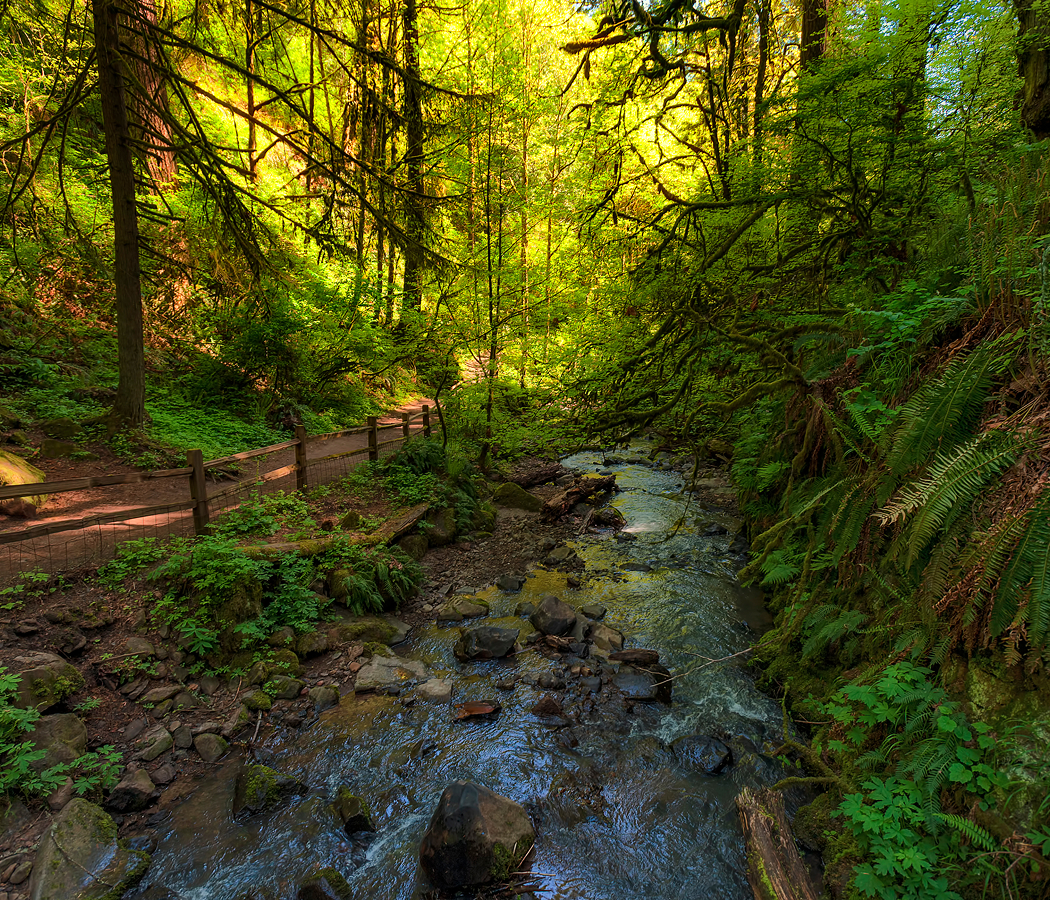
Begin at Lake Washington, where expansive shoreline views, native vegetation, and the freshwater landscape that shaped northeastern Seattle establish an inspiring introduction to the corridor's geographical setting. Continue to Lake City Farmers Market, whose regional producers, neighborhood artisans, and longstanding community traditions deepen appreciation for the district's enduring independent commercial culture before naturally guiding the experience toward its concluding destination. Conclude at Thornton Creek Natural Area, where restored wetlands, native forest habitat, and winding boardwalks provide the reflective payoff by revealing the ecological landscape that continues defining Lake City's character beyond its commercial streets. The progression moves naturally from shoreline scenery through neighborhood enterprise before concluding within the natural environment that best expresses the enduring character of Lake City Way.
Where your story begins.
Foresyte Travel reveals places that feel extraordinary long before you arrive.
Enjoy editorial crafted for luxury travelers.
Foresyte may earn a commission when you book.