
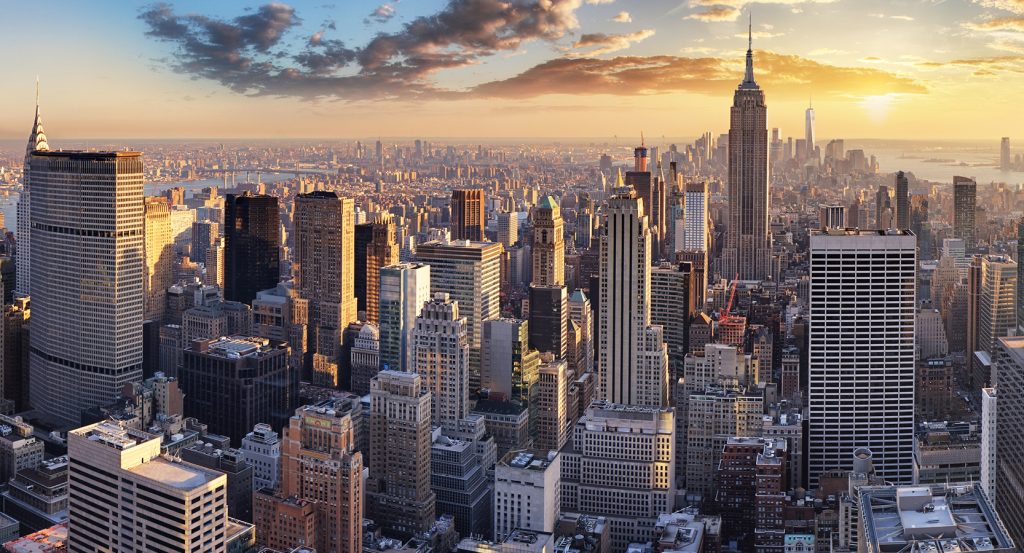
Why you should experience Life Hotel New York in New York, NY.
Life Hotel New York is a literary boutique hotel where NoMad's publishing heritage, illustration culture, artistic independence and turn-of-the-century creative ambition converge within the former headquarters of the original Life magazine.
Set along West 31st Street near Broadway and just steps from Empire State Building, the hotel occupies a Beaux-Arts building conceived by Carrère and Hastings for publisher John Ames Mitchell, who had founded Life as an demonstrated humor and literary magazine. Limestone, red brick and tall windows frame a façade crowned with a pen-holding cherub surrounded by musical instruments, paintbrushes and a notepad, while repeated “Life” inscriptions preserve the building's publishing character directly in its architecture. Norman Rockwell and illustrator Charles Dana Gibson belonged to the creative circle associated with the address, where editorial production shared the building with apartments occupied by contributors and staff. The result is a hotel where John Ames Mitchell, Carrère and Hastings, Norman Rockwell and Charles Dana Gibson give NoMad an unusually direct surviving connection between architecture, publishing and American illustration.
What you should know about Life Hotel New York.
Life Hotel New York is best known for occupying the 1895 Beaux-Arts headquarters designed by Carrère and Hastings for Life, the demonstrated magazine John Ames Mitchell had founded in 1883, with the publication remaining at 19 West 31st Street until 1936. Editorial production occupied spaces with ceilings reaching 20 feet, while apartments on the upper floors accommodated members of the magazine's creative community, including Norman Rockwell and Charles Dana Gibson. Carrère and Hastings composed the exterior from limestone and red brick, incorporating the pen-holding cherub, representations of artistic tools and repeated “Life” lettering into a façade that effectively advertised the creative work occurring inside. The building entered its contemporary hospitality chapter in 2017 when developer David Mitchell, hospitality executive Stephen Hanson and designer Tara Oxley converted it into a 98-room boutique hotel while retaining original marble floors, wood moldings, cast-iron columns and the double-L monogram. The publishing headquarters, live-work configuration, Carrère and Hastings architecture and Mitchell-Hanson-Oxley hotel conversion give Life Hotel New York an unusually concentrated relationship with more than a century of Manhattan creative culture.
Tara Oxley carried the building's editorial inheritance into the hotel through interiors that preserve original architectural fabric while introducing brass beds, midcentury lighting and Life photography spanning successive decades of twentieth-century visual culture. David Mitchell and Stephen Hanson extended that concept below the lobby through Gibson + Luce, named for Charles Dana Gibson and Life illustrator Henry Luce, inside a subterranean room reached by an original staircase where empty OFC liquor bottles were uncovered during the hotel conversion. Chef Michael Vignola joined Hanson in developing the original Life Restaurant, bringing experience from Strip House to a culinary program designed around the building's renewed role as a gathering place for creative New York. Together, Tara Oxley, David Mitchell, Stephen Hanson and Michael Vignola turned the former publishing headquarters into a hotel whose interiors, subterranean social space and original restaurant program remained anchored to the personalities and creative culture of the building itself.
How to fold Life Hotel New York into your trip.
Life Hotel New York works as the anchor for an afternoon tracing American literature, decorative collecting and skyscraper ambition through the streets surrounding NoMad.
Begin at Morgan Library & Museum, where financier J. Pierpont Morgan commissioned Charles Follen McKim to create a private library housing manuscripts, rare books, drawings and printed works within rooms shaped by marble, carved wood and Renaissance-inspired decoration. Continue to National Arts Club, where the organization founded by Charles DeKay occupies the former Samuel Tilden mansion, bringing artists, writers and cultural figures into interiors associated with one of nineteenth-century New York's most prominent political personalities. Conclude at Empire State Building, where Shreve, Lamb & Harmon translated the competitive energy of interwar Manhattan into a steel-framed skyscraper rising 1,250 feet to its original roof and assembled at a construction pace that became inseparable from the mythology of New York engineering. The progression moves from McKim's architecture for Morgan's literary collection through the artistic community cultivated by National Arts Club into the engineering ambition of Shreve, Lamb & Harmon, extending Life Hotel New York's publishing heritage through three complementary expressions of Manhattan creativity.
Where your story begins.
Foresyte Travel reveals places that feel extraordinary long before you arrive.
Experience premium editorial crafted for luxury travelers.







































































































