Why Marion Street matters.
Marion Street is a elevated corridor where First Hill's institutional legacy, architectural refinement, civic influence, and hillside character define one of Seattle's most consequential urban streets.
Running through First Hill between Downtown and the Central District, the corridor connects nationally recognized medical institutions, historic churches, early apartment buildings, civic landmarks, and established residential blocks that collectively reflect more than a century of continuous urban evolution. Collegiate Gothic masonry, Beaux-Arts façades, reinforced-concrete institutional buildings, Art Deco detailing, mature London plane trees, Pacific dogwoods, ornamental cherries, and carefully landscaped streets establish a streetscape where architectural dignity and neighborhood continuity remain closely intertwined. Throughout the corridor, generations of physicians, architects, educators, clergy, and civic leaders have cultivated an atmosphere defined by service, scholarship, and enduring public purpose. The result is an experience distinguished by architectural depth, institutional significance, and one of First Hill's defining corridors.
What defines Marion Street.
Marion Street is best known for extending through First Hill, whose elevated topography and proximity to downtown encouraged the establishment of Seattle's earliest major hospitals during the late nineteenth century, transforming the neighborhood into the region's principal center for healthcare, medical education, and charitable institutions. Construction accelerated between the 1890s and the 1930s, producing hospitals, churches, apartment buildings, professional offices, and institutional complexes distinguished by reinforced-concrete framing, structural steel, brick masonry, Indiana limestone, decorative terra cotta, and copper-clad roof elements engineered for permanence and civic presence. The corridor matured alongside physicians, surgeons, religious orders, medical researchers, charitable foundations, and professional organizations whose continued investment reinforced First Hill's longstanding role within the Pacific Northwest's healthcare network. Cooper's hawks, Anna's hummingbirds, Douglas firs, western red cedars, vine maples, Pacific dogwoods, and native understory plantings continue contributing to the mature urban ecology surrounding the hillside neighborhood. Together, these institutional milestones, professional traditions, architectural practices, construction methods, and ecological systems establish Marion Street as one of First Hill's defining historic corridors.
Architect John Graham Sr. helped shape First Hill's institutional character through hospital and commercial commissions whose restrained classical proportions reinforced the neighborhood's reputation for enduring civic architecture during the early twentieth century. His work complemented the expansion of Swedish Hospital, founded in 1910, whose steady growth strengthened Marion Street's association with advanced medical care while encouraging the construction of professional offices, apartment buildings, and supporting institutions throughout the surrounding corridor. Original limestone entrances, decorative terra-cotta panels, riveted steel framing, brick pilasters, copper detailing, and finely crafted masonry remain visible along Marion Street, preserving the architectural language established during First Hill's formative decades. Together, Graham's architectural influence, Swedish Hospital's institutional growth, and the corridor's remarkably intact historic buildings explain why Marion Street continues expressing the enduring character of Seattle's premier medical district.
How Marion Street fits.
Marion Street works as an exploration of First Hill's architectural heritage, civic legacy, and elevated cityscape.
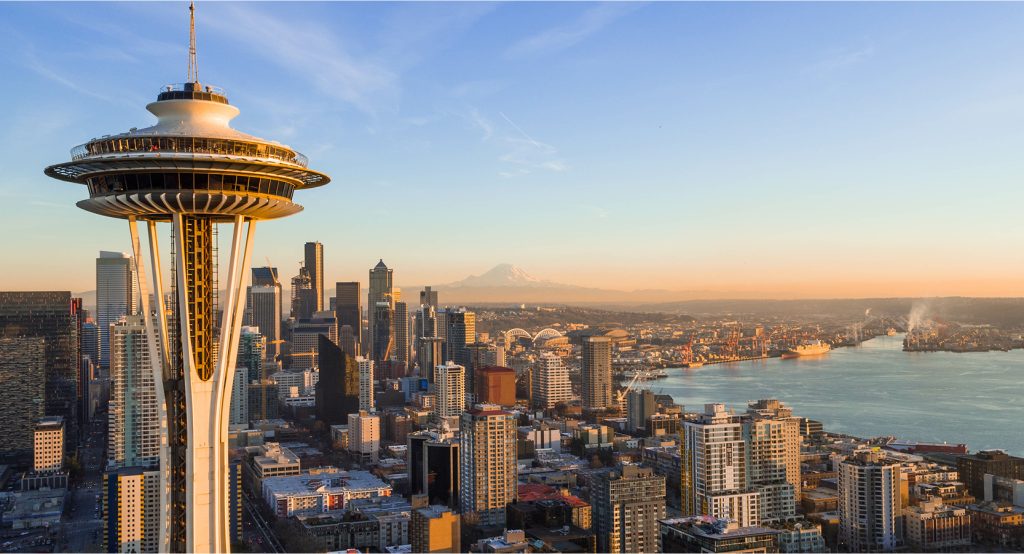
Begin at St. James Cathedral, where Romanesque Revival architecture, remarkable interior craftsmanship, and more than a century of civic history establish a thoughtful introduction to First Hill's enduring cultural significance. Continue to Seattle University Campus, whose collegiate architecture, public art, and landscaped grounds broaden appreciation for the neighborhood's intellectual traditions before naturally guiding the experience toward its concluding destination. Conclude at Dr. José Rizal Park, where sweeping views across Downtown, Elliott Bay, and the Olympic Mountains provide the reflective payoff by revealing the dramatic hillside landscape that has shaped Marion Street's character for generations. The progression moves naturally from sacred architecture through academic tradition before concluding with the panoramic perspective that best expresses the enduring significance of Marion Street.
Where your story begins.
Foresyte Travel reveals places that feel extraordinary long before you arrive.
Enjoy editorial crafted for luxury travelers.
Foresyte may earn a commission when you book.