
Why Mount Washington matters.
Mount Washington is a topographic enclave where Northeast Los Angeles's Arroyo Seco character meets early hilltop development, winding residential streets and an architectural concentration spanning Craftsman houses through experimental Southern California modernism.
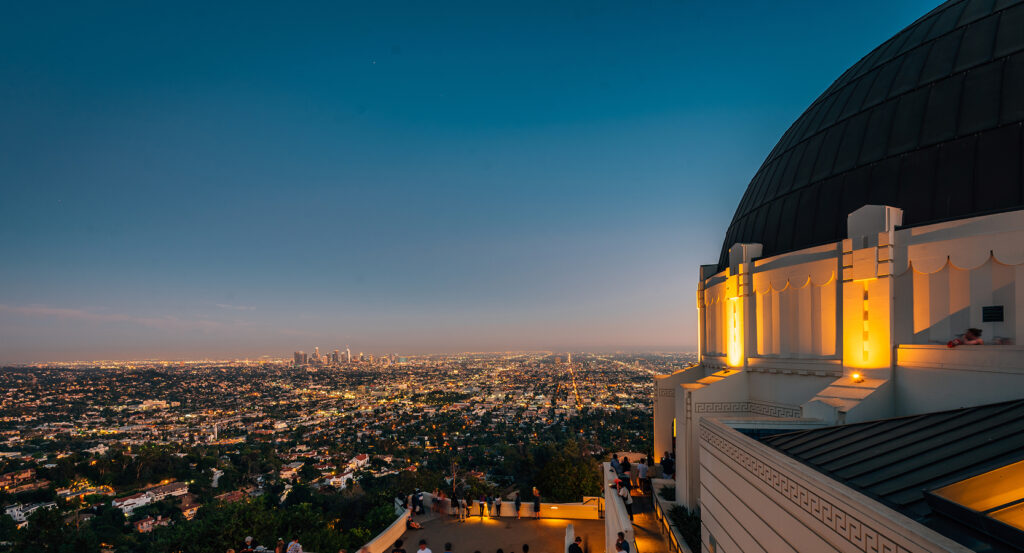
Positioned between Highland Park, Glassell Park, and Cypress Park, the neighborhood occupies a steep isolated hill above the Arroyo Seco, where ridges rise abruptly from surrounding lowlands and residential streets trace irregular contours toward a crest exceeding the elevations of adjacent communities. Craftsman houses, Period Revival residences and later modern designs occupy slopes cut by narrow roads, deep gullies and stair-stepped parcels, creating sharp transitions between sheltered hillside pockets and exposed upper streets with long views toward Downtown and the San Gabriel Mountains. Mount Washington Drive supplies the primary encounter through a looping ascent whose curves reveal successive residential terraces before reaching the broad upper ridge. San Rafael Avenue creates a secondary passage across the summit, where larger lots, mature vegetation and comparatively gentle terrain give the crest a physical character distinct from the steeper flanks below. The result is a neighborhood whose unusually complete range of twentieth-century hillside architecture makes the evolving technical and domestic ambitions of Northeast Los Angeles legible across a single mountain.
What defines Mount Washington.
Mount Washington is best known for beginning as an ambitious hilltop resort development built around the Mount Washington Hotel and a dedicated incline railway connecting the summit with the Arroyo Seco below. Developer Robert Marsh promoted the tract during the opening twentieth century, and the railway and access road reached completion in 1909 as infrastructure for the new mountaintop destination. Meyer and Holler designed the Mission Revival hotel through the Milwaukee Building Company, placing lounge and dining rooms alongside eighteen guest rooms, each equipped with a private bath. The property opened in early 1910 with tennis grounds, walking paths and a viewing platform overlooking Highland Park, positioning the summit as a suburban retreat above the expanding city. A reservoir served the development with water pumped from a spring near the Santa Fe tracks at Avenue 41, linking the isolated hilltop enterprise to the transportation corridor below. Mechanical difficulties repeatedly disrupted the incline railway before service ended in 1919, removing the specialized connection on which the original resort concept had depended. The hotel passed through markedly different functions during the following years, becoming a military school in 1922 and a private hospital in 1923. Paramahansa Yogananda encountered the vacant property after arriving in Los Angeles during his transcontinental lecture work and acquired it with assistance from his students in 1925. The former resort then became the international headquarters of Self-Realization Fellowship, where Yogananda lived and worked for more than twenty-five years and established a permanent Western center for his Kriya Yoga teachings.
Steep undeveloped slopes supplied Mount Washington with a second architectural chapter after new construction techniques opened difficult parcels during the late 1950s and early 1960s. Cantilevered stilt houses appeared on hillsides previously resistant to conventional building, joining custom Mid-Century Modern residences whose structural systems responded directly to severe grades and limited buildable ground. Architects Smith & Williams, Kemper Nomland Jr., Allyn E. Morris and Gregory Ain contributed custom designs across the neighborhood, expanding a local architectural collection already containing early modern work by Rudolf Schindler, Richard Neutra and Harwell Hamilton Harris. Sea View Lane developed a particularly strong concentration of modern houses, placing individual architectural commissions along one of the mountain's upper residential streets. Developer Ray Watt pursued a different approach between 1964 and 1966 on the northwest side, filling steep gullies before constructing Mount Washington West as the largest postwar subdivision in Northeast Los Angeles. Ranch houses within that tract introduced a comparatively standardized domestic type beside the individually designed modern residences scattered across older slopes. Craftsman and Period Revival houses from the first development era coexist with Early Modern experiments, postwar stilt construction, custom Mid-Century Modern commissions and Ranch houses created during the mountain's final large subdivision phase. Mount Washington's built fabric spans two principal development surges, with the 1910s and 1920s establishing its first residential landscape and the 1950s and 1960s extending construction onto terrain that earlier builders had left substantially untouched.
How Mount Washington fits.
Mount Washington works as the anchor for an outing connecting a preservation campus assembled from threatened Victorian buildings, the hand-built home of a central figure in Southern California cultural history and a family stained-glass workshop rooted in the Arroyo Seco arts movement.
Begin at Heritage Square Museum, created in 1969 as preservationists began relocating architecturally significant structures threatened with demolition across Los Angeles. Eight historic buildings now occupy the campus, collectively interpreting Southern California's development during its first century of statehood from 1850 through 1950. The collection ranges from the Longfellow-Hastings Octagon House to the William Perry House and includes the Palms Depot, Lincoln Avenue Methodist Church and Hale House, placing domestic, religious and transportation architecture within a single preserved setting beside the Arroyo Seco. Continue to Lummis House, where writer, editor, photographer and librarian Charles Fletcher Lummis selected a site beside an immense sycamore in 1895 and constructed the residence he called El Alisal. Lummis had entered Los Angeles cultural life after his celebrated 1884 to 1885 walk from Cincinnati to California and later became city librarian and an influential advocate for Southwestern art and Indigenous cultures. The stone residence became closely associated with the circle of writers, artists and cultural figures surrounding him, giving the Arroyo Seco a surviving domestic monument to the intellectual community that flourished there around the turn of the twentieth century. Conclude at Judson Studios, established in Los Angeles in 1897 by painter and professor William Lees Judson with his three sons and still operated by the fifth generation of the Judson family. Walter Horace Judson, the eldest son and a stained-glass specialist, helped develop the enterprise as Los Angeles expanded rapidly around the turn of the century. William Lees Judson designed the original building on the present Garvanza property in 1900, rooting the workshop physically within the Arroyo Seco arts community. More than 125 years later, the company remains America's oldest family-run stained-glass studio, with thousands of stained and fused glass projects extending its Arroyo Seco craft tradition far beyond Los Angeles. The progression moves from rescued Victorian architecture through Lummis's hand-built Arroyo Seco residence and culminates at a multigenerational art-glass workshop, connecting preservation, cultural authorship and working craft across the communities surrounding Mount Washington.
Where your story begins.
Foresyte Travel reveals places that feel extraordinary long before you arrive.
Enjoy editorial crafted for luxury travelers.
Foresyte may earn a commission when you book.





































































































