
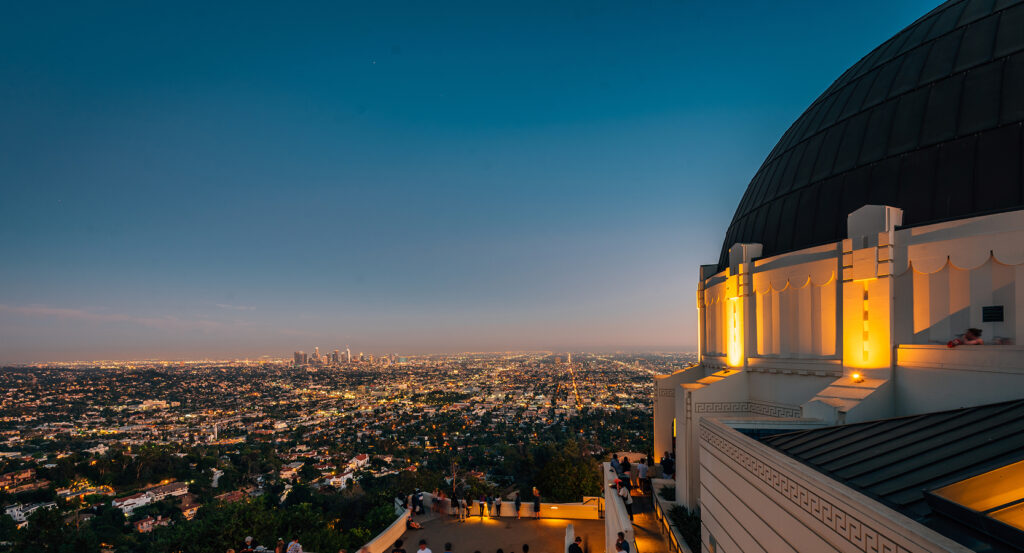
Why Northeast Los Angeles matters.
Northeast Los Angeles is a topographically varied enclave where Los Angeles's early suburban expansion meets Arroyo Seco settlement, hillside architecture and communities shaped independently along rail, streetcar and river corridors.
Positioned between Glendale, Pasadena, and Downtown, the neighborhood occupies a broad northeastern sector of the city where the Los Angeles River, Arroyo Seco, San Rafael Hills and smaller ridges divide the urban fabric into valleys, terraces and elevated residential districts. Victorian houses, Craftsman residences, commercial blocks and steep hillside streets form sharply different environments across Lincoln Heights, Highland Park, Garvanza, Mount Washington, Glassell Park and Eagle Rock, giving the area unusual architectural breadth within a geographically continuous section of Los Angeles. Figueroa Street supplies the primary encounter through the Arroyo Seco communities, crossing long-established commercial centers and residential districts as the surrounding terrain repeatedly rises away from the corridor. Colorado Boulevard creates a secondary east-west passage through Eagle Rock, where broader blocks and the San Rafael Hills shift the physical character away from the narrower Arroyo Seco basin. The result is a neighborhood whose rivers, hills and transportation corridors preserved unusually distinct communities inside one metropolitan sector, making Northeast Los Angeles a concentrated expression of how geography directed the city's outward growth.
What defines Northeast Los Angeles.
Northeast Los Angeles is best known for developing from several independent settlements whose nineteenth-century land histories preceded their eventual incorporation into Los Angeles. Spanish governor Pedro Fages granted José María Verdugo Rancho San Rafael in 1784, creating an estate of 36,000 acres between the Los Angeles River and Arroyo Seco. Financial difficulties overtook the Verdugo family during the nineteenth century, and Alfred Beck Chapman and Andrew Glassell acquired the foreclosed property in 1869 before dividing it into thirty-one parcels. Land from that former rancho subsequently contributed to Atwater Village, Garvanza, Glassell Park, Highland Park, Mount Washington and Eagle Rock. Lincoln Heights and Montecito Heights emerged from former pueblo land, giving the northeastern sector another developmental origin independent of Rancho San Rafael. El Sereno followed a third path through territory associated with Rancho Rosa de Castilla, granted to Juan Ballesteros in 1831 before ownership later passed to Jean-Baptiste Batz and Catalina Batz. Rail development accelerated the conversion of agricultural ground during the closing nineteenth century, with the Los Angeles and San Gabriel Railroad establishing a route through the Arroyo Seco corridor. Highland Park gained a streetcar connection along Pasadena Avenue in 1894 and another Arroyo Seco route in 1895, strengthening its emergence as a streetcar suburb before later Los Angeles Railway and Pacific Electric service extended deeper into the district. Los Angeles absorbed most of the communities across the northeastern sector between 1910 and 1930, joining places with separate origins into the municipal geography now recognized as Northeast Los Angeles.
The Arroyo Seco became the center of an Arts and Crafts culture that gave the northeastern districts an architectural and artistic significance extending far beyond their early suburban growth. Charles Fletcher Lummis began El Alisal beside the Arroyo Seco in 1897, constructing the fourteen-room house across fifteen years with thick walls formed from riverbed stone and consulting architects Sumner Hunt and Arthur Benton on structural problems. The handcrafted building translated the Arts and Crafts preference for locally available stone into an intensely personal form rooted in the arroyo itself. Painter William Lees Judson and his three sons established their art-glass enterprise in Los Angeles in 1897, and Judson designed a Garvanza building for the operation in 1900. Walter Horace Judson developed its stained-glass practice, beginning a family enterprise that has continued across five generations and now stands as the oldest family-run stained-glass company in the United States. The wider Highland Park-Garvanza area accumulated Queen Anne, Shingle, Craftsman, Mission Revival and Tudor Revival architecture from the 1880s through the 1940s, with Craftsman houses becoming especially prominent during the Arroyo Seco Arts and Crafts period. Transportation engineering later placed another nationally consequential layer through the same landscape when the Arroyo Seco Parkway opened in 1940 as the West's first fully grade-separated, limited-access landscaped freeway built as a non-toll state highway. Its six-mile original section became both a prototype for California freeway engineering and an alignment of Route 66, binding a district associated with handcrafted architecture to the emerging automobile infrastructure that would redefine metropolitan Los Angeles.
How Northeast Los Angeles fits.
Northeast Los Angeles works as the anchor for an outing connecting rescued Victorian architecture, a hilltop institution devoted to Native American cultures and an urban conservation center embedded within one of the district's largest open landscapes.
Begin at Heritage Square Museum, created in 1969 as historic Los Angeles buildings faced demolition during a period of rapid metropolitan redevelopment. Eight surviving structures from different parts of the city now occupy the site, spanning domestic, religious, transportation and commercial architecture from the Victorian era into the early twentieth century. The collection ranges from the Longfellow-Hastings Octagon House and William Perry House to the Palms Depot, Lincoln Avenue Methodist Church and Hale House, with an original 1909 Denver & Rio Grande Railroad boxcar adding another artifact of the period. The buildings were physically relocated to the museum, turning threatened individual structures into a concentrated architectural collection devoted to Southern California between 1850 and 1950. Continue to Southwest Museum, created by Charles Fletcher Lummis and opened in 1914 inside a Mission Revival building by Sumner Hunt and Silas Burns. Rising above the Arroyo Seco on Mount Washington, it became the first museum in Los Angeles and housed a major collection of Native American art and cultural objects assembled around Lummis's ambition to make Southern California a national center of culture. The institution later merged with the Autry Museum of the American West, which assumed responsibility for the historic campus, its collections and the neighboring 1917 Casa de Adobe. Conclude at Audubon Center at Debs Park, opened in 2003 inside the 282-acre Ernest E. Debs Regional Park as National Audubon Society's first urban center created specifically to engage a Latino community. Its building became the first LEED Platinum-certified structure in the United States at the time of construction, pairing environmental education with a physical demonstration of sustainable design. The center occupies seventeen acres within the larger park and has expanded its ecological work through habitat restoration and Los Nogales Nursery, established in 2008 with the Los Angeles Conservation Corps and Caltrans and later developed into more than 6,000 square feet of growing space for over thirty California native plant species. The progression moves from rescued nineteenth-century architecture through an early Los Angeles museum devoted to Indigenous cultures and culminates in a twenty-first-century conservation institution, connecting preservation, cultural stewardship and ecological restoration across Northeast Los Angeles.
Where your story begins.
Foresyte Travel reveals places that feel extraordinary long before you arrive.
Enjoy editorial crafted for luxury travelers.
Foresyte may earn a commission when you book.





































































































