
Why San Rafael Hills matters.
San Rafael Hills is a rugged enclave where the West San Gabriel Valley's metropolitan character meets chaparral ridges, wooded canyons and hillside communities rising between Pasadena, Glendale and the Arroyo Seco.
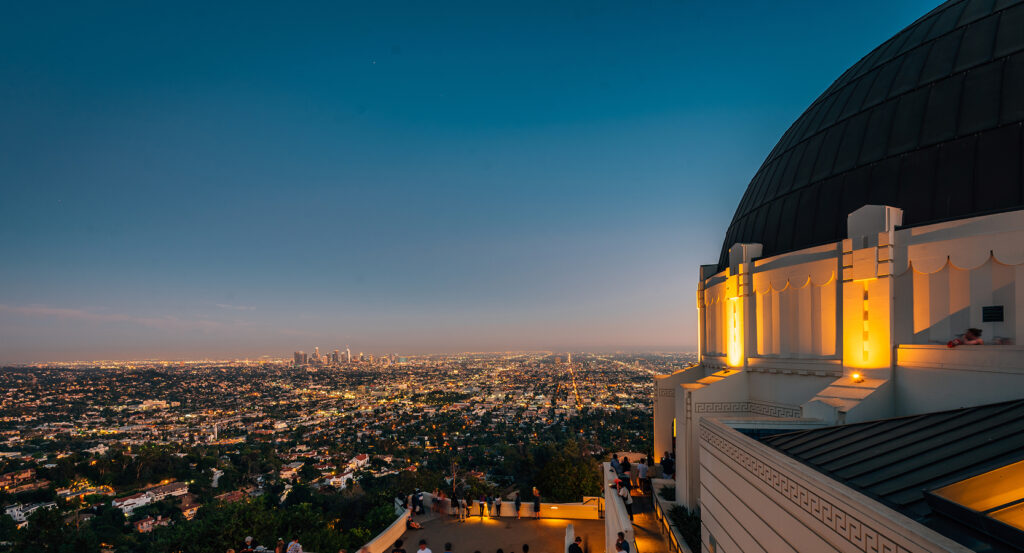
Positioned between La Cañada Flintridge, Eagle Rock, and Pasadena, the area occupies a low transverse range extending through Linda Vista Avenue, Chevy Chase Drive and Figueroa Street between the Verdugo Mountains and the Arroyo Seco. Steep ridges alternate with narrow canyon floors across elevations ranging from 720 to 1,889 feet, with coast live oak woodland, coastal sage scrub and chaparral surviving between residential enclaves. Movement through San Rafael Hills follows winding contour roads that climb from surrounding valleys, cross exposed saddles and descend through drainages including Scholl and Sycamore canyons. Housing occupies many gentler slopes, yet undeveloped ridges and canyon interiors preserve extensive breaks in the urban fabric between Glendale, western Pasadena and Northeast Los Angeles. The result is a greater area whose abrupt topography, native vegetation, canyon corridors and scattered hillside communities retain a distinct mountain geography within one of metropolitan Los Angeles's most intensively developed regions.
What defines San Rafael Hills.
San Rafael Hills is best known for forming the elevated eastern portion of Rancho San Rafael, the 36,403-acre Spanish concession granted to José María Verdugo in 1784 after his service as a soldier at Mission San Gabriel. Verdugo retired from military service in 1790 and established a cattle ranch across territory extending from the Los Angeles River toward the Arroyo Seco and north toward the mountains. Governor Diego de Borica confirmed his title in 1798, securing a property that encompassed present-day Glendale and extensive sections of Northeast Los Angeles. Verdugo died in 1831 and left the rancho jointly to Julio and Catalina Verdugo, whose inheritance remained intact for another three decades. Partition came in 1861, and Julio subsequently mortgaged his portion for $3,445.37 at three percent monthly interest. The debt had risen to $58,750 eight years later, contributing to the breakup of the family holding and the transfer of former rancho acreage to new owners. Court proceedings ultimately divided Rancho San Rafael into thirty-one parcels, opening sections of the hills and surrounding valleys to vineyards, farms, estates and residential settlements. Benjamin Dreyfus acquired 8,000 acres encompassing Eagle Rock and adjoining ground in 1871 with ambitions for grape cultivation, extending the succession of large private holdings that followed the Verdugo era. The San Rafael name survives across the hills as a direct geographic inheritance from one of the earliest Spanish-era ranch properties surrounding Los Angeles.
Residential development entered the hills through a separate series of early twentieth-century ventures that used elevation, tree cover and isolation as primary attractions. Former United States senator Frank P. Flint subdivided 1,700 acres along the northern slopes after acquiring land south of present-day Foothill Boulevard, naming his estate community Flintridge and dividing the property into large homesites. The arrival of electric railway service to nearby Montrose in 1913, accompanied by improved roads and growing automobile ownership, made commuting between the foothills and Los Angeles increasingly practical. Large residences subsequently appeared across Flint's wooded subdivision, whose position on the northern side of the range produced a cooler, greener setting than many surrounding sections of the valley. Chevy Chase Canyon developed through another branch of the same hillside expansion after serving during the early twentieth century as a private game preserve associated with the Doheny family. Its first developer introduced the Chevy Chase Estates name in 1926, carrying residential construction into the largest canyon of the San Rafael Hills. Pasadena's western slopes expanded concurrently: San Rafael Heights and Cheviotdale properties subdivided during the 1900s were divided again between 1922 and 1925 as demand reached previously undeveloped hillside ground. Annandale Estates and Alta San Rafael Estates followed in 1925, adding new residential pockets around the western ridges above the Arroyo Seco. These projects converted separate sections of a difficult mountain range into interconnected residential districts without erasing the canyons and steep slopes that had originally kept the hills apart from surrounding urban grids.
How San Rafael Hills fits.
San Rafael Hills works as the anchor for a daytime outing connecting a steel-and-glass design campus suspended across an arroyo, an Arts and Crafts residence engineered against wildfire and one of the most complete achievements of Greene and Greene.
Begin at ArtCenter College of Design, whose Hillside Campus has occupied 165 wooded acres above Pasadena since 1976. Craig Ellwood Associates conceived its principal building as a long steel-and-glass bridge spanning an arroyo and roadway, translating the difficult hillside site into the central architectural idea. ArtCenter had originated in Los Angeles in 1930 under advertising specialist Edward A. Adams, whose school emphasized direct preparation for professional work in commercial art and design. The move into the San Rafael Hills gave that institution a purpose-built setting whose exposed structural system became inseparable from its public image. Computer laboratories installed during the 1980s placed ArtCenter among the earliest design schools to make digital technology a central part of instruction, strengthening a reputation already closely associated with industrial and transportation design. A South Wing designed by former Ellwood associate James Tyler expanded the hillside complex between 1989 and 1991 without abandoning the architectural logic of the original bridge building. Continue to Lanterman House, commissioned in 1915 by physician Roy Lanterman after he returned to the Crescenta-Cañada Valley where his parents had settled in 1875. Architect Arthur L. Haley designed the U-shaped residence around a central courtyard, combining Mexican Colonial organization with Arts and Crafts interiors. Lanterman insisted on reinforced-concrete foundations, floors and walls after his emergency medical work following the 1906 San Francisco earthquake and fire had made structural fire resistance a personal concern. Thirty-two pairs of French doors connected interior rooms with the courtyard and surrounding pergolas, and the second floor contained a ballroom for the family. Roy and Emily Lanterman remained there until their deaths in 1948 and 1949, and their son Lloyd eventually left the house with its original furnishings to the city in 1987. Conclude at Gamble House, designed by Charles Sumner Greene and Henry Mather Greene for David and Mary Gamble of Cincinnati. The brothers began the commission in 1907, completed drawings by February 1908 and finished construction between March 1908 and January 1909. Their design joined post-and-beam construction, deep roof overhangs, projecting terraces and extensive custom woodwork with furniture created specifically for the residence, producing the most complete surviving example of their mature work. The Gamble family retained the house for more than half a century before transferring it to Pasadena in 1966 through an agreement involving the University of Southern California. Its survival with original architectural fabric and Greene and Greene furnishings gives the residence unusual completeness among major American Arts and Crafts houses. The progression moves from Ellwood's 1970s steel bridge through Haley's fire-conscious concrete residence and culminates in the Greenes' extraordinarily integrated work of architecture, furniture and craftsmanship at the edge of the Arroyo Seco.
Where your story begins.
Foresyte Travel reveals places that feel extraordinary long before you arrive.
Enjoy editorial crafted for luxury travelers.
Foresyte may earn a commission when you book.





































































































