
Why Porter Ranch matters.
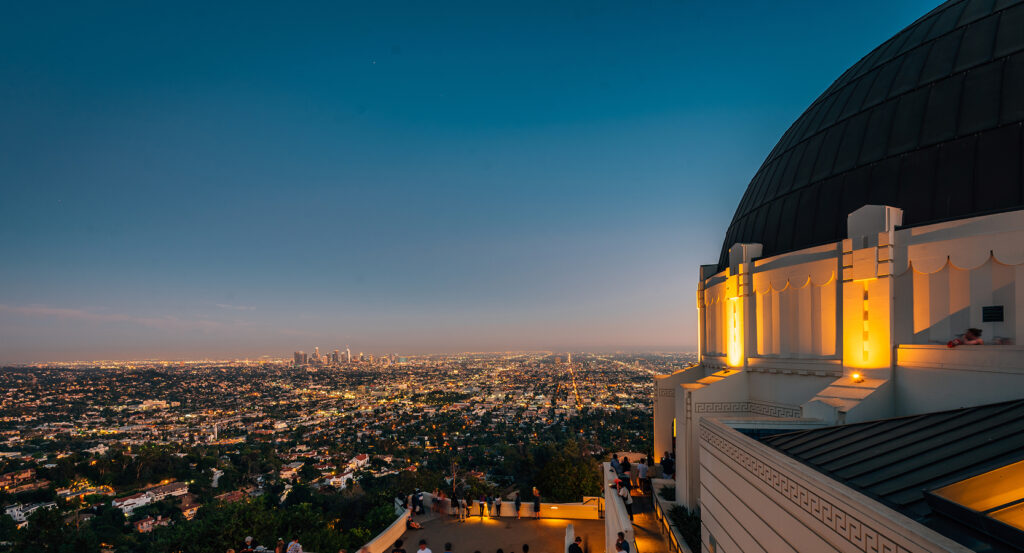
Porter Ranch is an elevated enclave where the Northwest San Fernando Valley's suburban character meets Santa Susana Mountain foothills, late twentieth-century residential tracts and open ridgelines rising above the northern basin.
Positioned between Chatsworth, Northridge, and Granada Hills, the neighborhood occupies ascending ground extending through Reseda Boulevard, Rinaldi Street and Tampa Avenue from the upper valley floor toward the Santa Susana Mountains. Curving residential streets climb through successive elevations, with detached houses arranged across hillsides and ridge crests overlooking broad sections of the San Fernando Valley. Movement through Porter Ranch repeatedly shifts between wide arterial roads and enclosed residential loops, with cul-de-sacs and hillside streets departing sharply from the rectilinear grid covering lower ground to the south. Canyons and undeveloped slopes interrupt the built fabric along the neighborhood's mountain edge, creating pronounced transitions between subdivisions and exposed chaparral terrain. The result is a neighborhood whose ascending streets, expansive residential tracts, canyon breaks and mountain frontage preserve the physical character of one of the San Fernando Valley's last major areas to undergo suburban development.
What defines Porter Ranch.
Porter Ranch is best known for emerging from Benjamin Porter's immense nineteenth-century landholding into one of the San Fernando Valley's latest large-scale suburban communities. Porter joined his cousin George K. Porter and Charles Maclay in purchasing 56,000 acres across the northern half of the former Rancho Ex-Mission San Fernando in 1874, after which the partners divided the property into three large holdings. Benjamin received the western section, encompassing close to 20,000 acres across ground that included the future Porter Ranch and Chatsworth communities. His property remained primarily devoted to ranching and farming, with wheat fields and grazing land occupying a landscape still isolated from the settlements expanding elsewhere in the valley. Porter disposed of substantial acreage during the 1880s, including ground subsequently developed as Chatsworth Park, but thousands of acres beneath the Santa Susana Mountains remained within his family. Ownership passed through his daughter Mary Sophia Porter Sesnon to her children Porter Sesnon, Barbara Sesnon Cartan and William T. Sesnon Jr., preserving a large remnant of the original ranch well into the twentieth century. The Sesnon heirs sold the final 4,150 acres to Macco Realty Company in 1962, closing nearly nine decades of Porter family control over land whose isolation had delayed the suburban conversion already reshaping much of the surrounding valley.
Macco Realty transformed that 4,150-acre acquisition through a development campaign conceived at a scale unusual even within postwar Los Angeles. The initial project covered 6.5 square miles between Reseda Boulevard and Topanga Canyon Boulevard, extending north from Devonshire Street into the mountains. Its design reserved 423 acres for parks and golf courses around a projected 10,000 single-family houses marketed heavily toward professional and managerial households. Macco donated an initial 63-acre park property that opened in 1966, giving the emerging community a large recreational centerpiece during its first construction phase. Residential building accelerated during the 1970s, when cul-de-sacs, curving streets and detached houses spread across terrain that had remained largely undeveloped only a decade earlier. Porter Valley Country Club had opened in 1968, placing a golf course and clubhouse within the residential landscape as the community expanded around it. The neighborhood entered popular culture during production of Steven Spielberg's E.T. the Extra-Terrestrial, with Brasilia Drive, Killimore Avenue, Granada Circle and surrounding streets appearing in the 1982 film and Porter Ridge Park supplying the setting for its final park sequence. Porter Ranch carries an unusually compressed development history, moving within a few decades from a surviving fragment of a nineteenth-century ranch into a vast hillside suburb whose streets became recognizable far beyond the San Fernando Valley through one of American cinema's defining films.
How Porter Ranch fits.
Porter Ranch works as the anchor for a daytime outing connecting the Valley's sole surviving homestead cottage, Barbara Stanwyck's former thoroughbred estate and a mountain pass carrying traces of nineteenth-century overland travel.
Begin at Homestead Acre, where James David and Rhoda Jane Hill settled 110 acres in Chatsworth in 1886 under the Homestead Act. Their daughter Minnie was born there that November and spent most of her life on the property. Between 1911 and 1913, members of the Hill family constructed the redwood cottage now associated with Minnie Hill Palmer and her husband Alfred, replacing the family's earlier house. Minnie returned from several years of farming in Montana in 1920 and raised her family on the Chatsworth property as the surrounding district retained its rural character. She eventually sold the remaining farmland in 1955 but kept the cottage and 1.3 acres, living there until shortly before her death in 1981. The Chatsworth Historical Society became conservator of the property in 1978, and the surviving house remains the San Fernando Valley's only extant homestead cottage. Continue to The Oakridge Estate, surviving from the 1936 creation of Marwyck Ranch by actress Barbara Stanwyck, Zeppo Marx and Marion Marx. The partners invested $200,000 in close to 130 acres, developing a thoroughbred breeding and training operation to specifications supplied by trainer Harry S. Hart. A six-furlong training track occupied the ranch, and Stanwyck commissioned Paul R. Williams and Robert Finkelhor to design her residence on a ten-acre rise overlooking the equestrian property. Stanwyck sold the house to actor Jack Oakie in 1941, after which it acquired the Oakridge name. Marwyck itself passed to J. H. Ryan in 1943 and became Northridge Farms, but Stanwyck's former residence survived the later disappearance of the larger equestrian complex. Conclude at Santa Susana Pass State Historic Park, where high sandstone ridges preserve a transportation corridor used centuries before suburban streets reached the western valley. Chumash, Tongva and Tataviam people traversed the mountains before Spanish travelers adopted the route for horses, livestock and ox carts. Between 1850 and 1861, Indigenous laborers widened the steep passage for stagecoaches and mud wagons, creating the notorious descent known as Devil's Slide. The road subsequently carried the Butterfield Overland Stage and Wells Fargo traffic between Los Angeles and Santa Barbara, with locked wheels and braking equipment sometimes throwing sparks against the rock during dangerous descents. A later quarry within the same mountain landscape supplied stone for construction of the San Pedro Harbor breakwater. The progression moves from a surviving 1880s homestead through Stanwyck's sophisticated thoroughbred estate and culminates among the sandstone ridges of an overland route whose history reaches centuries beyond suburban Porter Ranch.
Where your story begins.
Foresyte Travel reveals places that feel extraordinary long before you arrive.
Enjoy editorial crafted for luxury travelers.
Foresyte may earn a commission when you book.





































































































