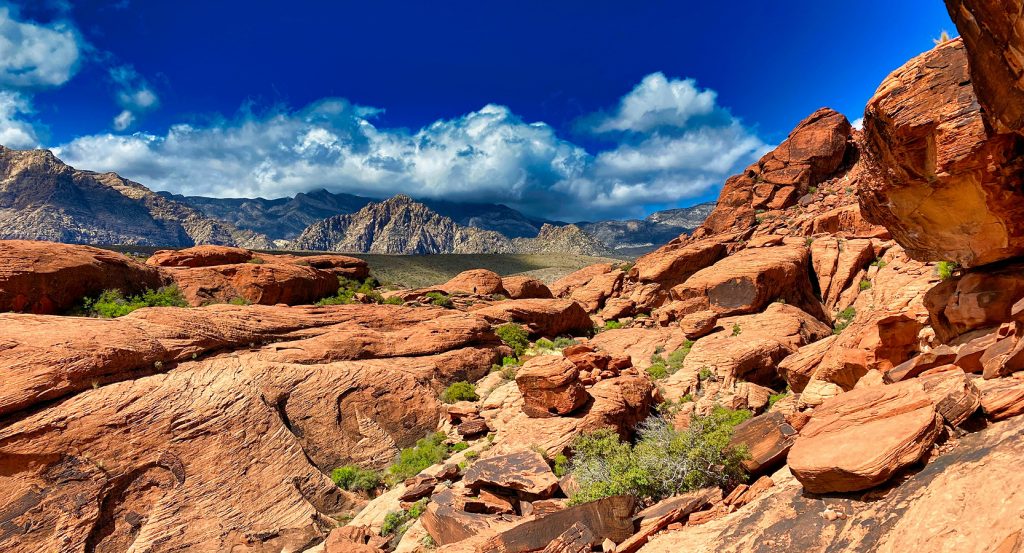
Why Red Rock Canyon National Conservation Area matters.
Red Rock Canyon National Conservation Area is a protected desert landscape where Summerlin West's rugged frontier, geological history, Mojave ecosystems, and outdoor adventure reveal one of the American Southwest's most compelling natural environments.
Set along State Route 159 near the Red Rock Scenic Drive entrance and just steps from the Calico Hills, this expansive conservation area unfolds through towering sandstone escarpments, winding desert canyons, ancient limestone formations, Joshua tree woodlands, and sweeping basin vistas where more than 600 million years of geological change remain exposed across the landscape. Crimson cliffs, sculpted rock faces, broad desert valleys, and dramatic elevation changes create an environment shaped by deep time and relentless natural forces. Geology, ecology, and wilderness define every mile of the preserve.
What defines Red Rock Canyon National Conservation Area.
Red Rock Canyon National Conservation Area is best known for becoming Nevada's first National Conservation Area following federal designation in 1990, protecting 200,000 acres of Mojave Desert where towering Aztec Sandstone cliffs, ancient limestone formations, complex fault systems, and diverse desert ecosystems preserve more than 600 million years of Earth's geological history only 17 miles west of the Las Vegas Strip. The area's most recognizable formations originated 180 million years ago when immense desert dunes, comparable in scale to the modern Sahara, hardened into the cross-bedded Aztec Sandstone that now forms the canyon's striking red escarpments, while older limestone exposures record a time when the region lay beneath a shallow tropical sea filled with marine life. Powerful tectonic forces later uplifted and folded these rock layers along the Keystone Thrust Fault, placing older Paleozoic limestone above much younger Jurassic sandstone in one of North America's most significant geological features. The conservation area encompasses the 13-mile Scenic Drive, internationally respected rock climbing routes, extensive hiking and mountain biking trails, seasonal waterfalls at Pine Creek, archaeological sites preserving evidence of Indigenous occupation spanning thousands of years, and habitats supporting desert tortoises, bighorn sheep, wild burros, golden eagles, and more than 200 bird species. Since its designation, Bureau of Land Management scientists have continued expanding geological research, habitat restoration, archaeological documentation, wildfire management, and conservation initiatives protecting Nevada's first National Conservation Area while accommodating millions of annual visitors through carefully managed recreation programs.
Ancient seabeds, fossil-bearing limestone, Jurassic sand dunes transformed into stone, and the immense Keystone Thrust expose an uninterrupted geological record that few desert landscapes reveal with comparable clarity. Wind, water, tectonic uplift, and erosion shaped cliffs exceeding 3,000 feet in relief, carving canyons, exposing cross-bedded sandstone, and revealing rock layers that document dramatic environmental changes across hundreds of millions of years. Ongoing geological research, habitat stewardship, archaeological preservation, and responsible recreation ensure the conservation area continues protecting one of the Mojave Desert's most scientifically important landscapes for future generations.
How Red Rock Canyon National Conservation Area fits.
Red Rock Canyon National Conservation Area works as the centerpiece of an exploration through Las Vegas' striking desert landscapes.
Begin at Red Rock Canyon Visitor Center, where interpretive exhibits introduce the geology, wildlife, and history of the conservation area before beginning the Scenic Drive. Continue to Calico Hills, whose vividly colored sandstone formations provide some of the area's most recognizable hiking and climbing terrain. Conclude at Spring Mountain Ranch State Park, where historic ranch buildings, cottonwood groves, and the dramatic backdrop of the Spring Mountains provide a memorable finale celebrating another chapter of southern Nevada's natural and cultural history. The progression moves naturally from geological interpretation to immersive desert scenery before concluding through one of the region's most significant historic landscapes, revealing why the western edge of Las Vegas offers one of the Southwest's most rewarding outdoor experiences.
Where your story begins.
Foresyte Travel reveals places that feel extraordinary long before you arrive.
Enjoy editorial crafted for luxury travelers.
Foresyte may earn a commission when you book.