Why you should experience The Manhattan Club in New York, NY.
The Manhattan Club is a storied residence hotel where Midtown's theatrical tradition, concert-hall prestige, grand-hotel history and culture of repeat New York ritual converge within a pioneering experiment in Manhattan fractional ownership.
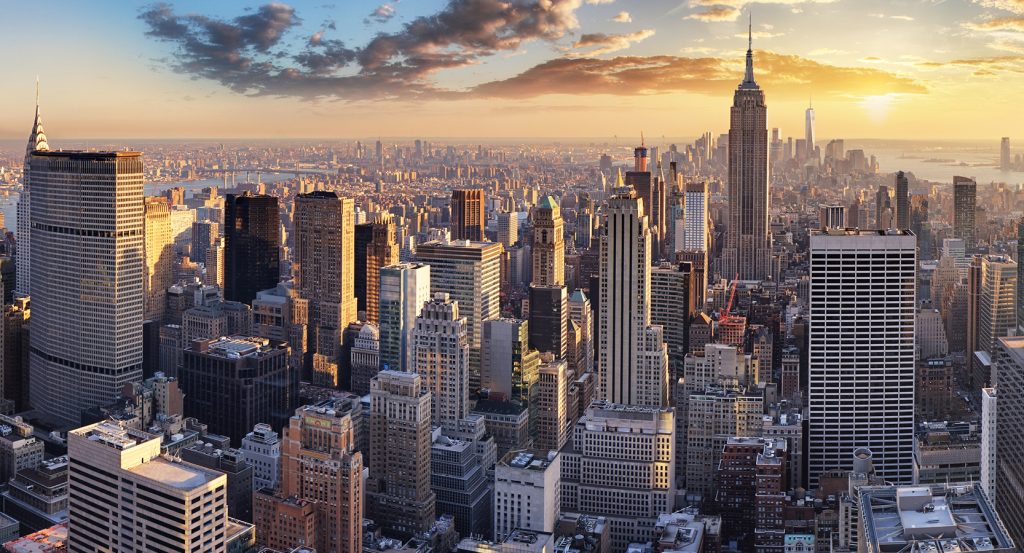
Set along West 56th Street near 7th Avenue and just steps from Carnegie Hall, the property occupies the northern portion of the 1927 Park Central complex, a Renaissance Revival hotel designed by Gronenberg & Leuchtag and originally developed with 1,450 guestrooms. Developer Ian Bruce Eichner acquired the building in 1995 and converted half of those rooms into The Manhattan Club, creating an all-suite ownership property within the fabric of one of Midtown's great interwar hotels. The concept deliberately treated New York as a place owners would return to repeatedly for Broadway, classical music, dining and cultural life, giving the traditional hotel suite the permanence of a personal city residence. The result is a property where the architecture of 1920s hotel New York became the foundation for a distinctly late twentieth-century idea, owning a recurring piece of Manhattan itself.
What you should know about The Manhattan Club.
The Manhattan Club is best known for becoming New York City's first fractional ownership property after its concept began taking physical form in 1994 with the $60 million purchase of a property at the southwest corner of West 56th Street and 7th Avenue, followed by the incorporation of The Manhattan Club Timeshare Association in 1996. Its physical setting reaches considerably further back: The Manhattan Club occupies part of the Park Central Hotel complex, a 25-story Renaissance Revival building designed by Gronenberg & Leuchtag, completed in 1926 and opened on June 12, 1927. The original Park Central developed into one of Midtown's major hotels before Sheraton purchased it in 1948, subsequently operating it as the Park-Sheraton and later New York Sheraton before the property passed through additional ownership and branding chapters. Ian Bruce Eichner acquired the building in 1995 and converted half of its 1,450 guestrooms into The Manhattan Club, creating 266 all-suite ownership units along the building's West 56th Street side. The Manhattan Club Timeshare Association was formally incorporated on May 29, 1996, initially under the name The Manhattan Club Urban Ownership Inc., amended its name on June 5 and registered The Manhattan Club as an assumed name that August, giving the project an unusually traceable emergence from historic hotel conversion into a new form of New York accommodation.
That reinvention preserved a connection to a building whose earlier hospitality history was inseparable from twentieth-century New York celebrity and performance. The Park Central hosted figures including Jackie Gleason and Eleanor Roosevelt, while its Park-Sheraton era entered New York crime history on October 25, 1957 when Murder, Inc. boss Albert Anastasia was assassinated while sitting in the hotel barber shop, an episode whose photographs became enduring images of the city's organized-crime era. The Manhattan Club subsequently redirected part of this enormous conventional hotel toward a fundamentally different model, selling recurring occupancy in Midtown to owners who treated Broadway performances, classical concerts and seasonal New York traditions as repeat rituals. Nearly two decades of ownership programming are now explicitly woven into the property's own identity, making its history a progression from 1920s grand-hotel scale through Sheraton-era Manhattan mythology into one of the city's earliest attempts to make a Midtown hotel function as a recurring private residence.
How to fold The Manhattan Club into your trip.
The Manhattan Club works as the anchor for an afternoon tracing the music, broadcasting and performance history concentrated along Midtown's western edge.
Begin at Carnegie Hall, where industrialist Andrew Carnegie financed William Burnet Tuthill's Italian Renaissance-inspired concert hall, inaugurated on May 5, 1891 with Pyotr Ilyich Tchaikovsky conducting during its opening festival, establishing West 57th Street as one of America's most consequential musical addresses. Continue to Ed Sullivan Theater, where architect Herbert J. Krapp's 1927 theater opened as Hammerstein's Theatre before becoming a CBS television studio and, from 1948 to 1971, the home of The Ed Sullivan Show, whose stage introduced national audiences to performers ranging from Elvis Presley to the Beatles. Conclude at Museum of Arts and Design, founded in 1956 as the Museum of Contemporary Crafts and now occupying Brad Cloepfil's reworked building at Columbus Circle, where craft, materials and contemporary making extend the afternoon from performance into the physical disciplines of artistic production. The progression moves from Carnegie Hall's classical ambition through the mass-cultural power of broadcast television into contemporary craft, revealing the unusually concentrated creative history surrounding The Manhattan Club's West 56th Street address.
Where your story begins.
Foresyte Travel reveals places that feel extraordinary long before you arrive.
Experience premium editorial crafted for luxury travelers.