
Why The Peninsula New York matters.
The Peninsula New York is a storied hotel where Midtown's Fifth Avenue prestige meets an early skyscraper hotel that survived financial failure, serial reinvention and a pivotal Hong Kong acquisition before becoming Peninsula's first North American property.
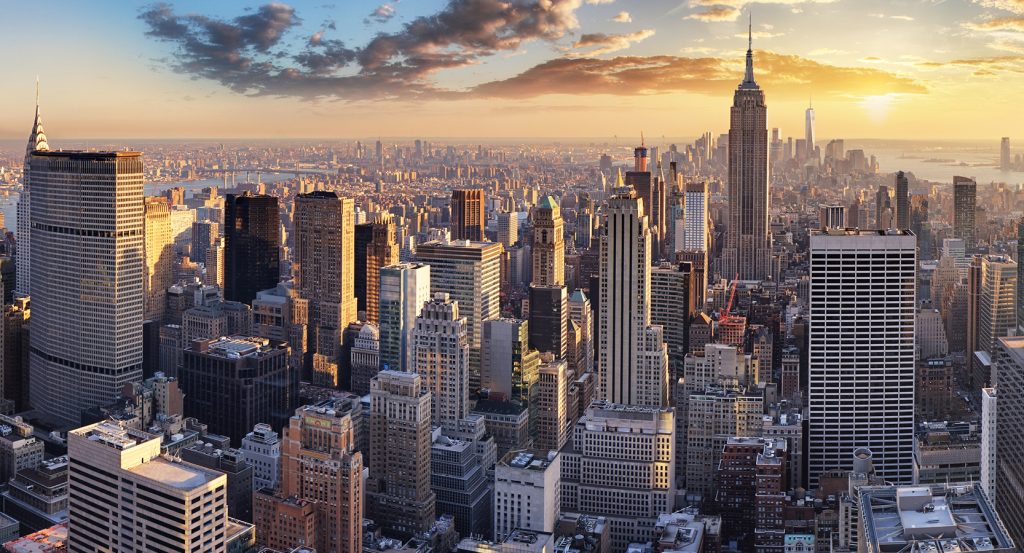
Set along 5th Avenue near West 55th Street and just steps from Paley Park, the hotel occupies one of Midtown's most concentrated cultural and commercial corridors, between Rockefeller Center, Central Park and the institutional architecture clustered around Upper 5th Avenue. Limestone, granite, copper cornices and deeply modeled upper stories give the building the vertical formality associated with Manhattan's first generation of high-rise luxury hotels. A double-height lobby and marble staircase create a ceremonial transition from the dense avenue frontage into the property's principal interior spaces. The uppermost levels rise above neighboring rooflines, opening the building toward the Midtown skyline after the comparatively enclosed architectural sequence at street level. The result is a hotel whose 5th Avenue stature derives equally from its commanding physical presence and an unusually turbulent history of survival and reinvention.
What defines The Peninsula New York.
The Peninsula New York is best known for its origins as the Gotham Hotel, developed by the Fifty-Fifth Street Company during 5th Avenue's early twentieth-century transformation from a mansion corridor into a center of luxury commerce and hospitality. U.S. senator Mark Hanna and financier Thomas Fortune Ryan became major investors, with Senator Thomas C. Platt providing additional financing and Washington hotelier Frank V. Bennett taking a long lease before completion. The Gotham debuted in 1905 with Hanna's widow as its first patron and prominent early residents including Platt and railroad financier James J. Hill. A restrictive New York liquor law immediately created an existential problem: nearby Fifth Avenue Presbyterian Church prevented the Gotham from securing the approvals required to sell alcohol. State legislators attempted to change the law, but Governor Frank W. Higgins blocked one effort and Governor Charles Evans Hughes vetoed another. The commercial disadvantage contributed to the property's foreclosure in 1908, giving one of 5th Avenue's grandest new hotels a remarkably unstable beginning. Metropolitan Life Insurance Company acquired the Gotham in 1932 and later introduced 5th Avenue storefronts, integrating retail more directly into the property's economics. Sol Goldman and Alex DiLorenzo acquired the building in 1965, beginning another ownership chapter before Swiss hotelier René Hatt leased it in 1979. Hatt pursued the Nova-Park Gotham concept through an ambitious rehabilitation, but lawsuits and financial problems overwhelmed the project and the closed property passed into another period of uncertainty. Pratt Hotel Corporation, Southmark Corporation, Goldman, Arthur Cohen, William Zeckendorf Jr. and other investors subsequently assembled a new ownership group and revived the stalled redevelopment. A licensing arrangement with Pierre Cardin connected the property to Maxim's de Paris, and the building reopened under that name in 1987. The Maxim's venture struggled financially despite the enormous investment behind its revival, placing the property back on the market shortly after its return. Across eight decades, the Gotham had moved through political investment, foreclosure, insurance-company ownership, real-estate speculation and two failed repositioning campaigns before the transaction that finally stabilized its place among 5th Avenue's leading hotels.
The Hongkong and Shanghai Hotels agreed to acquire the Maxim's operating interest for $127 million in 1988, giving the Kadoorie-controlled company its first hotel in North America and securing a New York foothold for a hospitality business whose Peninsula name originated in Hong Kong. Michael Kadoorie was already leading HSH when the company entered Manhattan, extending a family stewardship of the group that had begun decades earlier under Elly, Lawrence and Horace Kadoorie. HSH assumed control in October 1988 and renamed the property The Peninsula New York, linking 5th Avenue directly with the service culture developed at The Peninsula Hong Kong since 1928. New York City designated the former Gotham a landmark in June 1989, formally protecting a building that had narrowly survived several periods of financial and physical uncertainty. HSH closed the property for a major rehabilitation in 1998, committing between $45 million and $55 million to a comprehensive renewal that also modernized fundamental building systems. AAA began awarding the property Five Diamond status in 1999, initiating a long-running formal recognition of the repositioned hotel. The property later became HSH's American flagship as the Peninsula portfolio expanded to Beverly Hills and Chicago. Bill Rooney Studio led another comprehensive redesign beginning in 2024, drawing upon Manhattan's 1920s decorative culture across the principal public areas. Mexican artist Ricardo Mazal created a commissioned triptych for the Palm Court, introducing a major contemporary artwork into the historic interior sequence. MICHELIN awarded the hotel a Key in the inaugural United States hotel selection that same year, adding another institutional distinction during the property's latest renewal. HSH's stewardship has given the former Gotham something its earlier incarnations repeatedly lacked: continuity across decades, allowing a hotel once defined by foreclosure and failed reinventions to become the enduring American anchor of the Peninsula organization.
How The Peninsula New York fits.
The Peninsula New York works as a Midtown base for a sequence connecting a pioneering pocket park, a Gothic church shaped by civic generosity and an eighteenth-century institution created to advance New York's skilled trades.
Begin at Paley Park, established by CBS founder William S. Paley as a memorial to his father Samuel and opened in May 1967 on East 53rd Street. Zion & Breen Associates shaped the compact site around honey locust trees, movable seating and a twenty-foot water wall whose sound masks the surrounding city. Eero Saarinen tables and Henry Bertoia chairs joined the composition, giving the project an unusual concentration of modern design within a tiny Manhattan parcel. Its success helped establish the vest-pocket park as an influential model for creating public space on constrained urban sites. Continue to Saint Thomas Church Fifth Avenue, where Ralph Adams Cram and Bertram Grosvenor Goodhue designed the parish's fourth church after winning an architectural competition. Rector Ernest M. Stires diverted the congregation's accumulated building fund to San Francisco earthquake relief in 1906, and unsolicited donations subsequently replenished the money required for the New York project. The cornerstone followed in 1911, with the congregation entering the building in 1913 and consecration occurring in 1916. Conclude at General Society of Mechanics and Tradesmen, founded by twenty-two artisans in 1785 to support craftsmen and their families. The organization developed educational programs alongside its charitable work and moved into the former Berkeley School on West 44th Street in 1899. Andrew Carnegie contributed more than half a million dollars during the following decade, helping the Mechanics Institute expand technical instruction as industrial New York demanded increasingly sophisticated skills. Its collections later incorporated John M. Mossman's extraordinary assemblage of historic locks, keys and safes, preserving the material culture of trades that helped construct the city. The progression moves from Paley's influential experiment in concentrated public space through a church whose construction emerged from an extraordinary act of civic generosity and culminates with an institution that has supported New York craftsmanship, technical education and material heritage since the eighteenth century.
Where your story begins.
Foresyte Travel reveals places that feel extraordinary long before you arrive.
Enjoy editorial crafted for luxury travelers.
Foresyte may earn a commission when you book.







































































































