
Why The Kitano Hotel New York matters.
The Kitano Hotel New York is a pioneering hotel where Murray Hill's diplomatic character meets Tsuguto Kitano's postwar vision for Japanese hospitality in Manhattan, five decades of continuous Japanese ownership and a cultural program spanning Japanese cuisine, visual art and jazz.
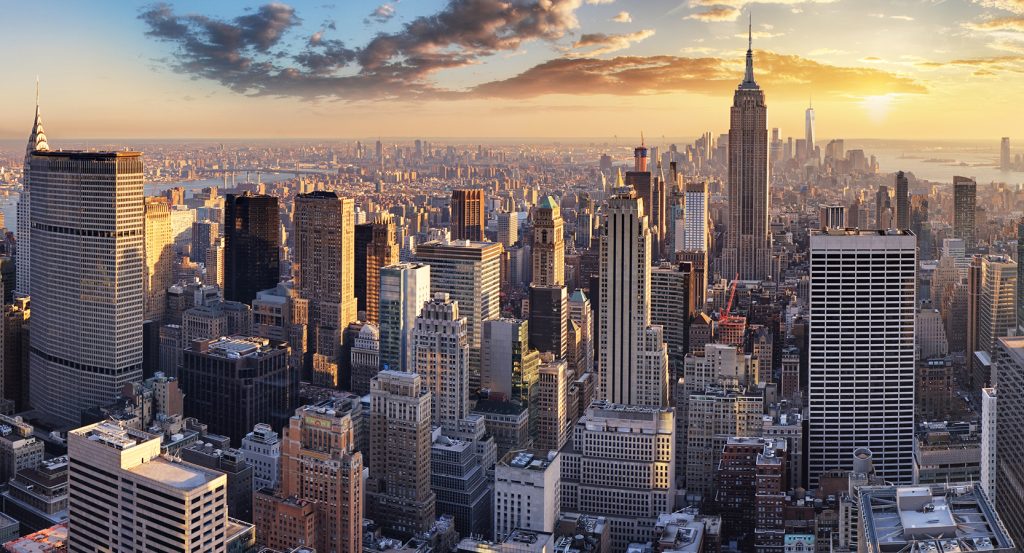
Set along Park Avenue near East 38th Street and just steps from Bryant Park, the hotel occupies a prominent corner where Murray Hill's brownstones and diplomatic residences meet the larger office towers extending north toward Grand Central Terminal. The building presents a restrained masonry exterior along Park Avenue, with a disciplined window grid and understated entrance creating a quieter architectural presence than the glass towers farther north. Japanese decorative arts, floral arrangements and carefully composed public rooms carry the property's cultural orientation inward, creating an immediate relationship between its Manhattan setting and the hospitality traditions that inspired its founding. Park Avenue frontage connects the interiors with one of Midtown's broadest north-south corridors, placing the building within walking distance of the civic, architectural and cultural institutions clustered around Murray Hill. The result is a hotel whose physical restraint, Japanese cultural character and unusually enduring ownership make its Park Avenue address the American expression of a hospitality philosophy conceived during a formative period in postwar relations between Japan and New York.
What defines The Kitano Hotel New York.
The Kitano Hotel New York is best known for opening in 1973 as an unprecedented Japanese-owned and operated hotel on the American East Coast, realizing an idea Tsuguto Kitano had formed during the 1964 New York World's Fair. Kitano Construction had entered the United States through work on the fair's Japan Pavilion, giving Tsuguto Kitano direct exposure to the difficulties Japanese business travelers encountered when navigating language and cultural differences in New York. He conceived a hotel that could bridge those differences through Japanese hospitality while operating within the commercial center of Manhattan. Kitano subsequently acquired the Murray Hotel, an apartment property previously owned by a mining company connected with the Rockefeller family, and converted it for the new operation. Hotel Kitano opened in 1973 at 66 Park Avenue, the same year Kitano Construction entered the Second Section of the Tokyo Stock Exchange. John Lindsay presented Kitano with a Key to the City during the opening period, giving the venture a prominent civic welcome as Japanese investment and commercial relationships with the United States were expanding. The project followed another important Kitano hospitality venture in Tokyo, where the company had completed Kitano Arms in 1964 as a furnished luxury apartment hotel designed by Junzo Yoshimura. The New York property expanded substantially in 1995 through additional hotel spaces, meeting facilities, bars and restaurants and reopened under The Kitano name. Kitano Construction marked the New York hotel's fortieth anniversary in 2013, when Mayor Michael Bloomberg extended formal recognition to a property that had retained the same Japanese ownership through four decades of Manhattan hotel consolidation. The Kitano Hotel New York represents a rare continuous line from Japan's 1964 international emergence through Tsuguto Kitano's personal experience in New York to a Park Avenue institution still controlled by the organization that established it in 1973.
Hakubai gives the hotel its clearest culinary connection with Japan through kaiseki, the highly structured multi-course tradition rooted in seasonality, sequence and precise presentation. Tatami elements, shoji-inspired details and Japanese ceramics extend that culinary culture into the restaurant's physical setting, placing formal Japanese dining inside a Midtown hotel conceived from its origin as a bridge between the two countries. Jazz at Kitano developed a second cultural axis through live performances staged within the hotel, establishing a dedicated Manhattan platform for musicians inside a property otherwise strongly associated with Japanese traditions. Pianists, vocalists, ensembles and composers have used the intimate performance room for evening programs, connecting the hotel with New York's continuing small-club jazz culture. The combination carries particular significance in the context of Japan's deep twentieth-century engagement with American jazz, giving the hotel a cultural program that links two artistic traditions through performance. Original and rotating artworks deepen the Japanese presence across the public interiors, extending the property's cultural role beyond its restaurant. Kitano's long ownership provides unusual continuity for these programs, allowing Japanese dining, art and music to develop inside the same institution across successive eras of Midtown hospitality. The 1995 expansion strengthened that foundation by increasing the hotel's restaurant, bar and gathering spaces and formally introducing The Kitano name under which the property entered its second major chapter. The relationship between Hakubai and Jazz at Kitano gives the building two distinct cultural anchors, one grounded in Japanese culinary form and the other in a musical tradition shared intensely between Japan and the United States. The Kitano Hotel New York carries Tsuguto Kitano's original cross-cultural purpose into daily operation through food, music and art, giving its half-century history a cultural continuity unusually specific to the institution.
How The Kitano Hotel New York fits.
The Kitano Hotel New York works as a Murray Hill base for an outing connecting Nordic-American cultural exchange, Pierpont Morgan's transformation of private collecting into a public institution and the railway complex that permanently reorganized Midtown.
Begin at Scandinavia House, the permanent cultural center created by the American-Scandinavian Foundation, an organization established in 1911 by Danish-American industrialist Niels Poulson and fellow leaders from business and education to strengthen exchange between the United States and the Nordic countries. Polshek Partnership Architects designed the Park Avenue building after the foundation pursued a permanent home during the early 1990s, and Scandinavia House opened in October 2000 with festivities attended by heads of state and royal representatives from across the Nordic region. Its galleries, cinema, performance spaces and educational programs gave the foundation a purpose-built architectural center after decades of operating from changing New York addresses. Continue to The Morgan Library & Museum, whose architectural core began when Pierpont Morgan commissioned Charles Follen McKim in 1902 to create a private library beside his Madison Avenue residence. McKim completed the marble Renaissance-inspired building in 1906, organizing its extraordinary interiors around Morgan's manuscripts, rare books, drawings and other collections. J. P. Morgan Jr. transformed the library into a public institution in 1924, Benjamin Wistar Morris completed an annex in 1928 and Renzo Piano later unified the expanding campus through glass and steel additions completed in 2006. Conclude at Grand Central Terminal, created after the New York Central and Hudson River Railroad committed to replacing Grand Central Station with an electrified terminal suited to the enormous growth of metropolitan rail travel. Reed & Stem won the original architectural competition, Warren & Wetmore joined the project and engineer William J. Wilgus developed the revolutionary two-level track arrangement that placed trains underground and released valuable air rights above the rail yards for Terminal City. Grand Central opened in 1913, its Beaux-Arts concourse, celestial ceiling and integrated circulation becoming the centerpiece of an urban development strategy that reshaped Park Avenue and Midtown around the terminal. The progression moves from Poulson and Polshek's institutional home for Nordic-American exchange through Morgan and McKim's conversion of private collecting into public culture and culminates in Wilgus, Reed & Stem and Warren & Wetmore's railway complex, tracing international exchange, patronage and infrastructure along the Park Avenue corridor surrounding The Kitano Hotel New York.
Where your story begins.
Foresyte Travel reveals places that feel extraordinary long before you arrive.
Enjoy editorial crafted for luxury travelers.
Foresyte may earn a commission when you book.







































































































