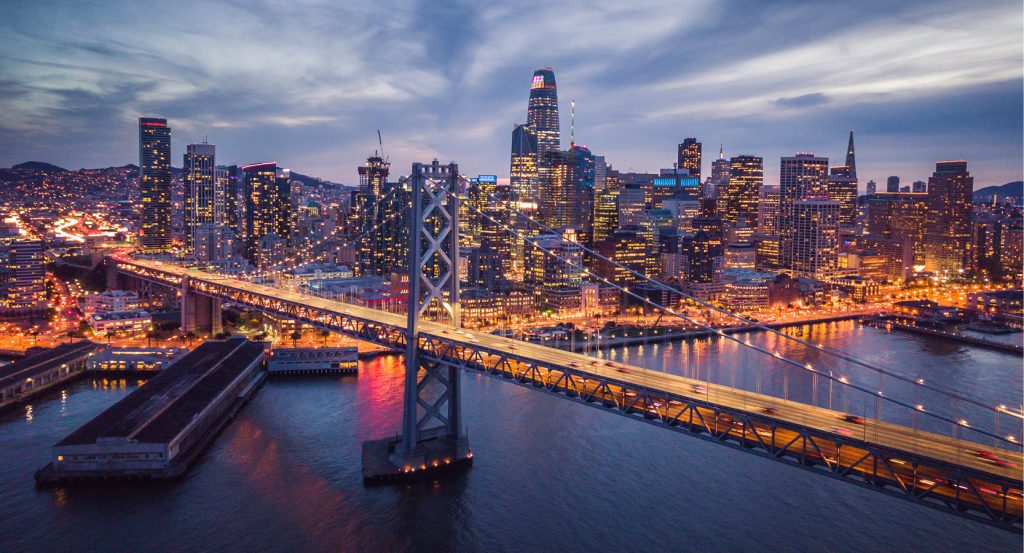
Why you should experience The Ritz-Carlton Club in San Francisco, California.
The Ritz-Carlton Club is a storied residence club where Financial District's publishing ambition, skyscraper experimentation, newspaper culture and instinct for architectural resurrection converge inside the former San Francisco Chronicle headquarters.
Set along Market Street near Kearny Street and just steps from Lotta's Fountain, the property occupies the Old Chronicle Building, commissioned by publisher Michael H. de Young from Chicago architects Daniel Burnham and John Wellborn Root and completed in 1889 as San Francisco's first skyscraper and then the tallest building on the West Coast. The Richardsonian Romanesque structure originally rose beneath a four-story bronze clock tower before fireworks celebrating Mayor Eugene Schmitz's 1905 reelection ignited the tower, while the 1906 earthquake and ensuing fire subsequently gutted much of the interior and prompted reconstruction under architect Willis Polk. San Francisco Chronicle remained until 1924, after which Home Mutual Savings & Loan radically altered the exterior in 1962 by cutting back masonry ornament and applying aluminum, glass and porcelain panels over Burnham & Root's original composition. The result is a property where Michael H. de Young, Burnham & Root, Eugene Schmitz, Willis Polk and Home Mutual Savings & Loan compress nearly a century of San Francisco newspaper power and architectural upheaval into the masonry beneath The Ritz-Carlton Club.
What you should know about The Ritz-Carlton Club.
The Ritz-Carlton Club is best known for emerging from developer Jim Hunter's reconstruction of 690 Market Street, approved in 2004 and begun in 2005 as an exceptionally complex residential conversion that removed the 1960s cladding, restored the surviving masonry facade, seismically strengthened the original structure and introduced a vertical addition above it. Architect Charles F. Bloszies designed the intervention as a deliberately recessive contemporary counterpart to the older building, while preservation architect Page & Turnbull assisted with recovering Burnham & Root's exterior and engineers strengthened original cast-iron columns with reinforced-concrete jackets, installed new foundations beneath existing load-bearing columns, arches and walls and supported the heavy masonry with elaborate shoring during construction. Twelve additional stories were stepped back behind the original street wall, ultimately producing a 24-story composition containing 101 units across The Ritz-Carlton Club and Residences, with 44 fractional club residences and 57 whole-ownership residences documented within the completed development. Residents began occupying the property in November 2007, and the project subsequently received California Construction's 2008 Best Redevelopment distinction and a Structural Engineers Association of Northern California Excellence in Engineering Award.
HCT Investments developed the ownership program into two interlocking residential formats, placing Ritz-Carlton Destination Club fractional interests beside privately held condominiums within the restored Chronicle structure. Fractional interests initially entered the market at $200,000 for a one-twelfth share, while Ritz-Carlton's club structure translated that ownership into a defined annual-use model and attached the service culture of The Ritz-Carlton to an urban residence. The completed property became one of the brand's distinctive city-based residential experiments, combining the Ritz-Carlton Destination Club program with wholly owned residences at the same address while developer HCT Investments carried sales of the residential component from May 2006 through January 2010. Together, HCT Investments, The Ritz-Carlton Destination Club, Charles F. Bloszies and Page & Turnbull made the property's contemporary character inseparable from the resurrection of 690 Market Street, turning a former newspaper plant into a residential club whose ownership structure, architectural engineering and preservation program were conceived as parts of the same reinvention.
How to fold The Ritz-Carlton Club into your trip.
The Ritz-Carlton Club works as the anchor for an afternoon tracing public memory, intellectual culture and nineteenth-century metropolitan ambition through Financial District.
Begin at Lotta's Fountain, donated to San Francisco by actress Lotta Crabtree in 1875 and constructed from cast iron, bronze and glass with lion-head water spouts and bronze panels depicting California history, later becoming the gathering point for San Francisco's annual commemoration of the 1906 earthquake at 5:12 a.m. Continue to Mechanics' Institute, founded in 1854 by builders, artisans and engineers with only four books and $300 to provide practical education as the Gold Rush waned, while its chess club, also founded in 1854, became the oldest continuously operating chess club in the United States and subsequently hosted José Capablanca, Alexander Alekhine, Bobby Fischer and Boris Spassky. Conclude at Palace Hotel, conceived by Bank of California founder William C. Ralston as an expression of San Francisco's aspirations toward world-city luxury and completed in 1875 after Ralston died following the collapse of his bank, leaving Senator William Sharon to carry the project forward. The progression moves from Crabtree's public gift through the Mechanics' Institute's Gold Rush-era intellectual culture into Ralston's metropolitan ambition, revealing the nineteenth-century San Francisco that produced the newspaper empire eventually housed beneath The Ritz-Carlton Club.
Where your story begins.
Foresyte Travel reveals places that feel extraordinary long before you arrive.
Experience premium editorial crafted for luxury travelers.