
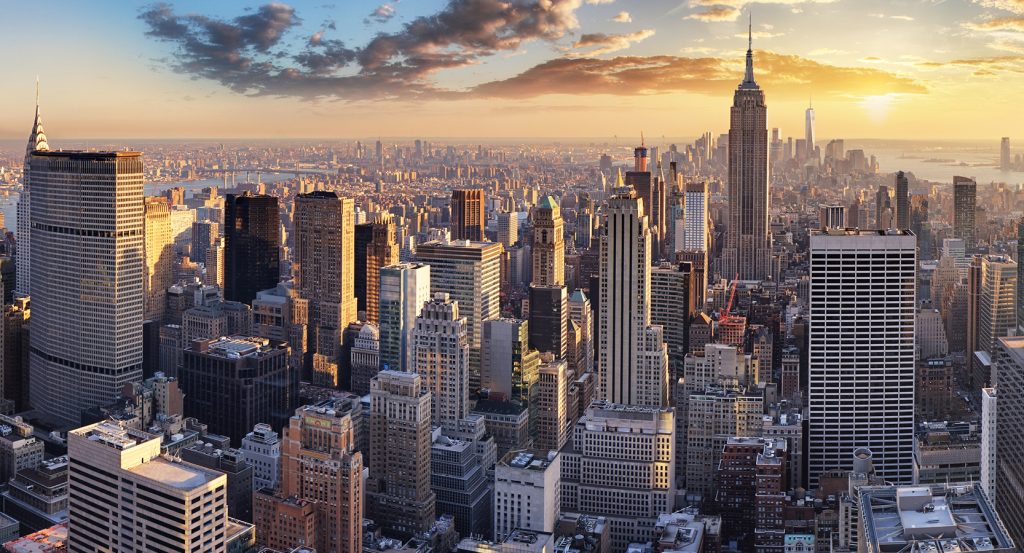
Why The Woolworth Building matters.
The Woolworth Building is a soaring architectural masterpiece where Lower Manhattan's commercial ambition, artistic craftsmanship, engineering innovation, and financial history converge within one of America's defining early skyscrapers.
Set along Broadway near Park Place and just steps from City Hall Park, the tower combines intricate terra-cotta ornamentation, Gothic Revival detailing, richly decorated interiors, and an unmistakable skyline presence into an environment that captures the confidence of New York's early twentieth-century building boom. Pointed arches, decorative gargoyles, gilded mosaics, and dramatic vaulted spaces reflect an era when engineering achievement and artistic expression advanced together. Architects, historians, photographers, and admirers of urban design continue gathering here to appreciate a structure whose influence reshaped the future of skyscraper construction. The result is an experience defined by architectural brilliance, engineering achievement, and one of New York City's most celebrated skyscrapers.
What defines The Woolworth Building.
The Woolworth Building is best known as the 792-foot Gothic Revival skyscraper commissioned by retail entrepreneur Frank W. Woolworth and completed in 1913 as the corporate headquarters of the F. W. Woolworth Company, becoming the tallest building in the world upon its opening until the completion of 40 Wall Street in 1930. Designed by architect Cass Gilbert and constructed by the Thompson-Starrett Company at a reported cost of $13.5 million paid entirely in cash by Woolworth, the 57-story tower employed a pioneering steel-frame structure clad in glazed architectural terra cotta that combined fire resistance with elaborate Gothic ornament inspired by European cathedrals. President Woodrow Wilson ceremonially illuminated the building during its dedication on April 24, 1913, using a telegraph signal sent from the White House, while the richly decorated lobby incorporated marble imported from Europe, vaulted mosaic ceilings, sculptural programs by René Paul Chambellan, bronze detailing, and humorous caricatures of Cass Gilbert and Frank W. Woolworth. The building was designated a National Historic Landmark in 1966 and a New York City Individual Landmark in 1983, later undergoing extensive restoration and adaptive reuse that converted the upper floors into residential condominiums while preserving the historic lobby and maintaining office space within one of Manhattan's most influential skyscrapers.
Cass Gilbert's design established a new architectural style for high-rise construction by demonstrating that steel-frame engineering could coexist with historically inspired ornament on an unprecedented vertical scale. The tower introduced innovations in elevator systems, wind bracing, foundation engineering, and high-rise construction techniques that influenced commercial skyscraper design throughout the twentieth century. Located within Lower Manhattan's civic district, the building stands near City Hall, the Civic Center, and Broadway, reflecting the close relationship between New York's financial expansion, municipal government, and architectural development during the Progressive Era. Together, these engineering advances, preservation initiatives, artistic achievements, and commercial milestones demonstrate how The Woolworth Building continues representing one of the most influential works in the history of American architecture.
How The Woolworth Building fits.
The Woolworth Building works as the culmination of a day exploring Lower Manhattan's remarkable blend of architecture, commerce, and civic history.
Begin at Federal Hall National Memorial, where the nation's earliest federal government and George Washington's presidential inauguration establish the historical foundations of Lower Manhattan before walking north along Broadway. Continue to Trinity Church, whose nineteenth-century Gothic Revival architecture and centuries of New York history provide meaningful context for the city's architectural evolution. Continue to City Hall Park, where landscaped public grounds and surrounding civic buildings frame the skyline while offering excellent perspectives of the tower rising above Broadway. Conclude at The Woolworth Building, where refined Gothic craftsmanship, pioneering engineering, and enduring architectural influence provide a fitting finale that reflects New York City's ascent as a global center of commerce and design.
Where your story begins.
Foresyte Travel reveals places that feel extraordinary long before you arrive.
Enjoy editorial crafted for luxury travelers.
Foresyte may earn a commission when you book.







































































































