Why Tilikum Place Cafe matters.
Tilikum Place Cafe is a distinctive European-inspired neighborhood restaurant where Belltown's historic commercial streets meet Ba Culbert's seasonal cooking, the Dutch baby tradition and an enduring approach to Seattle's independent café culture.
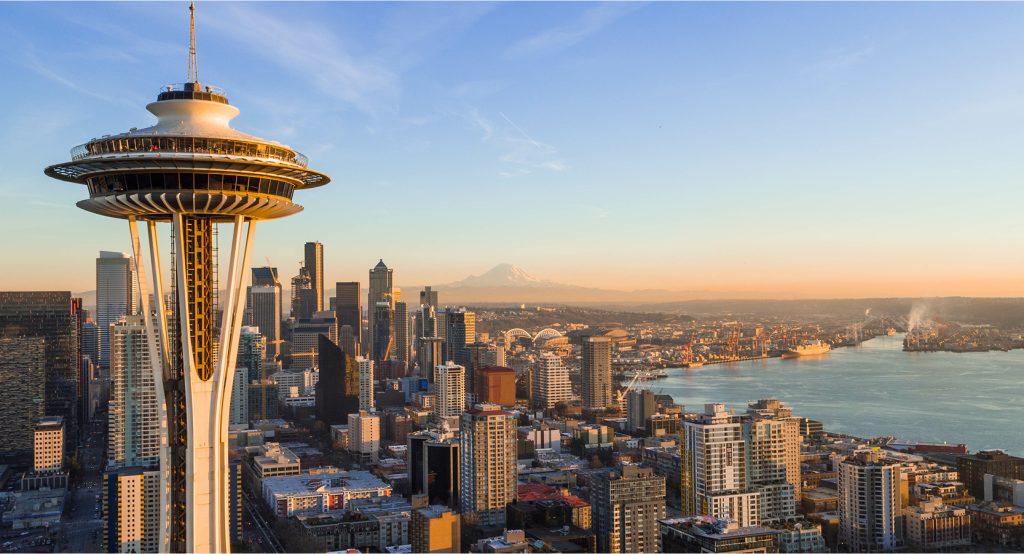
Situated on Cedar Street near its intersection with 4th Avenue, the restaurant occupies a former print-shop building beside the triangular public square that marks the meeting of Belltown and the Denny Regrade, within walking distance of Seattle Center. Floor-to-ceiling windows admit daylight and frame views toward the Space Needle, establishing a direct relationship with the surrounding streets. Herringbone flooring introduces a carefully crafted surface beneath the dining tables, and suspended lamps cast geometric patterns across the high ceiling. Exposed brick, compact seating arrangements and candlelit evening service give the interior the proportions of a traditional European neighborhood café. The result is an intimate dining room whose handcrafted details and changing natural light support the restaurant's transition from daytime brunch to evening dining.
What defines Tilikum Place Cafe.
Tilikum Place Cafe is best known for its made-to-order Dutch babies and its commitment to bringing the care and technical preparation of a substantial dinner menu into the traditions of breakfast and brunch. The restaurant opened in 2009 under the culinary leadership of Seattle chef Ba Culbert. Its founding premise challenged the conventional division between casual morning cooking and more elaborate evening preparations. Culbert brought extensive experience in Seattle's restaurant industry to a small establishment organized around seasonal ingredients and food prepared in-house. The business developed in a neighborhood undergoing substantial residential and commercial change as former industrial properties and older storefronts acquired new uses. Its name originated with a nearby public square associated with the city's early settlement history, connecting the restaurant with a recognizable feature of the surrounding district. Culbert established a menu combining European bistro traditions with the agricultural products of the Pacific Northwest. Dutch babies became the restaurant's signature preparation, attracting attention for their dramatic rise, delicate interior and adaptability to both sweet and savory ingredients. Their prominence helped distinguish the café within Seattle's competitive brunch scene, where the dish became closely associated with its culinary reputation. Food Network subsequently featured the restaurant's variations, including preparations incorporating duck confit and dried local cherries. Seattle Met recognized the kitchen's broader range, drawing attention to the quality of its lunch and dinner cooking alongside its established breakfast specialties. The restaurant developed a following for its careful preparation of familiar dishes, including baked eggs, seasonal quiches, soups and substantial European-inspired entrées. Its relatively small dining room encouraged a reservation-based approach to service, particularly during busy weekend brunch periods. The kitchen maintained separate daytime and evening menus, allowing the same culinary foundations to support different styles of dining. Its dinner program incorporated seasonal seafood, meat preparations and carefully constructed sauces, extending Culbert's original ambition across the full restaurant schedule. The café's proximity to Seattle's performing arts district also established a relationship with theater and opera audiences seeking meals before evening performances. Its continued operation demonstrates the durability of a chef-led neighborhood restaurant built around technical consistency, seasonal variation and a clearly defined culinary specialty.
How Tilikum Place Cafe fits.
Tilikum Place Cafe works as the culinary centerpiece for a Central Seattle itinerary connecting the city's early civic sculpture, the architectural ambitions of the 1962 World's Fair and the preservation of its industrial and technological history.
Begin at Tilikum Place, the triangular public square established at the junction of the original land claims associated with Arthur Denny, Carson Boren and William Bell. Its principal monument is James A. Wehn's bronze statue of Chief Seattle, commissioned in 1907 and unveiled on November 13, 1912. Difficulties with the original casting required the sculpture to be completed by the Gorham Company in New York. The figure stands above a stone fountain incorporating sculpted bear heads, with one arm extended in greeting. The monument was refurbished and rededicated in 1975, preserving an important example of Seattle's early municipal sculpture. Continue to Seattle Center Monorail, the elevated transportation system constructed for the Century 21 Exposition of 1962. Developed by Alweg, the line connected the downtown shopping district with the fairgrounds, demonstrating the transportation technologies promoted during the international exposition. Its original trains were manufactured in West Germany and introduced a streamlined design associated with midcentury visions of metropolitan mobility. The route extends one mile between Westlake Center and Seattle Center, passing above the streets and commercial buildings of the Denny Regrade. Its continued operation preserves an important component of the fair's transportation infrastructure and Seattle's architectural development during the early 1960s. Conclude at Museum of History & Industry, established in 1952 and relocated to the former Naval Reserve Armory on Lake Union in December 2012. Architects B. Marcus Priteca and William R. Grant designed the original military building, completed during the Second World War as a training facility for naval recruits. Its conversion preserved the substantial central drill hall and introduced exhibition spaces devoted to Seattle's commercial, technological and cultural development. Major artifacts include Boeing's 1919 B-1 floatplane, the restored Rainier Beer neon sign and material associated with the city's maritime industries. The museum's collections connect the region's Indigenous history with its subsequent development through manufacturing, transportation and technological innovation. The progression moves from the preservation of Seattle's early civic sculpture through the transportation ambitions of the World's Fair and culminates in an institution interpreting the city's industrial and cultural development.
Where your story begins.
Foresyte Travel reveals places that feel extraordinary long before you arrive.
Enjoy editorial crafted for luxury travelers.