
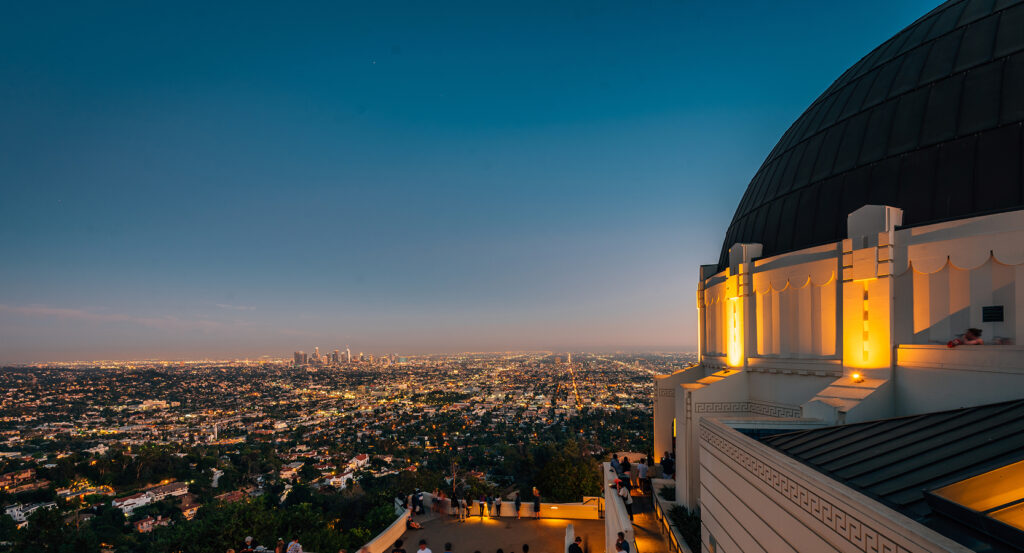
Why you should experience Vista Del Valle Drive in Los Angeles, California.
Vista Del Valle Drive is a picturesque corridor where Hollywood Hills West's hillside landscapes, architectural heritage, environmental stewardship, and panoramic city views define one of Los Angeles' most distinctive residential streets.
Running through Hollywood Hills West between Outpost Estates and Laurel Canyon, the corridor connects hillside residences, protected open space, scenic overlooks, winding canyon roads, and established neighborhoods that collectively reflect the Santa Monica Mountains' enduring influence on Los Angeles' urban form. Curving alignments, mature native vegetation, hillside architecture, dramatic ridgelines, and carefully preserved natural landscapes maintain a streetscape shaped by topography, thoughtful planning, and decades of environmental stewardship. Residential communities, public agencies, conservation organizations, and neighborhood associations continue reinforcing the corridor's importance within Hollywood Hills West while preserving its scenic character. The result is an experience defined by hillside living, natural beauty, and the enduring relationship between Los Angeles and the Santa Monica Mountains.
What you should know about Vista Del Valle Drive.
Vista Del Valle Drive is best known for traversing Hollywood Hills West, where residential development accelerated during the 1920s and 1930s following construction of scenic hillside roads that transformed former chaparral-covered ridges into some of Southern California's most sought-after neighborhoods while preserving commanding views across the Los Angeles Basin. The corridor occupies land historically associated with Rancho La Brea, the Mexican land grant confirmed in 1846, before extensive subdivision accompanied the rapid expansion made possible by completion of the Los Angeles Aqueduct in 1913, the engineering project directed by William Mulholland that supplied water supporting metropolitan growth. Nearby Runyon Canyon Park, acquired by the Mountains Recreation and Conservation Authority and the City of Los Angeles, preserves 160 acres of protected open space featuring native coastal sage scrub, hiking trails, wildlife habitat, and panoramic overlooks extending from Downtown to the Pacific Ocean. Vista Del Valle Drive also benefits from planning administered through the Hollywood Community Plan, together with hillside development regulations, wildfire resilience initiatives, transportation improvements, and environmental conservation policies implemented by the City of Los Angeles to preserve neighborhood character and sensitive natural landscapes.
The nearby Wattles Garden Park, established around the historic Wattles Mansion completed in 1908 by developer Gordon Wattles, preserves terraced gardens, Mediterranean-inspired landscapes, and one of Hollywood's earliest estate properties. The Hollywood Bowl, opened in 1922, has become one of the world's foremost outdoor performance venues while contributing substantially to Los Angeles' cultural history through decades of orchestral concerts and public performances. Griffith Park, established in 1896 following Colonel Griffith J. Griffith's donation of more than 3,000 acres, remains one of North America's largest municipal parks while protecting extensive natural landscapes adjoining the Hollywood Hills. The Santa Monica Mountains Conservancy continues supporting habitat restoration, trail connectivity, wildfire resilience, and open-space preservation throughout the surrounding hillside environment, reinforcing the long-term environmental stewardship that characterizes Vista Del Valle Drive.
How to fold Vista Del Valle Drive into your trip.
Vista Del Valle Drive works as an exploration of Los Angeles' hillside landscapes, cultural heritage, and protected open space.
Begin at Runyon Canyon Park, where panoramic hiking trails, native vegetation, and sweeping views introduce the environmental setting that defines Hollywood Hills West before following Vista Del Valle Drive through winding residential hillsides. Continue to Wattles Garden Park, where historic gardens, early twentieth-century estate architecture, and landscaped terraces deepen the story of hillside development while naturally leading toward one of Los Angeles' most celebrated cultural venues. Conclude at Hollywood Bowl, where historic architecture, landscaped grounds, and nearly a century of musical performances provide a fitting finale celebrating the cultural traditions woven into the surrounding hillsides. The progression moves naturally from protected natural landscapes to historic residential heritage before concluding with performing arts, revealing why Vista Del Valle Drive continues expressing the distinctive relationship between Hollywood Hills West and the Santa Monica Mountains.
Where your story begins.
Foresyte Travel reveals places that feel extraordinary long before you arrive.
Experience premium editorial crafted for luxury travelers.





































































































