
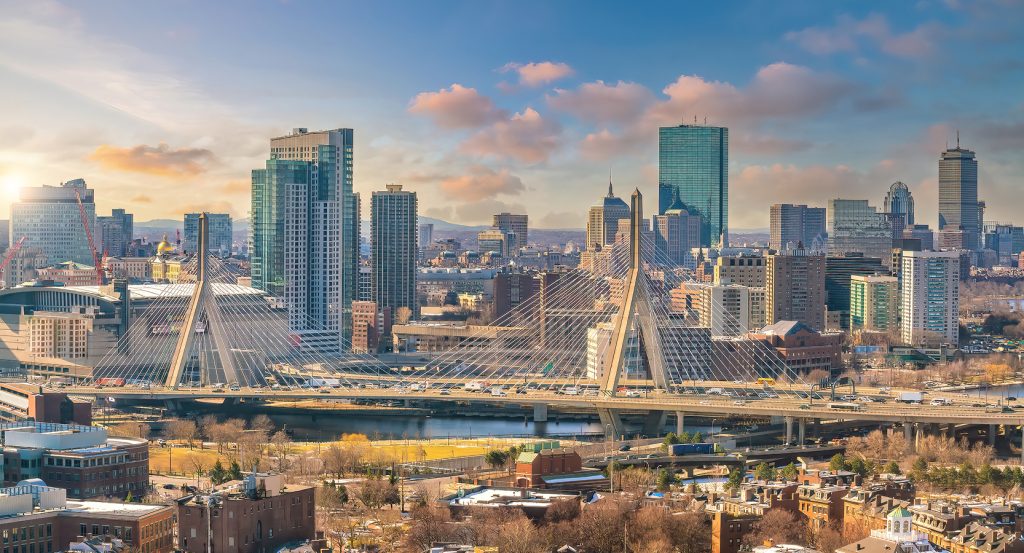
Why Washington Street matters.
Washington Street is a renowned Downtown corridor where colonial origins, commercial ambition, and nearly four centuries of urban history converge along the city's oldest continuously used street.
Running through Downtown Crossing between the South End, Chinatown, Downtown Crossing, and the North End, this historic corridor connects landmark theaters, historic churches, celebrated restaurants, civic institutions, neighborhood businesses, and architecturally significant commercial buildings that collectively showcase Boston's extraordinary evolution from Puritan settlement to global city. Colonial streetscapes, beautifully preserved nineteenth-century architecture, thriving retail districts, cultural landmarks, energetic public spaces, and enduring neighborhood traditions create an urban landscape where generations of revolutionaries, merchants, immigrants, entrepreneurs, performers, and residents have shaped one of New England's defining thoroughfares. Washington Street has served as Boston's principal north-south artery since the seventeenth century while continually adapting to the city's political, commercial, and cultural transformation. The result is a corridor defined by historical significance, civic influence, and lasting metropolitan importance.
What defines Washington Street.
Washington Street is best known for following the route of the Great Country Road, the colonial thoroughfare established during the seventeenth century that became Boston's oldest continuously used street and the city's original gateway to the mainland.
Long before modern street grids emerged, the route carried travelers, livestock, merchants, stagecoaches, and revolutionary figures between the Shawmut Peninsula and surrounding settlements, making it indispensable to Boston's early growth. As the city expanded, Washington Street evolved into Boston's principal commercial boulevard while retaining the alignment that had defined movement through the city for centuries. Today, that uninterrupted continuity makes the corridor one of the rare streets in America whose transportation legacy stretches from the colonial era to the present day. That extraordinary continuity has established Washington Street as the city's oldest continuously used street.
How Washington Street fits.
Washington Street works as an exploration of Boston's colonial history, architectural landmarks, and energetic downtown districts.
Begin along Washington Street, where centuries of architectural evolution immediately establish the corridor's defining identity. Continue toward the Old South Meeting House, where one of the nation's most influential Revolutionary landmarks provides broader perspective on Boston's extraordinary political legacy. From there, make your way to Boston Common, where America's oldest public park provides a memorable conclusion while celebrating the city's enduring civic heritage. Along the way, you'll encounter architecturally significant commercial buildings, welcoming public spaces, thriving neighborhood destinations, beautifully preserved historic landmarks, celebrated cultural institutions, and energetic gathering places that reveal Downtown's exceptional depth. The progression moves naturally from Boston's oldest surviving thoroughfare to a defining Revolutionary landmark to America's oldest public park, demonstrating how Washington Street connects colonial history, community life, and cultural discovery.
Where your story begins.
Foresyte Travel reveals places that feel extraordinary long before you arrive.
Enjoy editorial crafted for luxury travelers.
Foresyte may earn a commission when you book.







































































































