
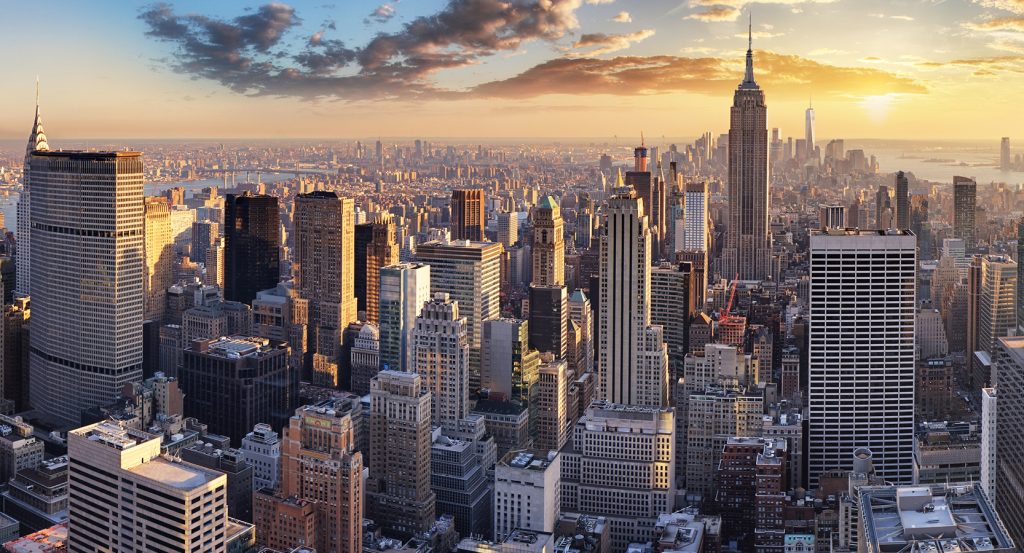
Why you should experience Woolworth Building in New York, NY.
Woolworth Building is a renowned architectural landmark where Tribeca's commercial ambition, Gilded Age prosperity, and New York's relentless pursuit of innovation culminate in one of the most celebrated skyscrapers ever constructed.
Set along Broadway near Park Place and just steps from City Hall Park, this soaring masterpiece anchors one of Lower Manhattan's most historically significant corridors, where civic institutions, financial power, and architectural achievement have shaped New York for more than a century. Ornate terra-cotta detailing, Gothic Revival craftsmanship, vaulted lobbies, soaring spires, intricate mosaics, decorative sculptures, and breathtaking vertical proportions create a building that feels both grand and elegant. Completed in 1913, the tower instantly became an international symbol of modern engineering and urban ambition. Its groundbreaking height and lavish design redefined what a skyscraper could be, inspiring generations of architects across the globe. The result is a destination defined by vision, craftsmanship, and architectural grandeur.
What you should know about Woolworth Building.
Woolworth Building is best known for being the tallest building in the world upon its completion in 1913 and for establishing the skyscraper as a work of architectural art rather than merely a feat of engineering.
Commissioned by retail magnate Frank W. Woolworth and designed by architect Cass Gilbert, the tower represented one of the most ambitious construction projects of its era. Its Gothic-inspired design earned it the nickname “The Cathedral of Commerce,” reflecting the extraordinary attention devoted to both structure and ornamentation. For nearly two decades, it held the title of the world's tallest building while serving as a powerful symbol of New York's emergence as a global economic capital. Its influence extended far beyond Lower Manhattan, helping shape the evolution of skyscraper design throughout the twentieth century. Few buildings possess such a profound legacy in the history of architecture.
How to fold Woolworth Building into your trip.
Woolworth Building works as an exploration of the architectural landmarks, civic spaces, and historic institutions that define Lower Manhattan's extraordinary legacy.
Begin at City Hall Park, where the neighborhood's defining relationship with governance, civic ambition, and urban development immediately comes into focus. Continue toward Woolworth Building, whose architectural grandeur and historical significance reveal the forces that transformed New York into the world's premier skyscraper city. From there, make your way to St. Paul's Chapel, where colonial history, preservation, and resilience provide a broader perspective on the layers of history that continue to define Lower Manhattan today. Along the route, you'll encounter landmark architecture, civic institutions, historic churches, public gathering spaces, cultural treasures, engineering achievements, and celebrated city icons that showcase the district's remarkable depth. The progression moves naturally from civic center to architectural masterpiece to historic sanctuary, revealing the extraordinary convergence of history, commerce, and design that shaped modern New York. Woolworth Building remains one of the city's most rewarding architectural destinations, preserving a remarkable balance between artistic beauty, engineering innovation, and historical significance.
Where your story begins.
Foresyte Travel reveals places that feel extraordinary long before you arrive.
Experience premium editorial crafted for luxury travelers.







































































































