
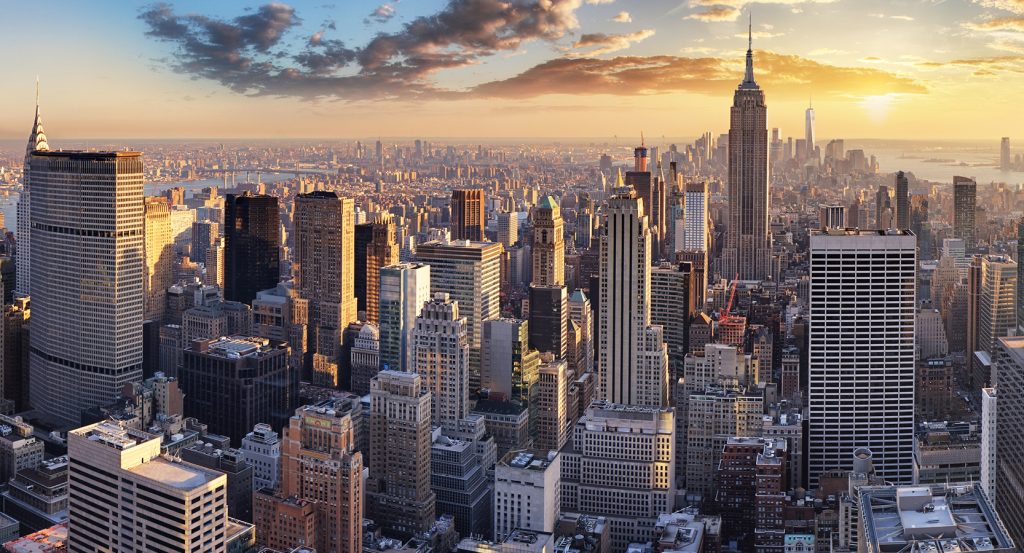
Why you should experience World Center Hotel in New York, NY.
World Center Hotel is a resolute four-star hotel where the Financial District's resilience, architectural reinvention, global commerce and extraordinary twenty-first-century rebuilding converge within a property conceived to look directly onto one of New York's most consequential urban chapters.
Set along Washington Street near Albany Street and just steps from Liberty Park, the 169-room property opened in 2010 on the southern perimeter of the World Trade Center while the surrounding complex was still being rebuilt, giving guestrooms and its twentieth-floor terrace direct sightlines across construction that would fundamentally reshape Lower Manhattan. Most accommodations were designed with floor-to-ceiling double-paned window walls, simultaneously maximizing those views and insulating rooms from the immense building activity outside, while custom blond elm furniture and bedside touchscreen climate controls established a distinctly early twenty-first-century interior vocabulary. Suites with kitchenettes and corporate apartments extended the concept toward longer stays, reflecting the surrounding concentration of international business. The result is a hotel whose architecture was conceived around witnessing Lower Manhattan in motion, capturing the Financial District at the precise moment when rebuilding began becoming a new cityscape.
What you should know about World Center Hotel.
World Center Hotel is best known for formally opening on June 9, 2010 as the first new hotel built beside the World Trade Center after September 11, with Mayor Michael Bloomberg proclaiming the date World Center Hotel Day while the immense reconstruction outside remained actively underway. The 20-story property opened with 169 guestrooms and corporate apartments ranging from single rooms to suites with kitchenettes, and most accommodations incorporated floor-to-ceiling double-paned window walls specifically engineered to preserve clear views while suppressing construction noise from the adjoining site. Guestrooms introduced custom-designed blond elm furnishings, LCD televisions with multimedia connectivity, ergonomic workstations, iPod docking stations and electronic bedside touchscreen temperature controls, while purified chilled water stations, network printing and in-room delivery of exercise equipment reflected the business-oriented operating concept. The twentieth floor became View of the World Terrace Club, combining an indoor restaurant with an outdoor terrace positioned directly above the rebuilding site and giving hotel guests an elevated perspective across the emerging 9/11 Memorial & Museum & Museum and new World Trade Center. The property had already begun accommodating guests during a floor-by-floor soft opening before its June inauguration, making the hotel not merely adjacent to Lower Manhattan's reconstruction but operational while that reconstruction was still unfolding immediately outside its windows.
The timing placed World Center Hotel inside a remarkably compressed sequence of Lower Manhattan history, opening more than a year before the 9/11 Memorial & Museum welcomed the public in September 2011 and four years before One World Trade Center opened in November 2014. Contemporary guests encountered an environment radically different from the completed district visible today, with cranes, excavation and rising structures forming the principal panorama from the property's north-facing rooms and terrace. That proximity was intentional enough to become part of the hotel's original identity, while the double-paned glazing allowed the architecture to frame reconstruction visually without allowing its near-continuous machinery to dominate the guestrooms acoustically. The View of the World Terrace Club concentrated that concept on the twentieth floor, where the outdoor platform sat level with the neighboring Deutsche Bank building as its damaged structure was being dismantled. World Center Hotel consequently preserves an unusual position in New York hospitality history, having opened not after the new World Trade Center had established itself, but while the architecture, memorial landscape and skyline immediately surrounding it were still taking physical form.
How to fold World Center Hotel into your trip.
World Center Hotel works as the anchor for an afternoon tracing how memory, architecture and public space have reshaped the blocks immediately surrounding Washington Street.
Begin at St. Nicholas Greek Orthodox Church and National Shrine, where Santiago Calatrava designed a marble-clad replacement for the church destroyed on September 11, drawing its dome from Byzantine precedents and completing a new sacred presence overlooking the rebuilt World Trade Center complex. Continue to The Oculus, where Calatrava pursued an entirely different expression through the World Trade Center Transportation Hub, whose soaring white ribs and central skylight turn a major transit interchange into one of Lower Manhattan's most recognizable contemporary architectural interiors. Conclude at Brookfield Place, where the Hudson waterfront opens through the Winter Garden, a glass-vaulted public room originally completed in 1988, severely damaged in 2001 and subsequently restored, allowing the sequence to resolve beside the river through another space whose history physically records Lower Manhattan's destruction and renewal. The progression moves from Calatrava's intimate sacred architecture through his vast transportation structure into a waterfront interior rebuilt after profound damage, revealing the architectural continuum of remembrance and renewal that gives World Center Hotel its singular context.
Where your story begins.
Foresyte Travel reveals places that feel extraordinary long before you arrive.
Experience premium editorial crafted for luxury travelers.







































































































