
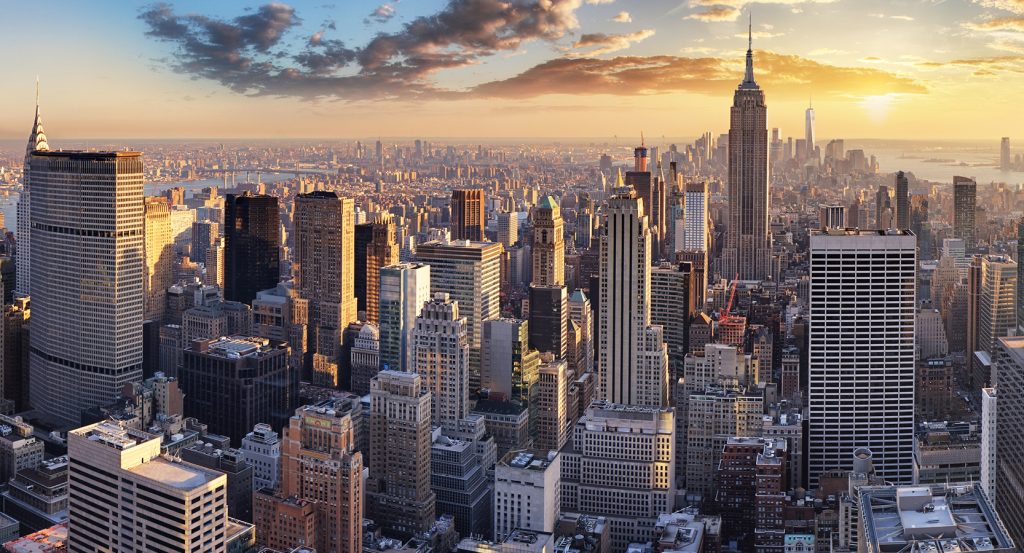
Why you should experience 113th Street in New York, NY.
113th Street is a distinguished corridor where Upper Manhattan's residential heritage, Harlem's cultural identity, and Morningside Heights' architectural legacy converge across one of Manhattan's most historically significant east-west streets.
Running from Riverside Drive to the Harlem River, the corridor links Morningside Heights, Central Harlem, and East Harlem through a succession of historic residential blocks, neighborhood institutions, and commercial corridors that collectively reflect more than a century of urban evolution. Its streetscape preserves an exceptional mix of brownstone rowhouses, masonry apartment buildings, civic architecture, and tree-lined residential blocks that demonstrate successive waves of nineteenth- and twentieth-century development. Walking along 113th Street reveals a corridor where planning, transportation, and neighborhood character remain inseparable from the built environment. The result is a corridor that continues expressing the layered history of Upper Manhattan through one of its defining cross-town thoroughfares.
What you should know about 113th Street.
113th Street is best known for emerging from the Commissioners' Plan of 1811, whose rectilinear grid permanently established the corridor's alignment before residential construction accelerated following completion of the Ninth Avenue Elevated Railroad in 1879 and expansion of the Interborough Rapid Transit network after 1904, transforming Upper Manhattan into one of New York City's fastest-growing residential districts. Between 1885 and 1925, speculative developers assembled continuous rows of brownstones, limestone townhouses, elevator apartment buildings, and mixed-use commercial structures reflecting Romanesque Revival, Renaissance Revival, Beaux-Arts, and Classical Revival architecture that still define much of the corridor today. The street's long-term growth was further reinforced by the surrounding 116th Street, Central Park North-110th Street, and Cathedral Parkway-110th Street subway stations, whose rapid-transit connectivity supported sustained residential density and neighborhood commerce across multiple generations. Continued façade rehabilitation, masonry restoration, adaptive reuse, and historic preservation have preserved 113th Street as an architectural record of Upper Manhattan's principal period of urban expansion.
East Harlem's residential landscape was substantially reshaped by construction of the Jefferson Houses, completed by the New York City Housing Authority in 1959, reflecting the neighborhood's postwar urban renewal initiatives. Nearby, the Manhattan Avenue-West 120th-123rd Streets Historic District, designated by the New York City Landmarks Preservation Commission in 1991, preserves one of Manhattan's finest concentrations of speculative late nineteenth-century rowhouse architecture representative of the same development era that shaped 113th Street. The corridor also reflects the transition from horse-drawn transportation to automobile-oriented streets through the gradual disappearance of neighborhood stables and expansion of modern street infrastructure during the first half of the twentieth century. Together, these public housing initiatives, preservation programs, and transportation changes demonstrate how successive planning decisions continually reshaped 113th Street while preserving its historic urban fabric.
How to fold 113th Street into your trip.
113th Street is best experienced through an afternoon exploring Upper Manhattan's architecture, landscapes, and cultural institutions.
Begin at Cathedral Church of St. John the Divine, where grand Gothic Revival architecture and one of the world's largest cathedral interiors introduce the neighborhood's extraordinary ecclesiastical heritage. Continue to Morningside Park, whose rugged Manhattan schist, dramatic topography, and scenic pathways showcase one of Frederick Law Olmsted and Calvert Vaux's most distinctive urban landscapes. Conclude at El Museo del Barrio, whose acclaimed exhibitions and permanent collections celebrate Puerto Rican, Caribbean, and Latin American art while reflecting East Harlem's enduring cultural identity. The progression moves naturally from grand architecture to historic landscape design before concluding with one of New York City's leading cultural institutions, revealing how 113th Street connects Upper Manhattan's architectural, environmental, and artistic traditions.
Where your story begins.
Foresyte Travel reveals places that feel extraordinary long before you arrive.
Experience premium editorial crafted for luxury travelers.







































































































