
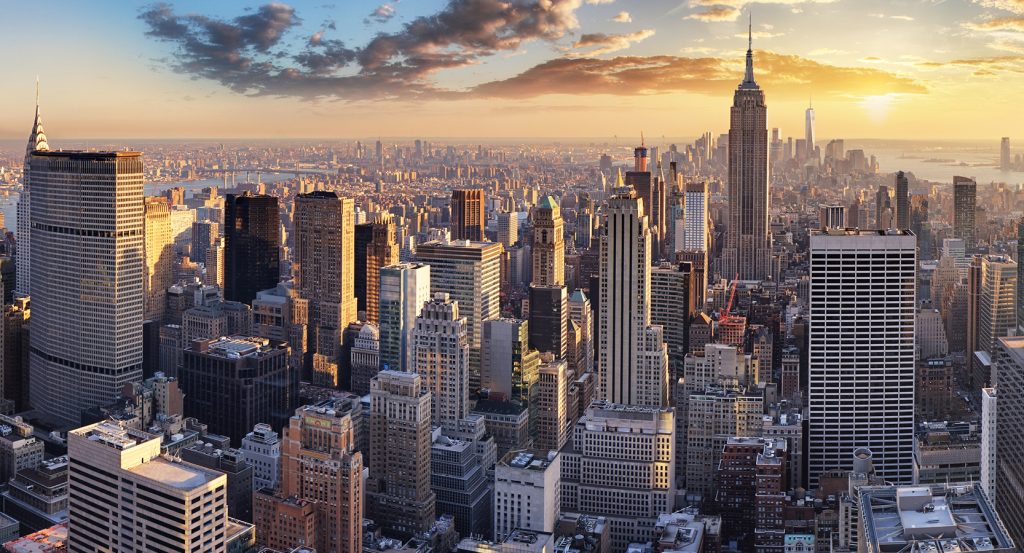
Why you should experience 17John Hotel in New York, NY.
17John Hotel is a grounded residence hotel where Financial District's conversion culture, prewar architecture, residential reinvention and contemporary downtown energy converge inside a former commercial building that helped pioneer Lower Manhattan living.
Set along John Street near Broadway and just steps from City Hall Park, the property occupies the former Tyler Building, designed by Clinton & Russell in 1920 as part of the dense commercial architecture surrounding what was then known as Insurance Row. Metro Loft acquired the nearly vacant building during Lower Manhattan's difficult mid-1990s real-estate environment and selected the address for developer Nathan Berman's first full-building conversion, beginning an association with office-to-residential projects that would eventually reshape numerous downtown properties. Architect Averitt Associates worked with structural engineer Gilsanz Murray Steficek and mechanical engineer Rubliano Associates on the project, converting deep commercial floor plates into residences while preserving the scale and masonry character of the original structure. The result is a hotel where Clinton & Russell's commercial architecture and Metro Loft's early conversion strategy capture a decisive chapter in the Financial District's evolution from a predominantly working neighborhood into a place where residential and hospitality life could flourish after business hours.
What you should know about 17John Hotel.
17John Hotel is best known for emerging from The Metro, Metro Loft's pioneering 1998 conversion of the Tyler Building into 111 apartments, a $14 million undertaking that followed the developer and his partners purchasing the 120,000-square-foot property for $5.2 million when it was nearly vacant. The completed project encompassed 121,000 square feet across 15 stories with ground-floor retail, while residences ranged from studios through two-bedroom apartments and established streamlined layouts and contemporary tenant spaces that Metro Loft credits with helping demonstrate demand for downtown residential living. The property subsequently entered hospitality as Sonder at City Hall Park, translating its apartment origins into an extended-stay format before Sonder's 2025 collapse precipitated another operating transition and the building emerged under the 17John identity. The Times identified the rebranded property in May 2026 as 17 John Hotel, retaining the spacious apartment-based layouts after the Sonder era and preserving an unusual continuity between Berman's late-1990s residential experiment and the building's contemporary accommodation model.
That residential lineage remains unusually legible in the current accommodation collection, which extends from studios to three-bedroom suites capable of sleeping groups of eight and equips the inventory with full kitchens instead of the compact kitchenette model common to Manhattan extended stays. Classic King Studios measure 340 square feet, one-bedroom apartments reach 600 square feet, and larger configurations add separate living and dining areas while selected apartments incorporate private terraces. A seventh-floor lounge develops the communal side of the property through biophilic design, earthy tones, archways and extensive greenery, while the rooftop terrace opens the building toward the vertical Lower Manhattan skyline above John Street. Together, the full kitchens, unusually broad suite spectrum, apartment-scale floor plans and shared upper-floor spaces preserve the logic of the building's 111-unit conversion while adapting that residential structure to travelers seeking substantially more space than a conventional Financial District hotel room provides.
How to fold 17John Hotel into your trip.
17John Hotel works as the anchor for an afternoon tracing skyscraper ambition, municipal history and the rediscovery of Black New York through the extraordinary historical concentration immediately north of John Street.
Begin at Woolworth Building, where five-and-dime entrepreneur Frank W. Woolworth commissioned Cass Gilbert to create a corporate headquarters that ultimately rose 792 feet, cost $13.5 million and became the world's tallest building when President Woodrow Wilson activated its lights from Washington during the April 24, 1913 opening. Continue to City Hall, where Joseph-François Mangin and John McComb Jr.'s competition-winning design was constructed between 1803 and 1811 before becoming the seat of municipal government in 1812, preserving one of the nation's most distinguished early nineteenth-century public buildings within the green space that gives 17John its downtown setting. Conclude at African Burial Ground National Monument, where construction work in 1991 exposed a colonial cemetery extending across 6.6 acres and archaeological excavation recovered the remains of 419 African men, women and children, nearly half younger than twelve, before 10,000 participants joined the 2003 Rites of Ancestral Return and the site received national monument status in 2006. The progression moves from Woolworth and Gilbert's extraordinary expression of commercial ambition through New York's enduring seat of government into a burial ground that fundamentally expanded understanding of African life in colonial Manhattan, revealing three powerful layers of the city within walking distance of 17John Hotel.
Where your story begins.
Foresyte Travel reveals places that feel extraordinary long before you arrive.
Experience premium editorial crafted for luxury travelers.







































































































