
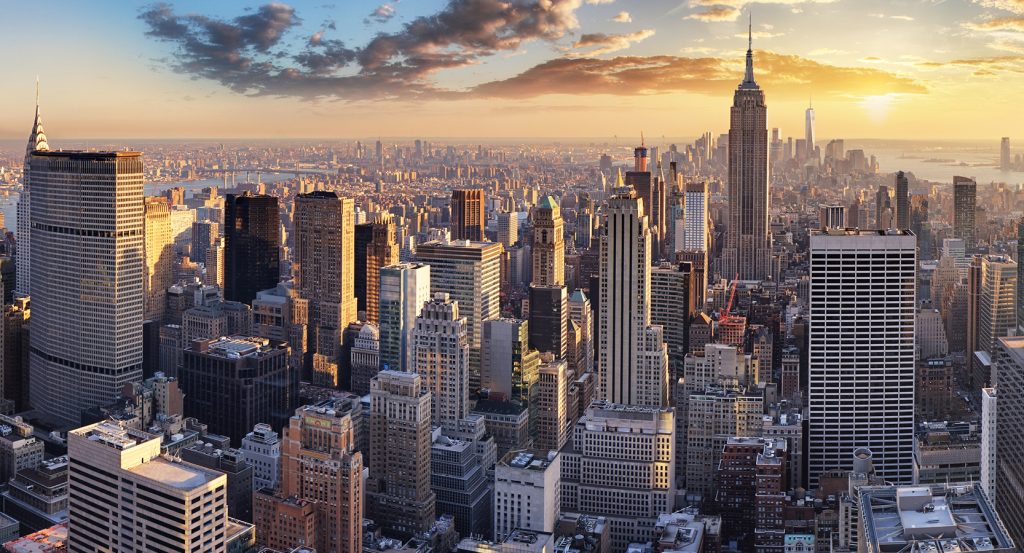
Why John Street matters.
John Street is a historic Financial District corridor where colonial heritage, commercial evolution, and urban resilience converge along one of Lower Manhattan's oldest streets.
Running through the Financial District between Fulton Street and Water Street, this storied thoroughfare connects landmark office buildings, historic churches, residential developments, commercial destinations, transportation hubs, and civic institutions that have shaped New York life for centuries. Narrow streetscapes, historic facades, early skyscrapers, preserved landmarks, and celebrated urban vistas create an environment defined by continuity and transformation. The corridor traces its origins to the colonial era, when Lower Manhattan emerged as the center of trade, governance, and commerce in New York. Merchants, financiers, immigrants, religious leaders, architects, and residents helped establish a neighborhood character that evolved alongside the growth of one of the world's most influential cities. To the south, Wall Street extends naturally from John Street through a collection of historic streets, landmark institutions, and architectural icons that reinforce the corridor's enduring significance. The result is a street defined by historical depth, commercial importance, and enduring civic character.
What defines John Street.
John Street is best known for housing John Street United Methodist Church, the oldest Methodist congregation in North America and the site of the first Methodist church building in the United States.
Founded in 1766 through the efforts of early followers of John Wesley, the congregation became a cornerstone of Methodism's growth across the American colonies and later the United States. The church provided spiritual leadership during the Revolutionary era and played a significant role in establishing one of the nation's largest Protestant denominations. Over centuries, the congregation endured war, economic upheaval, and dramatic changes to Lower Manhattan while preserving its historical mission. Today, the church remains one of the most significant religious landmarks in American history. Few New York streets maintain such a direct connection to an institution that helped shape the development of a major religious movement across the nation.
How John Street fits.
John Street works as an exploration of Lower Manhattan's religious heritage, colonial history, and financial legacy.
Begin at John Street United Methodist Church, where the corridor's defining relationship with faith, community, and early American history immediately comes into focus. Continue toward Fulton Market District, whose commercial significance reveals the entrepreneurial forces that helped shape Lower Manhattan across generations. From there, make your way to Federal Hall National Memorial, where one of New York's most important civic landmarks provides broader perspective on the political and economic institutions that continue to define the district today. Along the route, you'll encounter historic churches, commercial corridors, civic landmarks, architectural treasures, public gathering spaces, transportation hubs, and celebrated streetscapes that showcase the remarkable depth of the neighborhood. The progression moves naturally from John Street United Methodist Church to Fulton Market District to Federal Hall National Memorial, revealing how faith, commerce, and civic leadership combined to shape one of Manhattan's most historically significant corridors. John Street remains one of New York's most rewarding streets, preserving a distinctive balance between historical significance, cultural heritage, and enduring urban vitality.
Where your story begins.
Foresyte Travel reveals places that feel extraordinary long before you arrive.
Enjoy editorial crafted for luxury travelers.
Foresyte may earn a commission when you book.







































































































