
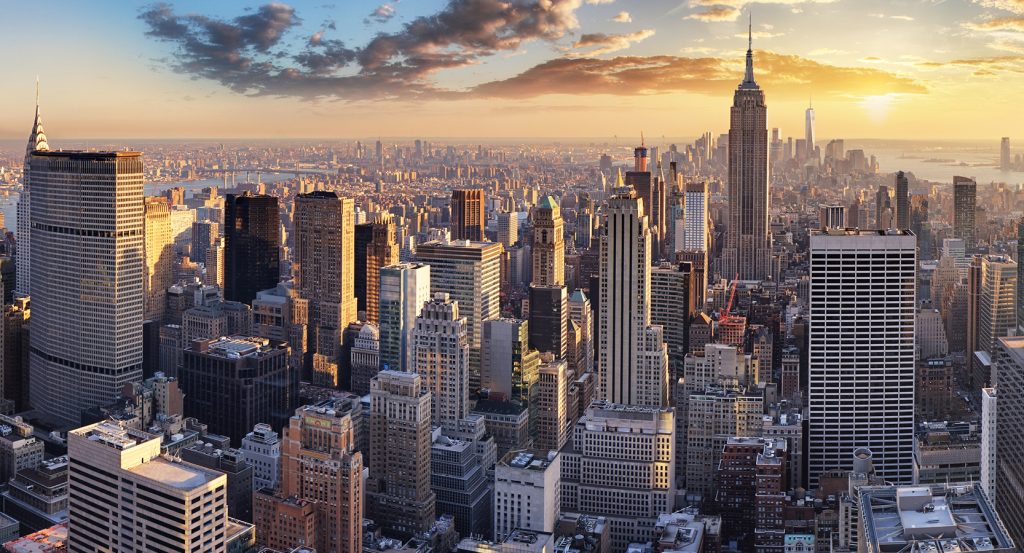
Why Fulton Street matters.
Fulton Street is a renowned Financial District corridor where commercial power, transportation connectivity, and urban transformation converge along one of Lower Manhattan's most important thoroughfares.
Running through the Financial District between Battery Park and the Brooklyn Bridge waterfront, this historic east-west artery connects landmark transit hubs, historic churches, commercial centers, civic institutions, public gathering spaces, and architectural icons that have shaped New York life for centuries. Historic streetscapes, modern retail destinations, transportation infrastructure, landmark buildings, and celebrated urban vistas create an environment defined by movement and opportunity. The corridor emerged during the eighteenth century as a vital commercial route linking the city's growing waterfront with expanding neighborhoods inland. Merchants, financiers, commuters, entrepreneurs, architects, and civic leaders helped establish a legacy that evolved alongside New York's rise as a global center of commerce and finance. To the south, Battery Park City extends naturally from Fulton Street through a collection of waterfront landmarks, public spaces, and neighborhood destinations that reinforce the corridor's enduring significance. The result is a street defined by connectivity, economic influence, and enduring metropolitan importance.
What defines Fulton Street.
Fulton Street is best known for being named after Robert Fulton, the engineer whose commercially successful steamboat revolutionized transportation and transformed trade throughout the United States.
Fulton's pioneering work on steam-powered navigation fundamentally altered how people and goods moved along American waterways during the early nineteenth century. His innovations accelerated commerce, strengthened regional connections, and helped fuel the nation's economic expansion. As New York emerged as America's leading port city, Fulton's name became permanently associated with one of Lower Manhattan's most important commercial corridors. The street grew alongside the city's expanding transportation and financial networks, reinforcing its role as a center of movement and exchange. Few Manhattan streets maintain such a direct connection to an inventor whose work reshaped transportation on a national scale.
How Fulton Street fits.
Fulton Street works as an exploration of Lower Manhattan's transportation legacy, commercial history, and civic landmarks.
Begin at Fulton Center, where the corridor's defining relationship with connectivity, infrastructure, and public life immediately comes into focus. Continue toward St. Paul's Chapel, whose historic significance reveals the colonial and civic foundations that helped shape the surrounding district across generations. From there, make your way to the The Seaport Museum, where one of New York's most important waterfront destinations provides broader perspective on the maritime commerce and entrepreneurial spirit that continue to define Lower Manhattan today. Along the route, you'll encounter transportation hubs, historic churches, commercial landmarks, civic institutions, architectural treasures, public gathering spaces, and celebrated city vistas that showcase the remarkable depth of the district. The progression moves naturally from Fulton Center to St. Paul's Chapel to the The Seaport Museum, revealing how transportation, commerce, and civic investment combined to shape one of Manhattan's most influential corridors. Fulton Street remains one of New York's most rewarding thoroughfares, preserving a distinctive balance between historical significance, commercial importance, and contemporary urban vitality.
Where your story begins.
Foresyte Travel reveals places that feel extraordinary long before you arrive.
Enjoy editorial crafted for luxury travelers.
Foresyte may earn a commission when you book.







































































































