
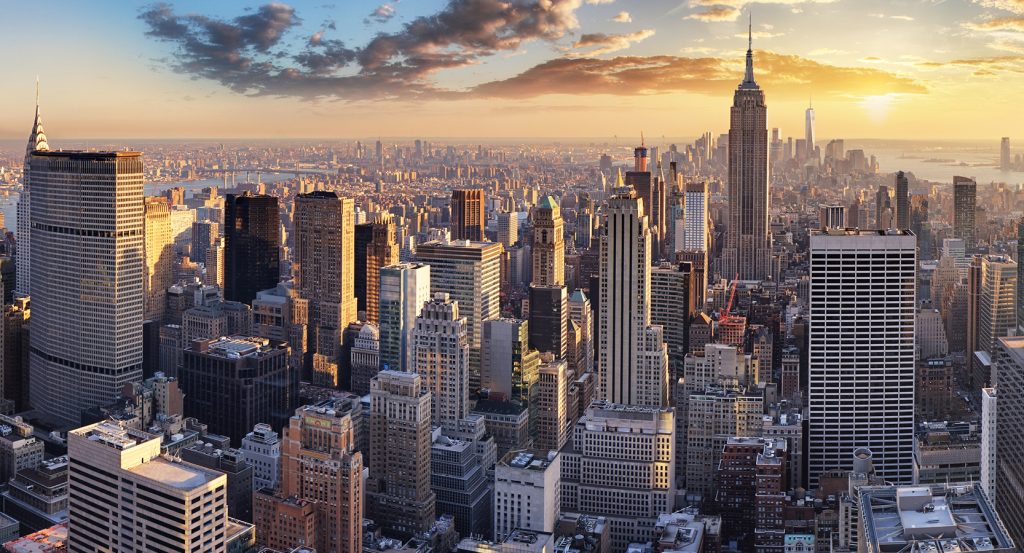
Why 22nd Street matters.
22nd Street is a spirited corridor where Chelsea's artistic legacy, Flatiron's commercial prominence, Gramercy's residential refinement, and Manhattan's architectural evolution converge within one of Midtown South's most historically layered districts.
Running across Manhattan between Chelsea and Gramercy through the Flatiron District, the street passes landmark loft buildings, historic townhouses, neighborhood institutions, galleries, and contemporary office developments that collectively reflect more than two centuries of urban growth. The corridor preserves successive layers of Greek Revival, Italianate, Beaux-Arts, Art Deco, and modern architecture while continually adapting to changing patterns of commerce, culture, and residential life. Walking along 22nd Street reveals a streetscape where architecture, entrepreneurship, preservation, and creativity remain closely connected. The result is a corridor where Manhattan's commercial and cultural history continues shaping one of its most engaging cross-town streets.
What you should know 22nd Street.
22nd Street is best known for extending through neighborhoods transformed following the Commissioners' Plan of 1811, whose orderly street grid directed Manhattan's northward expansion and established the structure for intensive residential and commercial development during the nineteenth century. Elegant Greek Revival townhouses gradually gave way to Italianate loft buildings, Beaux-Arts commercial structures, early steel-frame office buildings, and twentieth-century institutional architecture as the corridor evolved alongside New York City's expanding economy. Transportation improvements accelerated that transformation through the opening of the IRT Lexington Avenue Subway in 1904, the BMT Broadway Line in 1918, and the IND Sixth Avenue Line in 1940, strengthening connections between Midtown, Lower Manhattan, Upper Manhattan, and Brooklyn while supporting continued commercial investment. Landmark designation, adaptive reuse, and sustained preservation efforts have enabled 22nd Street to retain an architectural record illustrating more than two centuries of Manhattan's urban development.
Completed in 1907, the Salmagundi Club headquarters occupies the former Irad and Sarah Hawley House, preserving one of Manhattan's finest surviving Italianate brownstones while continuing the organization's mission of supporting American art established in 1871. Between 1906 and 1908, architect Robert Maynicke designed the Starrett-Lehigh predecessor New York Merchandise Building at 225 West 22nd Street, introducing reinforced-concrete construction and expansive floorplates that anticipated Manhattan's next generation of commercial loft architecture. The General Theological Seminary, whose Gothic Revival campus developed between 1827 and the early twentieth century from plans by Charles Coolidge Haight and earlier architects, established the oldest seminary of the Episcopal Church while creating one of Manhattan's largest surviving collegiate enclaves. Together, these institutional, architectural, and engineering achievements demonstrate how 22nd Street evolved within a corridor where education, commerce, preservation, and design continuously reinforced one another across successive generations.
How 22nd Street fits.
22nd Street is best experienced through an afternoon exploring Manhattan's celebrated architecture, public spaces, and cultural institutions.
Begin at Madison Square Park, where landscaped lawns, public art installations, and historic monuments introduce one of Manhattan's most beloved civic spaces. Continue to the Flatiron Building, whose pioneering steel-frame engineering and distinctive triangular form transformed early skyscraper design into an international architectural icon. Conclude at the High Line, where a former elevated freight railway has been reimagined as one of New York City's most influential public parks overlooking Chelsea's evolving streetscape. The progression moves naturally from historic civic space to architectural innovation before concluding with landmark adaptive reuse, revealing how 22nd Street connects Manhattan's commercial, architectural, and cultural evolution.
Where your story begins.
Foresyte Travel reveals places that feel extraordinary long before you arrive.
Enjoy editorial crafted for luxury travelers.
Foresyte may earn a commission when you book.







































































































