
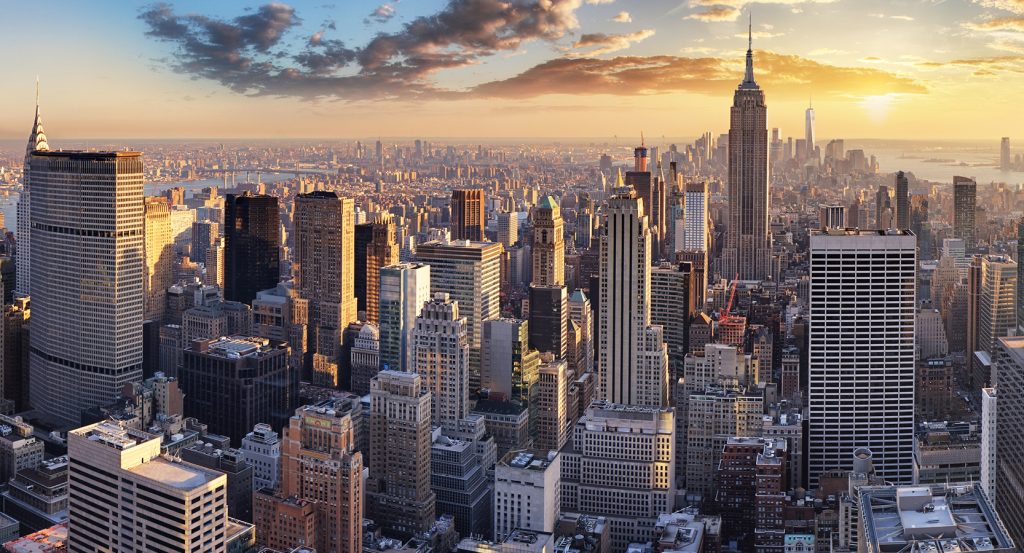
Why you should experience Pace University in New York, NY.
Pace University is an ambitious academic institution where the Financial District's civic legacy, professional opportunity, educational innovation, and global outlook converge within one of Lower Manhattan's most established private universities.
Set along Spruce Street near Park Row and just steps from City Hall Park, the university weaves contemporary academic facilities into one of New York City's most historically significant districts. Modern classrooms, collaborative learning environments, and active public spaces place students within walking distance of the city's governmental, financial, legal, and cultural institutions, creating an atmosphere where higher education remains deeply connected to professional life. Scholars, entrepreneurs, performing artists, and future business leaders continue choosing the campus for its distinctive blend of metropolitan energy and experiential learning. The result is an experience defined by academic momentum, professional engagement, and one of Lower Manhattan's leading educational institutions.
What you should know about Pace University.
Pace University is best known for opening in 1906 when brothers Homer St. Clair Pace and Charles A. Pace founded the Pace Institute to provide accounting and business education in New York City before the institution expanded into a comprehensive private university serving thousands of undergraduate, graduate, and professional students. The university received authority to confer bachelor's degrees in 1948 and formally became Pace University in 1973, developing campuses in Lower Manhattan and Pleasantville while establishing schools devoted to business, law, education, health professions, performing arts, computer science, and environmental studies. Its Lower Manhattan campus occupies multiple academic buildings surrounding One Pace Plaza, including the William C. and Anita B. Dyke Hall, 15 Beekman Street, and the Schimmel Center for the Arts, while the Elisabeth Haub School of Law operates from the Pleasantville campus in Westchester County. Academic programs hold accreditation through organizations including AACSB International for the Lubin School of Business, the American Bar Association for the Elisabeth Haub School of Law, and NASAD for the Sands College of Performing Arts, reinforcing the university's longstanding reputation for professional education and experiential learning.
Experiential education has shaped the university's academic model through one of the nation's longest-running internship traditions, connecting students with employers across Wall Street, the New York State Unified Court System, major media organizations, healthcare institutions, technology companies, and nonprofit organizations throughout the metropolitan region. Research initiatives span the Pace Energy and Climate Center, cybersecurity laboratories, digital forensics facilities, business incubators, and entrepreneurship programs that integrate faculty scholarship with public policy, environmental law, and emerging technologies. Alumni include New York City public officials, Fortune 500 executives, jurists, entrepreneurs, broadcasters, and performing artists whose careers reflect the institution's longstanding emphasis on professional preparation. Together, these academic partnerships, research centers, institutional affiliations, and alumni achievements demonstrate how Pace University has evolved from a specialized business institute into a comprehensive university closely connected to New York City's civic and economic life.
How to fold Pace University into your trip.
Pace University works as the culmination of a day exploring the Financial District's remarkable blend of civic history, architecture, and public institutions.
Begin at City Hall Park, where New York City's historic civic landscape introduces the governmental heart of Lower Manhattan before continuing through its surrounding streets. Continue to The Woolworth Building, where Cass Gilbert's celebrated Neo-Gothic skyscraper demonstrates the architectural ambition that transformed early twentieth-century New York into a global commercial capital. Continue to St. Paul's Chapel, where Manhattan's oldest surviving church building preserves more than two centuries of religious, civic, and national history before following Park Row toward the campus. Conclude at Pace University, where more than a century of academic achievement, professional education, and metropolitan engagement provides a fitting finale that reflects Lower Manhattan's enduring role as a center of learning, commerce, and public life.
Where your story begins.
Foresyte Travel reveals places that feel extraordinary long before you arrive.
Experience premium editorial crafted for luxury travelers.







































































































