Why you should experience 65th Street in Seattle, Washington.
65th Street is a connected corridor where Roosevelt's residential heritage, educational tradition, neighborhood commerce, and evolving urban character converge to create one of North Seattle's most influential cross streets.
Running through Roosevelt between Green Lake and Ravenna, the corridor connects historic residential blocks, neighborhood businesses, civic institutions, transit corridors, and established commercial districts that collectively reflect more than a century of continuous development. Craftsman residences, Tudor Revival storefronts, brick commercial buildings, reinforced-concrete structures, Douglas firs, western red cedars, Pacific dogwoods, flowering cherries, and mature tree canopies establish a streetscape where enduring architecture and Northwest landscapes remain closely intertwined. Throughout the corridor, generations of merchants, educators, architects, and residents have cultivated an atmosphere defined by continuity, craftsmanship, and neighborhood vitality. The result is an experience distinguished by architectural warmth, cultural significance, and one of Roosevelt's defining corridors.
What you should know about 65th Street.
65th Street is best known for crossing Roosevelt, whose development accelerated following the arrival of the Seattle Electric Railway during the 1890s, strengthening connections between North Seattle and downtown while encouraging sustained residential and commercial expansion across the surrounding ridge. Construction flourished between the 1900s and 1930s, producing Craftsman bungalows, American Foursquare residences, neighborhood business blocks, apartment buildings, and institutional structures distinguished by clinker brick, cedar shingles, reinforced-concrete framing, decorative half-timbering, leaded-glass windows, and finely crafted wood millwork. The corridor matured alongside neighborhood grocers, pharmacies, bakeries, professional offices, and independent retailers whose longevity established Roosevelt as one of Seattle's most cohesive commercial districts. Black-capped chickadees, Anna's hummingbirds, northern flickers, Douglas firs, western red cedars, vine maples, Pacific dogwoods, and native flowering shrubs continue contributing to the mature urban ecology surrounding the corridor. Together, these transportation milestones, commercial traditions, architectural styles, construction methods, and ecological features establish 65th Street as a defining expression of Roosevelt's historical evolution.
Roosevelt's character became increasingly associated with architecturally refined public institutions after Roosevelt High School, designed by Floyd A. Naramore and completed in 1922, established a lasting architectural presence that influenced development throughout the surrounding neighborhood. Naramore's restrained Collegiate Gothic design helped reinforce a broader era of carefully planned civic architecture whose emphasis on durable brick construction, symmetrical composition, and enduring craftsmanship echoed throughout buildings constructed along 65th Street during the following decades. Original masonry façades, decorative brick corbelling, cast-stone trim, exposed timber detailing, divided-light wood windows, and preserved storefront proportions continue illustrating how those architectural ideals became embedded within the corridor's built environment. Together, Naramore's architectural influence, Roosevelt's tradition of enduring civic design, and the corridor's remarkably intact early twentieth-century streetscape explain why 65th Street remains one of North Seattle's most cohesive historic corridors.
How to fold 65th Street into your trip.
65th Street works as an exploration of North Seattle's neighborhood heritage, natural landscapes, and community character.
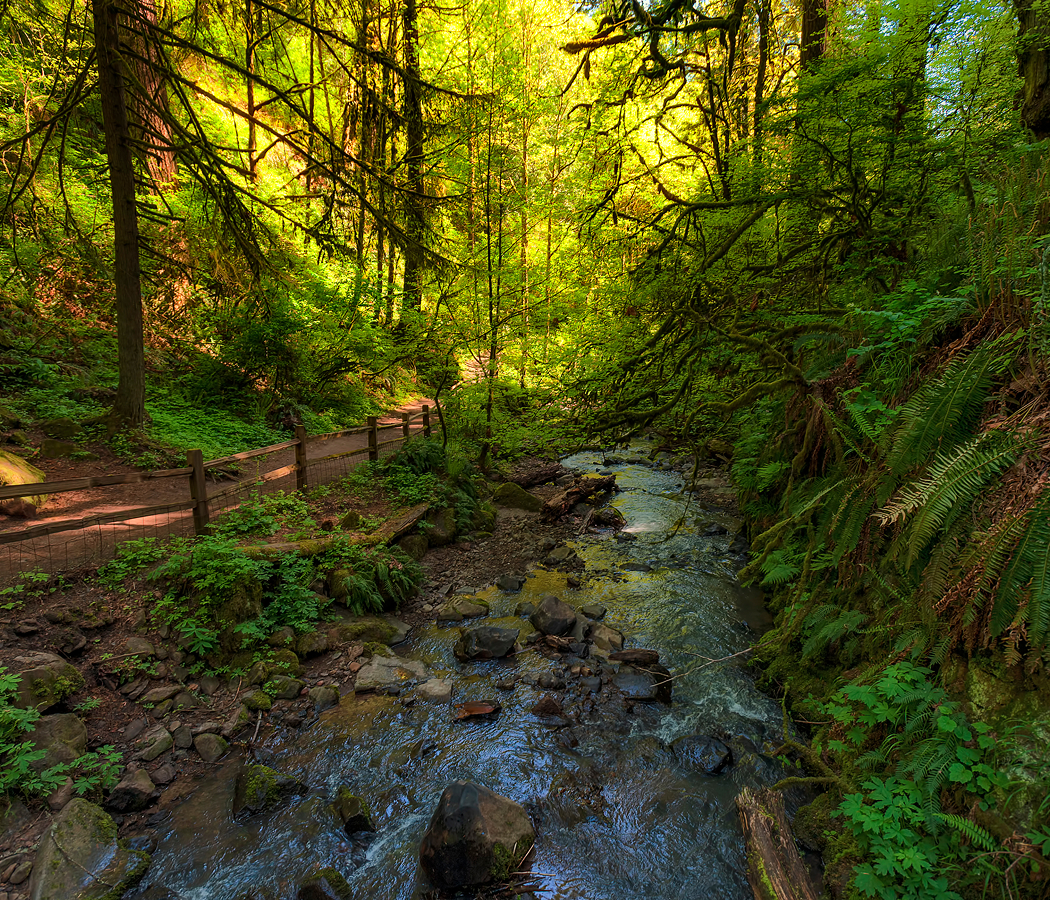
Begin at Ravenna Park, where towering old-growth trees, winding ravines, and peaceful walking trails introduce the glacial landscape that shaped the surrounding neighborhoods while providing a memorable beginning to the outing. Continue to Green Lake Branch Library, whose Carnegie-era architecture and longstanding literary tradition broaden appreciation for the community's civic character before naturally guiding the experience toward its concluding destination. Conclude at Green Lake Park, where expansive shoreline paths, mature evergreens, abundant birdlife, and sweeping lake views provide the reflective payoff by revealing the landscape that has anchored North Seattle's enduring character across generations. The progression moves naturally from ancient woodland through civic heritage before concluding beside the lake that best expresses the lasting character of 65th Street.
Where your story begins.
Foresyte Travel reveals places that feel extraordinary long before you arrive.
Experience premium editorial crafted for luxury travelers.