Why Alki Avenue matters.
Alki Avenue is a scenic corridor where Alki's maritime heritage, shoreline landscapes, coastal recreation, and Pacific Northwest character create one of Seattle's most celebrated waterfront streets.
Running through Alki between North Admiral and Duwamish Head, the corridor connects sandy beaches, waterfront residences, historic gathering places, and sweeping coastal vistas that collectively reflect more than a century of shoreline development. Craftsman homes, mid-century residences, brick seawalls, public esplanades, Pacific madrones, shore pines, driftwood-lined beaches, and saltwater shoreline vegetation establish a streetscape where maritime scenery and neighborhood character remain closely intertwined. Throughout the corridor, generations of architects, mariners, business owners, educators, neighborhood families, and waterfront stewards have cultivated an atmosphere defined by craftsmanship, resilience, and enduring coastal identity. The result is an experience distinguished by panoramic waterfront scenery, maritime tradition, and one of Alki's defining corridors.
What defines Alki Avenue.
Alki Avenue is best known for following the shoreline where the Denny Party established Seattle's first non-Indigenous settlement on November 13, 1851, before relocating across Elliott Bay to the present downtown waterfront several months later. Residential and recreational development expanded throughout the 1900s, 1910s, and 1920s, introducing Craftsman houses, beachfront cottages, apartment buildings, bathhouses, restaurants, and commercial buildings constructed with cedar shingles, structural timber, reinforced concrete, brick masonry, river-stone foundations, and finely crafted wood millwork overlooking Puget Sound. The corridor matured alongside shipbuilders, fishermen, merchants, educators, physicians, hospitality operators, and neighborhood businesses whose continued investment established Alki as one of Seattle's enduring coastal communities. Great blue herons, bald eagles, harbor seals, cormorants, Pacific madrones, shore pines, and native shoreline vegetation continue contributing to the ecological character that distinguishes the avenue today. Together, these settlement milestones, maritime traditions, architectural practices, construction methods, occupational histories, and coastal ecosystems establish Alki Avenue as one of Seattle's most historically significant waterfront corridors.
Architect Ellsworth Storey helped shape Seattle's early twentieth-century residential architecture through houses emphasizing natural materials, balanced proportions, handcrafted detailing, and harmonious relationships with surrounding landscapes. His work reflected a broader Arts and Crafts tradition that encouraged exposed timber framing, substantial masonry chimneys, divided-light wood sash windows, broad porches, handcrafted interior woodwork, and durable local materials throughout Seattle's residential neighborhoods. Original clinker brick, cedar siding, heavy timber framing, stone retaining walls, decorative wood brackets, and preserved millwork continue illustrating the construction traditions that define many of Alki Avenue's earliest surviving residences. Together, Storey's architectural influence, Alki's enduring residential craftsmanship, and the corridor's remarkably cohesive historic fabric explain why Alki Avenue remains one of Seattle's finest coastal streets.
How Alki Avenue fits.
Alki Avenue works as an exploration of Seattle's coastal heritage, maritime scenery, and shoreline traditions.
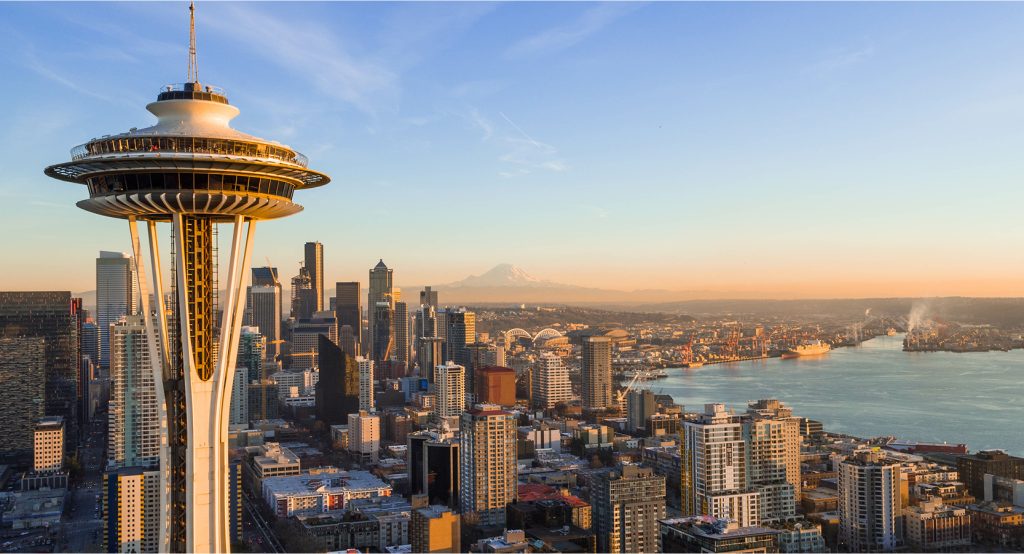
Begin at Alki Beach, where broad sandy shoreline, panoramic Puget Sound views, and the Olympic Mountains introduce the coastal landscape that has shaped the peninsula since Seattle's earliest years. Continue to Alki Point Lighthouse, whose active navigational role and enduring presence along Puget Sound deepen appreciation for the maritime history surrounding the avenue before naturally guiding the experience toward its concluding destination. Conclude at Hamilton Viewpoint Park, where sweeping views across Elliott Bay, the downtown skyline, and Mount Rainier provide the historical payoff by revealing the broader geography that continues defining the character of Alki Avenue. The progression moves naturally from shoreline landscapes through maritime history before concluding with the elevated panorama that best expresses the corridor's lasting character.
Where your story begins.
Foresyte Travel reveals places that feel extraordinary long before you arrive.
Enjoy editorial crafted for luxury travelers.
Foresyte may earn a commission when you book.