
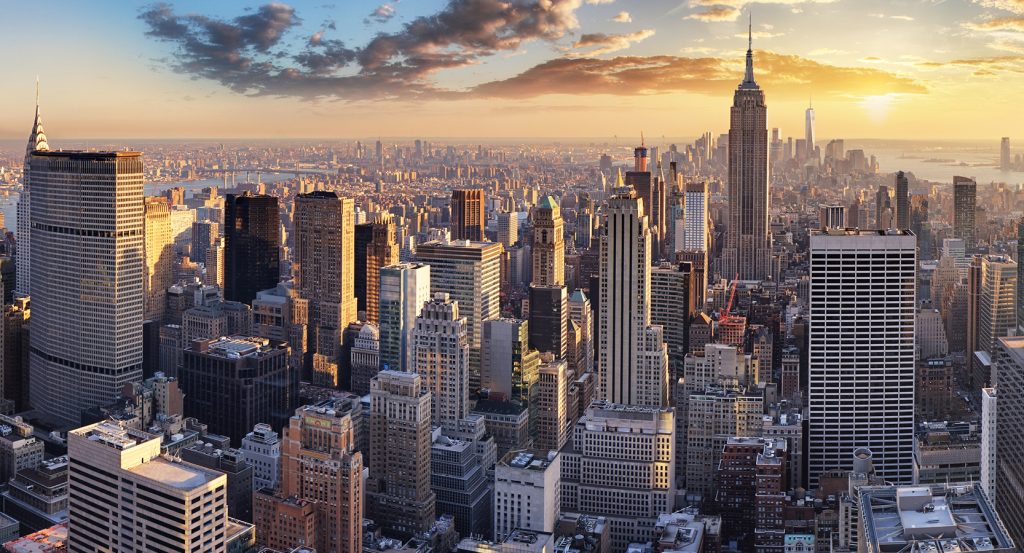
Why you should experience Bryant Park Hotel in New York, NY.
Bryant Park Hotel is a renowned hotel where Midtown's skyscraper ambition, architectural experimentation, corporate theater and Jazz Age imagination converge inside one of Raymond Hood's most audacious early towers.
Set along West 40th Street near 6th Avenue and just steps from Bryant Park, the hotel occupies the former American Radiator Building, completed in 1924 for the American Radiator Company from designs by Raymond Hood and John Mead Howells shortly after their winning Chicago Tribune Tower competition entry propelled Hood to national prominence. Hood rejected the pale masonry conventions of contemporary office towers for manganese-darkened brick representing coal and gold-colored architectural ornament suggesting fire, while polished black Swedish granite, bronze framing and abstracted Gothic forms turn the headquarters itself into an architectural expression of the heating company's business. Sculptor René Paul Chambellan contributed ornament to the exterior, and Hood pushed elevators, stairs and service functions toward one side of the floor plates so offices could receive unusually generous natural light and ventilation. Georgia O'Keeffe immortalized the nocturnal tower in her 1927 painting Radiator Building, Night, New York, capturing its illuminated crown and searchlights from the Shelton Hotel and cementing the black-and-gold skyscraper within the visual mythology of interwar Manhattan.
What you should know about Bryant Park Hotel.
Bryant Park Hotel is best known for opening in 2001 after hotelier Brian McNally and architect David Chipperfield converted the former corporate headquarters into a boutique property, introducing a new hospitality character to an address that had spent most of the twentieth century associated with American Radiator and its successor, American Standard. The conversion created 130 guestrooms and placed a theater in the building's lower levels, while the hotel operated near capacity during much of its first two months, giving McNally's project immediate traction during Manhattan's early-2000s boutique-hotel boom. The property's arrival also followed major preservation milestones for the tower, including New York City designation in 1974 and addition to the National Register of Historic Places in 1980, ensuring that its conversion unfolded within a tightly protected architectural envelope. McNally and Chipperfield introduced hospitality without erasing the building's corporate-era presence, establishing the 40 West 40th Street address as one of New York's most unusual conversions from a purpose-built company headquarters into an independent hotel.
Koi New York added a separate cultural chapter in 2005, carrying the Los Angeles-born restaurant concept east and establishing a 177-seat, multilevel dining room entered through ornate steel doors inside the hotel. The interior references both its Bryant Park setting and Koi's California predecessor through a lush garden composition, while the culinary program interprets Japanese cooking through dishes including Koi Crispy Rice, miso-bronzed black cod and lobster tacos alongside sushi and sashimi. Koi became particularly entwined with New York's fashion and entertainment circles during the years when Bryant Park hosted New York Fashion Week, drawing musicians and industry figures including Madonna and Rihanna into the hotel's orbit. The restaurant consequently gave Bryant Park Hotel a second character beyond its architectural pedigree, connecting an early-twenty-first-century Manhattan hotel with the fashion, dining and celebrity culture that animated Bryant Park during the property's formative years.
How to fold Bryant Park Hotel into your trip.
Bryant Park Hotel works as the anchor for an afternoon tracing public-space reinvention, Beaux-Arts intellectual ambition and Gilded Age collecting through the cultural institutions surrounding West 40th Street.
Begin at Bryant Park, where the site became public property in 1686, served as Reservoir Square after opening as a park in 1847, hosted the Crystal Palace exhibition structure beginning in 1853 and received the name of abolitionist and journalist William Cullen Bryant in 1884 before a four-year reconstruction culminated in its celebrated 1992 reopening with 2,000 movable bistro chairs. Continue to Stephen A. Schwarzman Building, where Carrère and Hastings spent 16 years creating the New York Public Library's Beaux-Arts research center above the former Croton Reservoir site, installing 75 miles of shelving before President William Howard Taft dedicated the $9 million building on May 23, 1911 and tens of thousands entered when the doors opened the following morning. Conclude at The Morgan Library & Museum, where Pierpont Morgan commissioned Charles Follen McKim in 1902 to create an Italian Renaissance-inspired private library completed in 1906, before Morgan's son Jack made the collection a public institution in 1924 and Renzo Piano's 2006 expansion added 75,000 square feet while integrating the historic campus with three steel-and-glass pavilions. The progression moves from the remarkable civic recovery of Bryant Park through Carrère and Hastings' marble temple of public scholarship into Morgan and McKim's intensely personal world of collecting, revealing three different expressions of New York cultural ambition within walking distance of Bryant Park Hotel.
Where your story begins.
Foresyte Travel reveals places that feel extraordinary long before you arrive.
Experience premium editorial crafted for luxury travelers.







































































































