
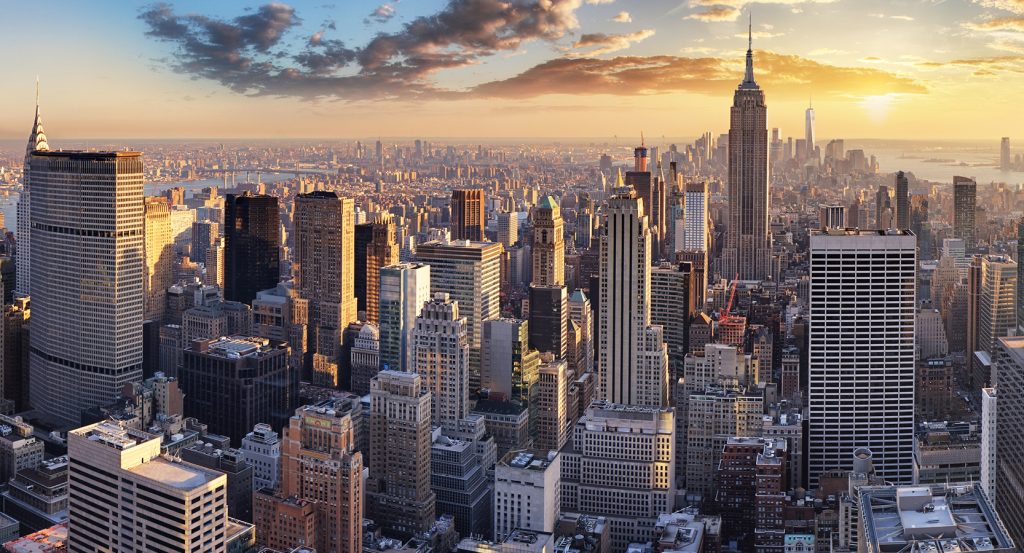
Why you should experience Duane Street Hotel Tribeca, Belvilla District 6 in New York, NY.
Duane Street Hotel Tribeca, Belvilla District 6 is a mercantile hotel where Tribeca's loft culture, cobblestone intimacy, industrial proportions and independent creative character converge within a compact corner property built to echo the neighborhood's residential scale.
Set along Duane Street near Church Street and just steps from Duane Park, the six-story hotel was conceived by Gene Kaufman Associates with interiors by Paul Vega as a deliberately small-scale interpretation of the loft style surrounding Lower Manhattan. Tall windows and 11-foot ceilings establish the vertical proportions associated with Tribeca lofts, while hardwood flooring, natural wood furnishings and slate bathrooms with chrome and marble detailing translate that industrial-residential language into the guestrooms. Vega differentiated the original accommodations through pale yellow and blonde wood in Superior rooms and lilac with cherry wood in Executive and Deluxe rooms, giving the compact interiors a materially specific identity. The result is a hotel where Gene Kaufman Associates' neighborhood-scale architecture and Paul Vega's loft-derived interiors translate Tribeca's former warehouse culture into an unusually intimate expression of downtown hospitality.
What you should know about Duane Street Hotel Tribeca.
Duane Street Hotel Tribeca, Belvilla District 6 is best known for beginning life as a 45-room independent hotel before Hersha Hospitality Trust acquired it from Hersha Development Corporation for $24.75 million in January 2008, making the property Hersha's second independent boutique hotel in New York and an early component of the company's emerging Independent Collection. Hersha later grouped Duane Street with NU Hotel Brooklyn and The Independent in Philadelphia as the foundation of that collection, an experiment centered on smaller properties shaped around the character of their individual neighborhoods. The property evolved to 43 keys before Hersha sold it to Premier Equities for $18 million in May 2021, a transaction valued at $419,000 per room, after which Premier leased the entire 17,500-square-foot hotel to Sonder. Sonder's subsequent collapse produced another chapter in the address's unusually fluid operating history, with the property reemerging in 2026 under OYO-linked PRISM as Belvilla District 6 Formerly Sonder through a 15-year lease, while the six-story building itself was offered for sale.
Chef Jehangir Mehta supplied the property's most consequential culinary chapter, first operating Mehtaphor inside the hotel before recasting the space as Graffiti Earth in May 2016 and bringing the global style of his East Village restaurant Graffiti downtown. The Culinary Institute of America-trained chef had worked as a pastry chef at Jean-Georges and Mercer Kitchen, and Graffiti Earth concentrated those experiences into an 18-to-20-seat room where Indian foundations intersected with Korean, Mexican and Japanese influences through dishes including curry-rice sushi with eggplant and king mushrooms paired with Malbec-mole sauce. Sustainability structured Mehta's concept from ingredients to physical objects, with vegetable-forward cooking, underutilized fish and carefully considered materials reinforcing the “Earth” character while a communal table and counter facing the open kitchen compressed the restaurant around direct contact with the cooking. Graffiti Earth closed when Duane Street Hotel ceased operations in May 2021, ending a culinary sequence that had made Mehta's evolving restaurant concepts an important part of the property for more than a decade.
How to fold Duane Street Hotel Tribeca into your trip.
Duane Street Hotel Tribeca, Belvilla District 6 works as the anchor for an afternoon tracing hospital infrastructure, African American history and skyscraper ambition through the dense architectural layers surrounding Duane Street.
Begin at Staple Street Skybridge, where a cast-iron passage suspended three stories above one of Tribeca's narrowest streets connected New York Hospital facilities, linking the 1893 House of Relief with the 1907 building at 9 Jay Street so patients and hospital functions could move between structures. Continue to African Burial Ground National Monument, where the 1991 rediscovery of a colonial cemetery dating from the seventeenth and eighteenth centuries exposed a burial ground estimated to contain as many as 15,000 free and enslaved Africans, with 419 excavated individuals later studied at Howard University and reinterred in 2003 before the site became a national monument in 2006. Conclude at Woolworth Building, where five-and-dime magnate Frank W. Woolworth commissioned Cass Gilbert to create a 792-foot Gothic skyscraper financed in cash for $13.5 million, inaugurated on April 24, 1913 when President Woodrow Wilson activated its illumination from Washington and remaining the world's tallest building until 1930. The progression moves from an overhead remnant of New York Hospital through the rediscovered lives of colonial New York's African community into Gilbert and Woolworth's soaring expression of twentieth-century commerce, revealing radically different layers of Lower Manhattan history within the compact world surrounding Duane Street.
Where your story begins.
Foresyte Travel reveals places that feel extraordinary long before you arrive.
Experience premium editorial crafted for luxury travelers.







































































































