
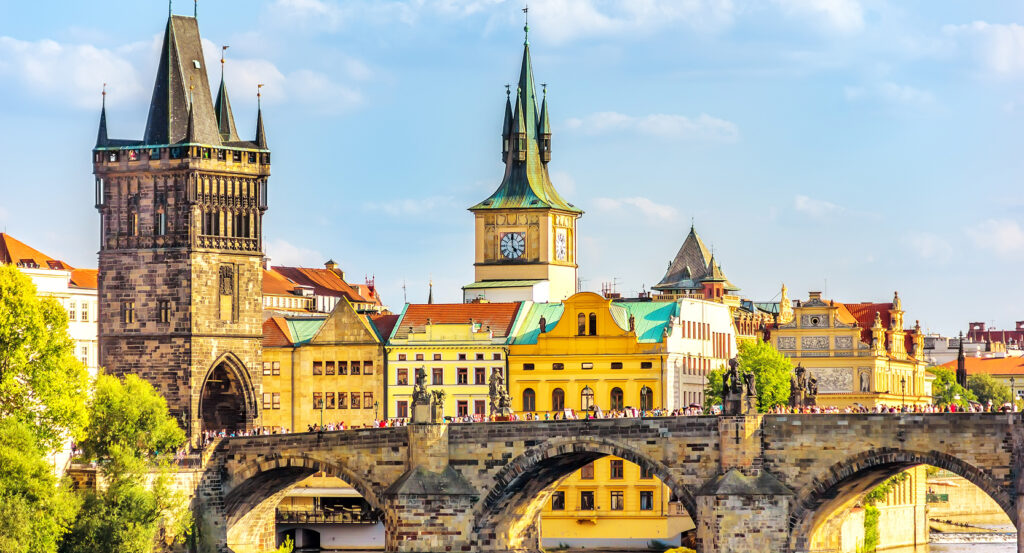
Why you should experience Hotel Kampa Garden in Prague, Czech Republic.
Hotel Kampa Garden is Prague lived at the pace of gardens, bridges, and quiet discovery, a hotel that places you directly beside historic canals and behind the city's busiest façades, offering connection without cacophony and proximity without physical overload.
Located on Kampa Island in Malá Strana, just a short stroll from Charles Bridge, this hotel occupies a part of Prague that feels rooted in everyday rhythm. Arrival feels like stepping from the city's bustle into a calm, tree-lined sanctuary. The exterior's modest scale and shaded garden foretell the experience within: one defined less by theatrical staging and more by spatial harmony and presence. Public areas unfold with an easy composure. The lobby feels like a quiet urban living room, warm woods, natural textures, and soft lighting converge to create an immediate sense of welcome. Sightlines are clear and calming; circulation feels intuitive. The hotel doesn't dominate the island's character, it belongs to it. Guest rooms at Hotel Kampa Garden reflect this character of warmth and restraint. They are generously proportioned for the district and designed to support rest, work, and quiet reflection. Beds are plush yet grounded, built for restorative sleep after days spent walking Prague's layered streets, gardens, and historic lanes. Windows frame views of leafy courtyards, the gentle flow of the Čertovka Canal, or the rooftops and spires of Malá Strana, turning Prague into a living tableau. Furniture is purposeful and comfortable: desks are genuinely usable, seating invites lingering, and storage allows you to unpack fully and feel at home. Lighting is layered and gentle, easing transitions from bright morning routines to calm evening repose. Bathrooms are spacious and composed with daily comfort in mind. Strong showers, thoughtful counter space, and durable finishes make everyday use feel effortless. Nothing in the room distracts; everything supports presence and continuity. Dining and shared spaces at Hotel Kampa Garden extend this sense of restful coherence. Breakfast feels like a moment of calm, a place to start the day without rush and with genuine nourishment rather than physical overwhelm. Lounges and seating areas provide quiet nooks for reading, planning, or simply pausing between explorations. The hotel's garden terrace is one of its defining features: a rare inner-city refuge where air, plants, and quiet merge into a restorative atmosphere. Service here is attentive, warm, and grounded. Staff interactions feel personable and informed. Local guidance is offered with sincerity and depth, helping you navigate Prague's many layers with context. Whether it's hidden passages along the Vltava, lesser-known courtyards, or thoughtful dining recommendations, assistance feels shaped by local insight and respect. The hotel attracts travelers who value substance over spectacle: cultural explorers, couples seeking calm amid the city's rhythm, repeat Prague visitors, and anyone who wants to experience the city not as a checklist of landmarks but as a lived environment.
What you should know about Hotel Kampa Garden.
Hotel Kampa Garden occupies a unique micro-locale, Kampa Island, a piece of Prague often bypassed by visitors rushing between major monuments but cherished by those who move at human pace.
The island's canal, cobblestone paths, and garden plots have shaped its character for centuries, and the hotel embraces this condition. Architecturally, the building was designed to integrate with its setting. Its modest volumes and material choices, warm brick, softened stone, timber, and textured plaster, were selected to resonate with the island's urban scale. Interiors were conceived with the idea of spatial inhabitation. Public spaces were arranged to prioritize calm circulation, acoustic balance, and visual restraint. Materials were chosen for longevity and tactile resonance rather than trend vocabulary, allowing rooms and corridors to feel composed even under repeated occupancy. Guest room planning stemmed from observation of how travelers actually live in space, how they rest, unpack, work, and transition between activities. This behavioral grounding resulted in layouts that feel intuitive and resolved, not fragmented by unnecessary zones or visual statements. Lighting systems were integrated early in design so that both natural and artificial light support the body's rhythms. Bathrooms were introduced with an understanding of daily ritual rather than singular impression, emphasizing strong water systems, generous circulation, and surfaces that feel welcoming under use. Dining and common areas were designed as social infrastructure rather than stage sets; they support calm interaction, pause, and reflection. Operational culture at Hotel Kampa Garden reinforces this thoughtful design logic. Staff training prioritizes local knowledge and situational awareness over scripted hospitality gestures. Interactions feel warm, grounded, and genuinely supportive, offering guidance rooted in neighborhood nuance and Prague's layered history. Guests often return because the hotel feels familiar, a place that supports exploration. In a city where many properties chase view or landmark address, Hotel Kampa Garden's distinction lies in contextual integration, spaces that function reliably under use, service that supports autonomy, and a character rooted in the city's everyday texture.
How to fold Hotel Kampa Garden into your trip.
Hotel Kampa Garden works best when you treat it as a base for slow discovery and mindful movement rather than a waypoint between must-see landmarks.
Begin mornings with calm intention. Enjoy breakfast in the hotel's garden terrace or lounge before stepping out into the narrow lanes of Malá Strana. Walk toward Charles Bridge in soft light, pause at quieter canal edges, and let the city's geometry unfold. Because the hotel sits on Kampa Island, returning midday feels restful. Come back to rest, read, or simply sit in the garden without leaving the rhythm of the day behind. The terrace and lounges provide natural punctuation points in your itinerary, turning pauses into integral moments. In the afternoon, explore adjacent neighborhoods, hidden courtyards, artisan shops, small galleries, and riverside paths reward unhurried attention. Use nearby tram or metro access to reach Prague Castle, the Jewish Quarter, or Old Town Square. Evenings unfold. Dine at refined local eateries or cross the river to enjoy concert venues, then return late through streets that feel calm and residential. The hotel's restful architecture makes late returns feel composed. Hotel Kampa Garden pairs especially well with long weekends, repeat visits, cultural immersion, and itineraries that value depth over checklist travel. By the time you leave, the hotel will feel less like a place you stayed and more like a subtle companion that shaped how Prague felt, not softened, not detached, but lived with presence, calm, and a rare sense of continuity. In a city defined by history and density, that kind of grounded experience becomes its own form of luxury.
Where your story begins.
Foresyte Travel reveals places that feel extraordinary long before you arrive.
Experience premium editorial crafted for luxury travelers.





































































































