
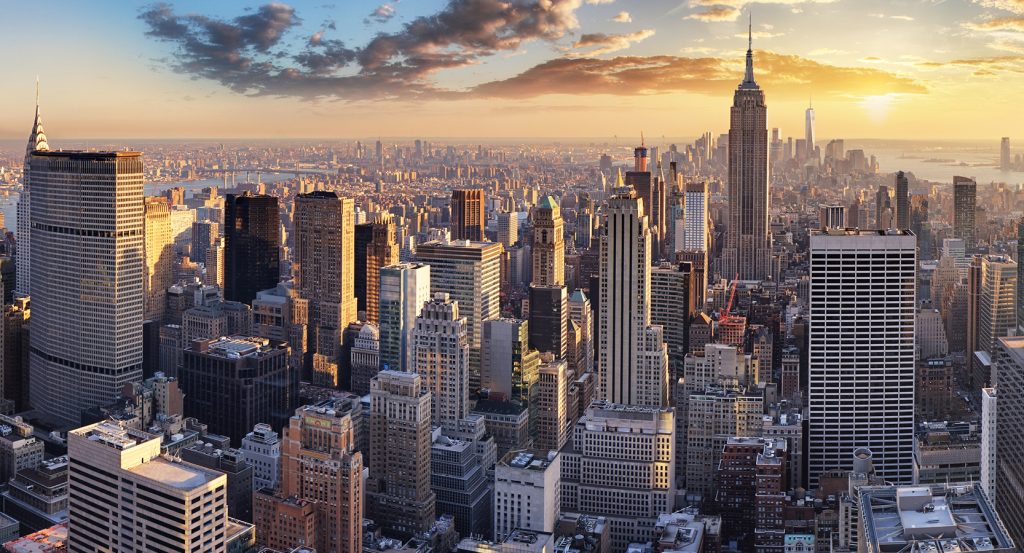
Why you should experience Hotel Seville NoMad - The Unbound Collection in New York, NY.
Hotel Seville NoMad - The Unbound Collection is a storied luxury hotel where NoMad's Beaux-Arts grandeur, turn-of-the-century hospitality culture, architectural craftsmanship and contemporary culinary sophistication converge within a century-old Madison Avenue address.
Set along East 29th Street near Madison Avenue and just steps from Madison Square Park, the hotel combines Harry Allan Jacobs's original masonry composition with an adjoining wing by Charles T. Mott, creating an elaborate ensemble of brick, limestone, terra cotta, curved metal windows and ornamental balconies. The interiors carry that architectural inheritance into a contemporary style of vintage-inspired furnishings, textured materials and restrained gray and blue tones, while Thomas Juul-Hansen's cascading stone bar gives Il Bar a sculptural centerpiece within the renewed lobby. Scarpetta and subterranean The Seville introduce distinct restaurant and nightlife personalities without severing the building's connection to its early hospitality character. The result is a hotel where Harry Allan Jacobs, Charles T. Mott and Thomas Juul-Hansen connect NoMad's architectural sophistication with a contemporary social character built around design, dining and more than a century of hotel culture.
What you should know about Hotel Seville NoMad - The Unbound Collection.
Hotel Seville NoMad - The Unbound Collection is best known for originating as Hotel Seville in 1904, when architect Harry Allan Jacobs completed a 12-story Beaux-Arts hotel at Madison Avenue and East 29th Street after Maitland E. Graves commissioned the project on property acquired by developer Myer Hellman. Jacobs conceived an unusually elaborate apartment hotel whose original plans anticipated 410 guest units and 300 bathrooms, while brick, terra cotta, limestone, balconies, curved metal windows, Ionic columns and rusticated masonry gave the exterior a level of ornamentation appropriate to the increasingly fashionable blocks north of Madison Square. Demand prompted an 11-story western annex designed by Charles T. Mott and completed in 1907, extending the property across East 28th and East 29th streets and creating the architectural complex that survives beneath subsequent hotel identities. The building later operated as Carlton Hotel and The James New York - NoMad before GFI Hospitality returned the Seville name and moved the property into The Unbound Collection by Hyatt, with Hyatt announcing 348 guestrooms and a restoration conceived around its early twentieth-century character. Harry Allan Jacobs's original tower, Charles T. Mott's expansion, successive hospitality identities and the revived Seville name compress more than a century of Manhattan hotel history into a single NoMad property.
Thomas Juul-Hansen develops the current social character through Il Bar, where a cascading stone bar anchors a residentially influenced lobby environment designed to move from daytime coffee into cocktails and small plates after dark. Scarpetta gives the property its principal culinary institution through modern Italian cooking, seasonal ingredients and a restaurant history that includes a James Beard Award nomination and a three-star review from The New York Times. The Seville carries the building's revived name below street level through live music, late-night cocktails and richly layered interiors conceived around the atmosphere of New York's Gilded Age, extending the historical thesis into nightlife. Together, Thomas Juul-Hansen, Il Bar, Scarpetta and The Seville give Hotel Seville NoMad - The Unbound Collection a coherent contemporary character in which lobby design, Italian dining and subterranean music culture build naturally upon the architectural character established by Jacobs and Mott.
How to fold Hotel Seville NoMad - The Unbound Collection into your trip.
Hotel Seville NoMad - The Unbound Collection works as the anchor for an afternoon tracing decorative art, private collecting and architectural ambition through the cultural institutions surrounding Madison Square.
Begin at National Arts Club, where the organization founded by Charles DeKay occupies the former Samuel J. Tilden residence on Gramercy Park, surrounding exhibitions, performances and artistic programming with interiors connected to one of nineteenth-century New York's prominent political figures. Continue to Morgan Library & Museum, where J. Pierpont Morgan commissioned Charles Follen McKim to create a private library for manuscripts, rare books, drawings and printed works within an Italian Renaissance-inspired composition of marble, carved wood and richly painted decoration. Conclude at Empire State Building, where Shreve, Lamb & Harmon translated interwar Manhattan ambition into a steel-framed skyscraper rising 1,250 feet to its original roof and completed through a construction campaign whose speed became inseparable from New York's vertical mythology. The progression moves from the artistic society surrounding Samuel J. Tilden's former home through Morgan's intensely personal culture of collecting into the engineering confidence of Shreve, Lamb & Harmon, revealing the architecture, art and metropolitan ambition surrounding Hotel Seville NoMad - The Unbound Collection.
Where your story begins.
Foresyte Travel reveals places that feel extraordinary long before you arrive.
Experience premium editorial crafted for luxury travelers.







































































































