Why you should experience Melrose Avenue in Seattle, Washington.
Melrose Avenue is a spirited Capitol Hill corridor where creative culture, architectural character, and spectacular city views converge along one of Seattle's most distinctive hillside streets.
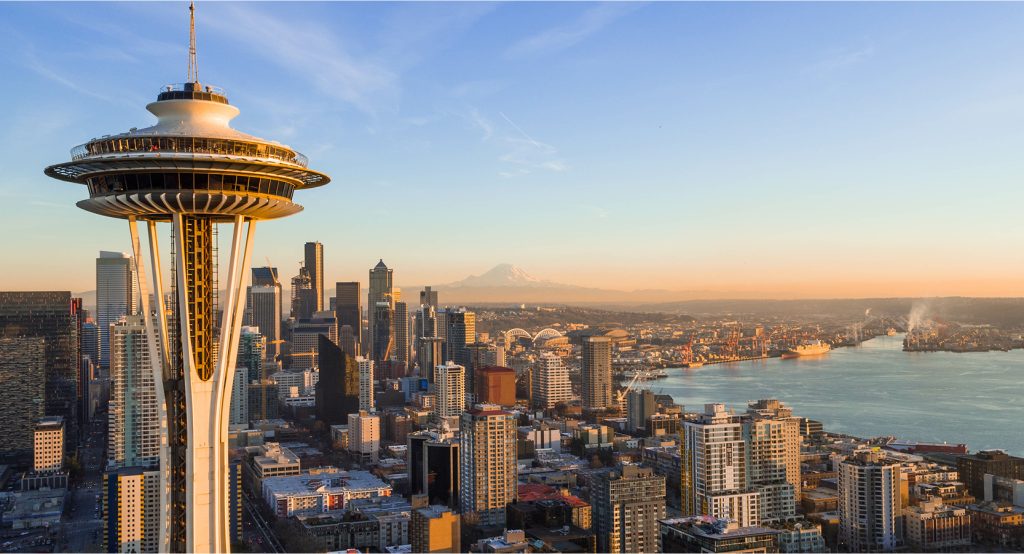
Running through Capitol Hill between Downtown and Eastlake, this character-rich corridor reveals a side of Seattle shaped as much by neighborhood life as by panoramic scenery. Historic brick apartment buildings, independent cafés, acclaimed restaurants, colorful murals, intimate cocktail bars, and thoughtfully preserved streetscapes create an atmosphere that feels unmistakably local while remaining just minutes from the city's commercial core. The avenue's elevated position rewards nearly every walk with sweeping views across Interstate 5 toward the downtown skyline, Elliott Bay, and the Olympic Mountains, while its mix of longtime institutions and creative newcomers reflects the evolving spirit of Capitol Hill. The result is a corridor defined by neighborhood authenticity, artistic energy, and enduring urban character.
What you should know about Melrose Avenue.
Melrose Avenue is best known for overlooking Interstate 5, among the largest highway construction projects in Seattle's history, whose construction between 1962 and 1967 demolished more than 1,500 homes and businesses, permanently reshaped dozens of city blocks, and physically divided Capitol Hill from downtown, transforming Seattle's urban fabric while profoundly influencing neighborhood identity, transportation, and redevelopment for generations.
The immense undertaking displaced thousands of residents and businesses while carving a massive corridor through the heart of the city, fundamentally altering how Seattle grew during the second half of the twentieth century. In the decades that followed, Melrose Avenue evolved into one of the city's most symbolic vantage points, where residents could literally overlook the infrastructure that reshaped their neighborhood while reclaiming adjacent spaces through parks, public art, housing, and locally owned businesses. Today the corridor represents both one of Seattle's most consequential chapters in urban planning and one of its strongest examples of neighborhood resilience, demonstrating how communities continually adapt, reinvent, and redefine themselves around transformative civic projects.
How to fold Melrose Avenue into your trip.
Melrose Avenue works as an exploration of Seattle's creative culture, skyline viewpoints, and neighborhood life.
Begin in the morning at Melrose Market, where artisan food vendors, independent retailers, and beautifully restored industrial architecture immediately establish the corridor's creative identity. Continue toward Cal Anderson Park, whose energetic public spaces and community atmosphere provide a broader appreciation of Capitol Hill before enjoying lunch at one of Melrose Avenue's celebrated neighborhood restaurants. From there, make your way to Kerry Park, where one of the world's most iconic skyline panoramas provides a memorable conclusion while placing the downtown landscape you've experienced throughout the day into spectacular perspective. Along the route, public murals, boutique cafés, locally owned shops, tree-lined streets, and panoramic overlooks demonstrate how Melrose Avenue seamlessly connects artistic expression with one of Seattle's most compelling urban neighborhoods. The progression moves naturally from a celebrated local marketplace to Capitol Hill's civic heart to Seattle's defining viewpoint, revealing why Melrose Avenue remains one of the city's most rewarding neighborhood corridors.
Where your story begins.
Foresyte Travel reveals places that feel extraordinary long before you arrive.
Experience premium editorial crafted for luxury travelers.