
Why SoHo matters.
SoHo is among the world's most influential neighborhoods where Lower Manhattan's cast-iron architecture, artistic legacy, luxury shopping, and creative culture create an urban district unlike any other.
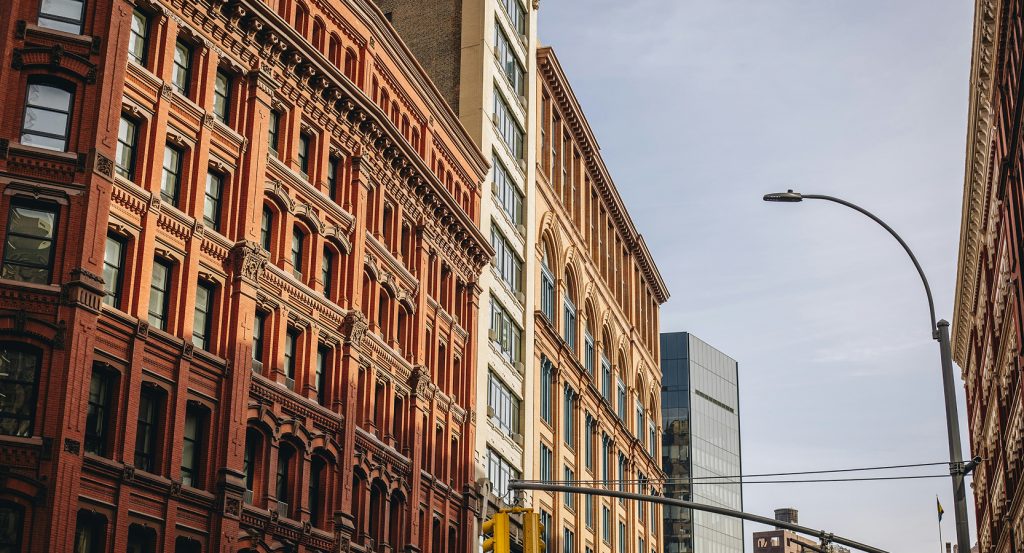
Positioned between Greenwich Village, NoHo, Little Italy, and Tribeca near Broadway and just steps from Prince Street, this internationally renowned neighborhood combines impeccably preserved cast-iron buildings, designer boutiques, contemporary art galleries, acclaimed restaurants, and energetic streets that have shaped New York City's cultural character for generations. Elegant nineteenth-century façades, expansive loft windows, Belgian-block side streets, and constantly evolving storefronts establish a streetscape celebrated equally for architectural significance and creative energy. Every block reveals another chapter in the transformation of an industrial district into one of the world's premier cultural and commercial destinations. The result is a neighborhood defined by architectural distinction, artistic influence, and one of New York City's most iconic urban landscapes.
What defines SoHo.
SoHo is best known for preserving the largest collection of cast-iron architecture in the world, encompassing 500 historic buildings constructed primarily between the 1840s and 1890s during Manhattan's emergence as America's commercial capital. The neighborhood's name, South of Houston Street, was coined during the 1960s as artists began converting vacant manufacturing lofts into studios and living spaces, transforming a declining industrial district into one of the most influential artistic communities of the twentieth century. During the late nineteenth century, SoHo served as the center of New York's dry goods trade, where pioneering architects including John B. Snook, Griffith Thomas, and Isaac F. Duckworth designed elaborate cast-iron façades that allowed larger windows, rapid construction, and unprecedented architectural ornamentation. Recognizing the district's extraordinary significance, New York City designated the SoHo-Cast Iron Historic District in 1973, while the area was subsequently listed on the National Register of Historic Places. Beginning in the 1970s and 1980s, internationally acclaimed artists, galleries, and cultural institutions established SoHo as one of the world's leading contemporary art centers before luxury fashion houses, flagship retailers, and globally recognized designers transformed Broadway, Prince Street, and Greene Street into premier shopping destinations. Today the neighborhood remains an internationally recognized model of historic preservation and adaptive reuse, where restored industrial lofts, celebrated architecture, thriving commercial activity, and enduring artistic heritage continue shaping one of New York City's most influential urban environments.
The neighborhood integrates expansive cast-iron façades, expansive loft buildings, pedestrian-oriented streets, landmark retail architecture, and carefully preserved historic streetscapes into one of the world's most distinctive urban districts. Restored commercial buildings, art galleries, luxury boutiques, public art, and energetic street life reinforce the neighborhood's remarkable balance between historic preservation and contemporary commerce. Ongoing conservation efforts protect one of the finest surviving collections of nineteenth-century commercial architecture while allowing SoHo to evolve as a global center of design, fashion, and culture. Every element demonstrates how architecture, adaptive reuse, historic preservation, and creative enterprise combine to create one of the world's most influential neighborhoods.
How SoHo fits.
SoHo works as the cultural centerpiece of an exploration through Lower Manhattan's historic neighborhoods.
Begin at Little Italy, where New York's celebrated immigrant heritage establishes the remarkable historical character of Lower Manhattan before continuing to SoHo. Continue to NoHo, whose historic architecture and creative institutions naturally extend the neighborhood's artistic legacy across adjoining districts. Conclude in Washington Square Park, where one of Manhattan's great civic spaces provides a memorable finale celebrating the creativity, architecture, and urban vitality that define Downtown New York. The progression moves naturally from historic immigrant streets to one of the world's great architectural neighborhoods before concluding within one of Manhattan's most celebrated public squares, revealing why SoHo remains among the world's defining urban destinations.
Where your story begins.
Foresyte Travel reveals places that feel extraordinary long before you arrive.
Enjoy editorial crafted for luxury travelers.
Foresyte may earn a commission when you book.







































































































