
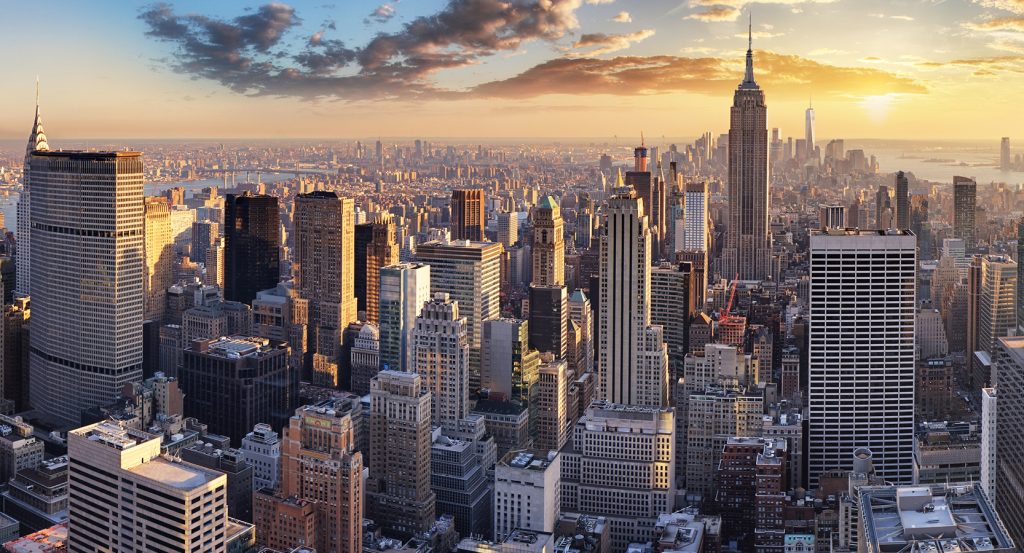
Why you should experience The Hilton Club New York in New York, NY.
The Hilton Club New York is an elevated residence club where Midtown's postwar ambition, Rockefeller Center prestige, entertainment history and vertical metropolitan energy converge within the upper reaches of one of New York's defining 1960s hotels.
Set along Avenue of the Americas near West 53rd Street and just steps from The Museum of Modern Art, the club occupies dedicated upper floors within New York Hilton Midtown, the 1963 tower designed by William B. Tabler Architects with Harrison & Abramovitz and developed by Hilton Hotels Corporation, Rockefeller Center and Uris Buildings Corporation. The parent hotel opened with 2,153 rooms as New York City's largest, bringing Conrad Hilton's rapidly expanding international hospitality empire into the architectural orbit of Rockefeller Center. Hilton Grand Vacations inserted a different model into that immense building in 2002, creating its first urban ownership property high above 6th Avenue. The result is a club where the scale and confidence of postwar Hilton provide the architectural foundation for a more private experiment in recurring Manhattan residence.
What you should know about The Hilton Club New York.
The Hilton Club New York is best known for opening in 2002 as Hilton Grand Vacations' first urban property, establishing a city-centered ownership model after the company had spent its first decade building a portfolio primarily around conventional vacation destinations. The club was created within New York Hilton Midtown, whose 487-foot tower began construction in 1961 and opened June 26, 1963 as the New York Hilton at Rockefeller Center with 2,153 rooms, making it the largest hotel in New York at the time. William B. Tabler Architects and Harrison & Abramovitz designed the building for a development partnership involving Hilton Hotels Corporation, Rockefeller Center and Uris Buildings Corporation, replacing an earlier concept by Morris Lapidus and giving 6th Avenue a broad slab-form tower closely associated with postwar corporate modernism. The building subsequently became woven into American technological history on April 3, 1973, when Motorola engineer Martin Cooper stood outside the Hilton and placed the first public handheld cellular telephone call using a prototype DynaTAC, calling rival Bell Labs engineer Joel Engel while a base station operated from nearby 1345 Avenue of the Americas. The Hilton Club's 2002 arrival repurposed part of a hotel already associated with Rockefeller Center development, Conrad Hilton's expansion era and a pivotal moment in telecommunications history, establishing Hilton Grand Vacations' urban strategy inside one of its parent brand's most historically consequential New York addresses.
Hilton Grand Vacations subsequently used The Hilton Club New York as the foundation for a much broader Manhattan strategy, making the 2002 property the ancestor of an urban collection that eventually expanded through West 57th Street by Hilton Club, The Residences by Hilton Club, The Central at 5th by Hilton Club and The Quin by Hilton Club. The company's 2018 acquisition of The Quin made that hotel its fourth New York property, while The Residences celebrated its own grand opening on Avenue of the Americas that same year, demonstrating how dramatically the city portfolio had developed from The Hilton Club's initial experiment sixteen years earlier. Hilton Grand Vacations itself separated from Hilton in 2017 to become an independent publicly traded company, placing the New York club's history across two distinct corporate eras while retaining the Hilton name and its original location within New York Hilton Midtown. The progression from a single 2002 urban ownership experiment into a multi-property Manhattan network makes The Hilton Club New York consequential less for conventional hotel programming than for proving that Hilton Grand Vacations' resort ownership model could be translated successfully into the center of a major global city.
How to fold The Hilton Club New York into your trip.
The Hilton Club New York works as the anchor for an afternoon tracing the modern art, broadcast culture and architectural ambition that reshaped Midtown during the twentieth century.
Begin at The Museum of Modern Art, founded in 1929 by patrons including Abby Aldrich Rockefeller, Lillie P. Bliss and Mary Quinn Sullivan, where a collection that began with eight prints and one drawing developed into one of the world's most influential institutions devoted to modern and contemporary art. Continue to Paley Center for Media, descended from the Museum of Broadcasting founded by CBS chairman William S. Paley in 1975, connecting the afternoon to the television and radio industries that made Midtown one of America's great centers of mass communication. Conclude at Rockefeller Center, whose fourteen-building original complex developed during the 1930s under John D. Rockefeller Jr. and united architecture, broadcasting, public art and commerce on an unprecedented urban scale immediately south of the Hilton. The progression moves from Rockefeller-supported modern art through Paley's preservation of broadcasting into the architectural complex that fused media and Midtown development, revealing the twentieth-century cultural forces already surrounding this address when New York Hilton Midtown opened in 1963.
Where your story begins.
Foresyte Travel reveals places that feel extraordinary long before you arrive.
Experience premium editorial crafted for luxury travelers.







































































































