Why The Ritz-Carlton New York matters.
The Ritz-Carlton New York, Central Park is a patrician hotel where Midtown's Central Park frontage meets Emery Roth's prewar architecture, transforming the former Hotel St. Moritz into a luxury property whose limestone base and elevated park views preserve nearly a century of hospitality history.
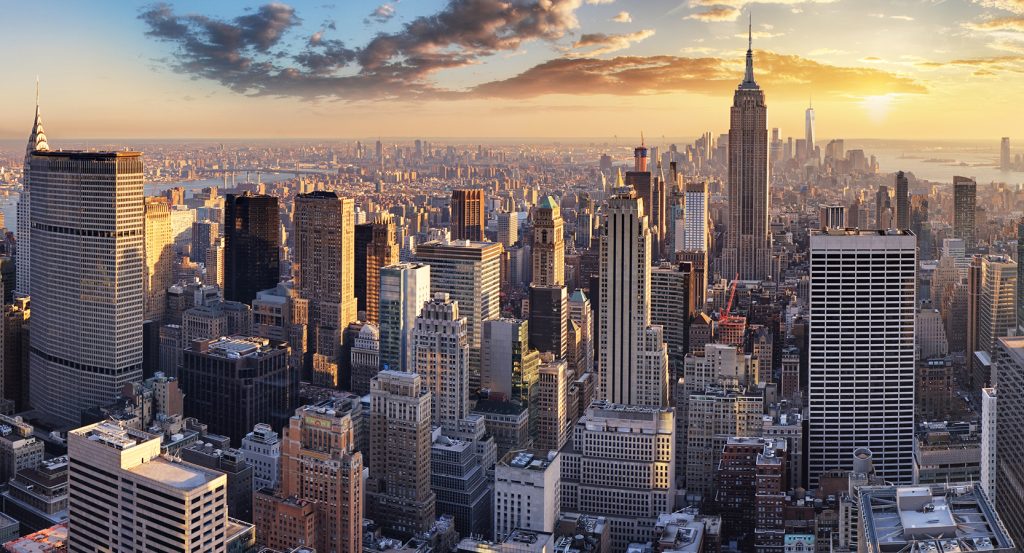
Set along Central Park South near Avenue of the Americas and just steps from Grand Army Plaza, the hotel occupies Midtown's northern edge between Central Park's southeastern landscape, 5th Avenue's luxury corridor and the masonry towers extending west along West 59th Street toward Columbus Circle. Emery Roth composed the building with a limestone base, brick elevations and vertically emphasized setbacks, giving the structure the height and formal massing characteristic of Manhattan's great prewar residential and hotel towers. Principal interiors rise directly opposite Central Park, creating broad northern perspectives across mature tree canopies toward the Upper East and Upper West Side skylines. The relatively narrow frontage concentrates the arrival sequence along Central Park South before the building ascends through successive setbacks above neighboring street-level façades. The result is a hotel whose prewar massing, direct park frontage and elevated northern outlook preserve Emery Roth's architectural presence within one of Manhattan's most prestigious hotel corridors.
What defines The Ritz-Carlton New York.
The Ritz-Carlton New York, Central Park is best known for occupying the former Hotel St. Moritz, designed by Emery Roth and opened in 1930 during the final great wave of prewar hotel construction surrounding Central Park. Harris H. Uris and Percy Uris developed the building, commissioning Roth to create a 33-story tower on the former site of the New York Athletic Club. The St. Moritz joined a remarkable concentration of major hotels facing Central Park, placing Roth's architecture alongside properties that made West 59th Street one of New York's most prestigious lodging addresses. Vincent Astor acquired the hotel in 1932, only two years after opening, adding the property to the extensive real-estate interests of one of Manhattan's most consequential families. Later ownership passed through a succession of operators, and the building became associated with Loews before Australian entrepreneur Alan Bond acquired it during the 1980s. Donald Trump purchased the St. Moritz in 1985 for $72 million, holding the property during a decade in which several major Central Park hotels changed ownership at exceptional valuations. Trump sold the building in 1988 for $180 million to Park Tower Realty, which later transferred it to Millennium Partners. Millennium undertook a major redevelopment during the late 1990s, retaining the historic tower while reconceiving the property for a new luxury hotel and private residences. The Ritz-Carlton Hotel Company assumed the hotel operation, and The Ritz-Carlton New York, Central Park opened in 2002 after the extensive transformation. The project returned the building to the highest tier of New York hospitality more than seven decades after the St. Moritz first opened on Central Park South. Millennium Partners sold the hotel interest to Host Marriott Corporation in 2006 for $416 million, establishing another major ownership turn only four years after the Ritz-Carlton debut. Ashkenazy Acquisition Corporation subsequently acquired the property for $105 million in 2012, extending an ownership history that has repeatedly attached exceptional real-estate value to Emery Roth's Central Park frontage.
Thierry Despont reshaped the hotel through a comprehensive transformation completed in 2019, developing interiors around the character of a highly tailored Manhattan residence and the colors of Central Park directly outside. Despont used pale woods, blue and green textiles, polished metal and custom furniture to establish a quieter visual composition across the renewed private interiors and public areas. Large-scale photographs by American artist Rodney Smith became a defining component of the redesigned corridors and private spaces, bringing surreal black-and-white imagery into discussion with the restrained furnishings. Central Park supplied the principal chromatic reference through deep greens, muted blues and neutral tones selected to change character with natural light entering from the northern exposures. Contour opened as the principal social and dining room following the transformation, with Despont organizing the interior around curved seating, dark wood, brass and artwork selected to sustain the residential character. Club Lounge interiors received another distinct treatment, using bookshelves, artwork and domestic-scale furniture to create smaller visual zones within the upper-floor setting. La Prairie operates the property's spa, connecting the Swiss skincare house with the Ritz-Carlton through treatments developed around its cellular-science cosmetics. A later collaboration with artist Hunt Slonem introduced his vivacious rabbit imagery into a specialty suite, extending the hotel's contemporary art program beyond Despont's original photographic selections. The Ritz-Carlton New York, Central Park uses Despont's residential composition, Smith's photography, park-derived colors and later artistic collaborations to create a contemporary interior chapter inside Roth's surviving prewar tower.
How The Ritz-Carlton New York fits.
The Ritz-Carlton New York, Central Park works as the anchor for an outing connecting a Gilded Age mansion built for an industrial fortune, an intimate concert hall that transformed American musical life and a sculptural modernist museum whose collection reshaped the presentation of twentieth-century art.
Begin at Cooper Hewitt, Smithsonian Design Museum, housed in the mansion Andrew Carnegie commissioned from Babb, Cook & Willard and completed in 1902. Carnegie chose an unusually open site far north of Manhattan's established millionaire district and equipped the residence with structural steel, central heating and one of the earliest residential passenger elevators in New York. The building later became home to the Cooper Union Museum for the Arts of Decoration before entering the Smithsonian Institution and reopening as Cooper Hewitt in 1976. Its collection spans centuries of decorative arts and design, placing historic objects and contemporary experimentation within Carnegie's former domestic architecture. Continue to Carnegie Hall, commissioned by Andrew Carnegie after conductor Walter Damrosch introduced him to plans for a permanent New York concert venue. William Burnet Tuthill designed the Italian Renaissance Revival building, which opened in 1891 with a festival featuring Pyotr Ilyich Tchaikovsky. The hall subsequently became a central stage for classical music, jazz, popular performance and political events, hosting figures extending from Gustav Mahler and Arturo Toscanini to Billie Holiday and the Beatles. A campaign led by Isaac Stern prevented demolition during the 1950s, and New York City acquired the building in 1960 to preserve its musical function. Conclude at Guggenheim Museum, commissioned by Solomon R. Guggenheim and museum director Hilla Rebay from Frank Lloyd Wright in 1943. Wright spent more than a decade developing the building, ultimately creating an inverted spiral whose continuous ramp challenged conventional gallery planning and transformed movement itself into an architectural event. The museum opened in October 1959, six months after Wright's death, placing his final major New York work opposite Central Park. Its collection grew from Guggenheim's holdings of nonobjective art to encompass major works by Wassily Kandinsky, Pablo Picasso, Paul Klee and generations of later artists. The progression moves from Cooper Hewitt, Smithsonian Design Museum's transformation of Andrew Carnegie's residence into a design institution through Carnegie Hall's preservation of New York's great musical stage and culminates at Guggenheim Museum, where Frank Lloyd Wright reinvented the architectural possibilities of the modern art museum.
Where your story begins.
Foresyte Travel reveals places that feel extraordinary long before you arrive.
Enjoy editorial crafted for luxury travelers.
Foresyte may earn a commission when you book.