
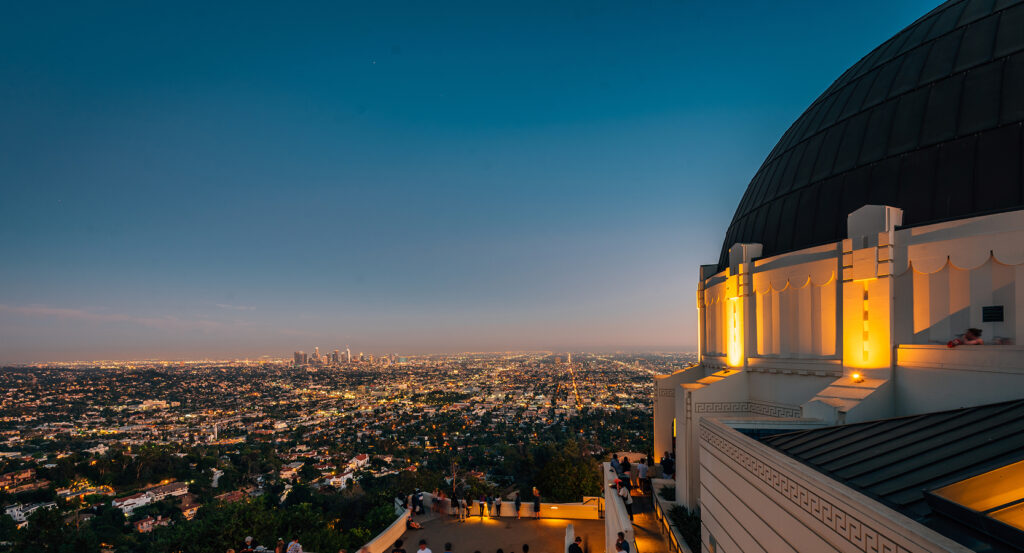
Why Topanga State Park matters.
Topanga State Park is an expansive mountain preserve where Topanga's canyon character meets ancient cultural landscapes, chaparral-covered ridges and one of the largest protected wildlands embedded within a major American metropolis.
Set within the Santa Monica Mountains near Topanga Canyon Boulevard and just beyond the residential core of Topanga, the park extends across a vast mountain system between the San Fernando Valley and Santa Monica Bay, bounded by Topanga Canyon to the west, Rustic Canyon to the east and the communities of Pacific Palisades and Brentwood along its southern reaches, where deeply incised drainages descend from interior ridges toward the Pacific Ocean. More than 11,500 acres encompass open grassland, oak woodland, coastal sage scrub, bay laurel woodland, walnut woodland, riparian corridors and mature chaparral distributed across steep changes in elevation and exposure. Marine fossils, sedimentary formations, earthquake faults and volcanic intrusions reveal geological processes extending far beyond the human history visible across the mountains. Thirty-six miles of trails cross exposed ridgelines, shaded canyon floors and elevated slopes with broad views toward Santa Monica Bay, the Los Angeles Basin and neighboring ranges. The result is an immense mountain landscape whose ecological diversity, geological complexity and uninterrupted canyon terrain preserve an unusually large section of the Santa Monica Mountains within the metropolitan geography of Los Angeles.
What defines Topanga State Park.
Topanga State Park is best known for preserving a Santa Monica Mountains landscape carrying evidence of human occupation extending back thousands of years before the modern park existed. Lands within its boundaries occupy an interface between territories associated with the Tongva and Chumash peoples, with archaeological sites demonstrating long settlement across the mountains and adjoining coast. The Lower Topanga Canyon village site entered archaeological study after Sophie Bayler identified it in 1905, preceding a far more intensive period of investigation during the 1940s and 1950s. CA-LAN-1 became the first archaeological site entered into California's State Trinomial System within Los Angeles County and yielded several thousand milling stones. Archaeologists Robert F. Heizer and Adan E. Treganza conducted significant work there, contributing to the definition of what became known as the Topanga Archaeological Complex. Radiocarbon dating placed occupation at CA-LAN-1 at more than 6,000 years before present, making it among the oldest known habitation sites in the region. Twenty-nine Native American archaeological sites and isolated finds have been identified across parkland, connecting interior mountain ridges, canyon watercourses and the lower watershed with successive periods of settlement. Later Spanish and Mexican landholding incorporated portions of the mountains into Rancho Boca de Santa Monica and Rancho San Vicente y Santa Monica, associated respectively with Francisco Marquez and Ysidro Reyes and with Francisco Sepúlveda. Twentieth-century land use brought camps, ranches, private retreats and recreational properties into the same mountains, including Rancho Las Lomas Celestiales, developed by the Trippet family during an era when affluent Angelenos established weekend properties beyond the urbanized basin. The surviving layers place prehistoric settlement, rancho-era landholding and twentieth-century mountain retreat culture across a landscape whose significance reaches far beyond its modern recreational role.
Public preservation emerged from decades of pressure over development, extraction and the future of the Santa Monica Mountains. Alphonzo Bell pursued a major limestone quarry and cement operation in the Topanga area during the late 1920s, provoking local opposition before deteriorating economic conditions helped end the project 1931, though quarrying persisted until shortly after World War II. Environmental advocacy strengthened as postwar subdivision pushed deeper into the mountains, contributing to the preservation movement that began assembling Topanga State Park during the 1960s. California's 1964 park bond supplied major acquisition resources during a statewide period of wildland protection, and the Topanga park unit opened to the public in 1973. Subsequent acquisitions expanded its geographic reach through Los Leones and Lower Topanga Canyon, eventually connecting interior mountain terrain with the Pacific coast. That preservation history entered a severe new chapter on January 7, 2025, when the Palisades Fire crossed into parkland during a 24-day fire that burned more than 23,000 acres across the region. More than 8,000 acres of Topanga State Park burned, 28 park structures were lost, and the historic Topanga Ranch Motel was destroyed along with extensive damage to roads, trails, bridges and natural habitat. Unburned hiking areas reopened during March 2025 as rehabilitation proceeded across the larger property. California State Parks initiated a formal recovery planning process in June 2026, extending the park's decades-long history of land preservation into the reconstruction of a mountain system profoundly altered by one of the most destructive fires in modern Los Angeles history.
How Topanga State Park fits.
Topanga State Park works as the anchor for a canyon outing connecting artistic refuge during the Hollywood blacklist, a community institution physically built by Topanga residents and an improbable 1930 country club that passed through radically different chapters of Southern California social history.
Begin at Will Geer Theatricum Botanicum, whose origins reach into the McCarthy era after actor Will Geer was called before the House Committee on Un-American Activities and lost access to major Hollywood studio work. Geer and actress Herta Ware settled on Topanga acreage, where his botany training joined theatrical practice as the property became a refuge for blacklisted performers and folk musicians during the 1950s. A natural bowl beneath California live oaks developed into an outdoor stage for Shakespeare and politically engaged performance, and Geer revived the enterprise after his success as Zebulon Walton on The Waltons. The family formed the nonprofit Theatricum Botanicum in 1973, drawing performers including Pete Seeger, Arlo Guthrie, Della Reese and Burl Ives to workshops and concerts. Herta Ware and a resident company continued the theater after Geer's death in 1978, and daughter Ellen Geer subsequently carried the repertory tradition into another generation. Continue to Topanga Community House, created through a grassroots undertaking that began when the Topanga Woman's Club formed in 1949 with the goal of creating a gathering place for the canyon. A 12-acre property became available the following year, and residents pursued an unusually literal form of community construction through fundraisers, volunteer labor and donated resources. The 1952 “A Nickel a Brick” campaign financed the concrete blocks needed for the walls, and volunteers gradually erected the structure over the following decade before paying its mortgage. The unfinished building was already hosting community gatherings before its roof and interior were complete, turning the construction project itself into a collective civic enterprise. A Strawberry Festival originating there during the 1960s subsequently developed into Topanga Days, the Memorial Day weekend tradition that became the organization's principal annual fundraiser. The property later became home to the Topanga Symphony and generations of local cultural gatherings, preserving a physical expression of the canyon's unusually strong tradition of resident-built institutions. Conclude at The Mountain Mermaid, constructed in 1930 as the clubhouse for Sylvia Park Country Club during an ambitious attempt to subdivide a mountain ranch into a recreational residential community. Architect Charles E. Finkenbinder designed the Spanish Mediterranean building, completed by brothers Charles and Irving Goldman in 100 days for $10,000 before the Depression undermined the surrounding development. Its subsequent history repeatedly rewrote the property's social role: Rancho Topanga operated there as a youth retreat, the site became associated with Mickey Cohen's clandestine gambling operation during the 1940s, and former vice officer Phil Ewing converted it into The Canyon Club, a gay nightclub, during the postwar era. The Mermaid Tavern followed in 1972 as a concert house and artists' gathering place before deterioration brought the structure close to demolition. Artist Bill Buerge acquired the property 1990 and undertook a decades-long restoration, and California designated it Point of Historical Interest 058 in 1993. The progression moves from Will Geer's artistic refuge through a community house financed and constructed by canyon residents and culminates in The Mountain Mermaid's passage from country club through countercultural gathering places to architectural preservation, tracing the independent institutions that developed alongside Topanga's protected mountain landscape.
Where your story begins.
Foresyte Travel reveals places that feel extraordinary long before you arrive.
Enjoy editorial crafted for luxury travelers.
Foresyte may earn a commission when you book.





































































































