Why you should experience Winery Caves in Napa Valley, California.
The Napa Valley Winery Caves are where the story of wine slips beneath the surface, into the cool, echoing heart of the earth, where time itself ages with grace.
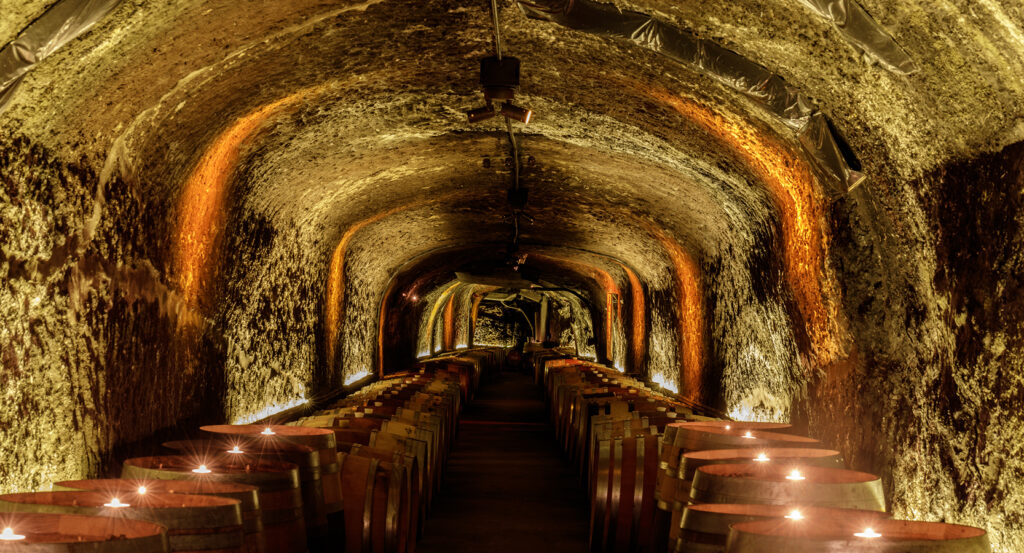
Step inside, and the temperature drops, the air still and fragrant with oak, stone, and anticipation. Rows of barrels stretch into the shadows like a cathedral of craftsmanship, each one holding a silent promise of flavor yet to be revealed. Candlelight flickers off the walls, revealing the rough texture of volcanic rock and limestone carved by hand, sometimes centuries ago. Here, above all else, wine is alive, breathing, evolving, whispering its secrets to those who step quietly enough to listen. The Napa Valley Winery Caves aren't just about storage or spectacle; they are sanctuaries of patience, the places where the valley's most celebrated vintages earn their soul. Above ground, the vineyards shimmer in gold. Below, the cave is calm, eternal, and reverent, the hidden heart of Napa's brilliance.
What you should know about Winery Caves.
The tradition of wine caves in Napa Valley predates electricity, refrigeration, and even the term “wine country.”
When European immigrants settled the valley in the mid-19th century, they realized that the region's porous volcanic soil offered a natural refuge from the sun, ideal for cooling and preserving wine before the days of temperature control. The first documented cave, built by Jacob Schram in 1862, still stands at Schramsberg Vineyards in Calistoga, its hand-dug tunnels extending deep into the hillside. Over the decades, the craft evolved from necessity to art. Today, Napa's most iconic estates, Pine Ridge Vineyards, Stags Leap Wine Cellars, Jarvis Estate, and Del Dotto, continue the legacy with elaborate underground galleries, blending geology with grandeur. The caves maintain an even 58°F year-round, creating the perfect environment for barrel aging, where subtle fluctuations in humidity and temperature coax out the wines' structure and depth. Many were excavated by master tunnelers from Italy and China, their hand tools leaving visible imprints in the rock. Some, like those at Jarvis, feature subterranean waterfalls engineered to regulate humidity, while others at Del Dotto are lined with Roman brick and Italian marble, turning the act of aging wine into an architectural experience. What few realize is that the caves also serve as living laboratories, winemakers test oak varietals, toast levels, and aging durations in side-by-side comparisons within the same stable conditions. Each cave tells a different chapter of Napa's evolution: a fusion of nature's patience and human ingenuity. Beneath the valley's glamour lies this quiet, ancient world, a realm of barrels, silence, and slow perfection.
How to fold Winery Caves into your trip.
Exploring the Napa Valley Winery Caves is a journey through the valley's hidden dimension, a must for travelers who want to see how the region's magic truly matures.
Start by booking a guided cave tasting at one of Napa's heritage estates. Schramsberg offers historical tours that illuminate the original 19th-century hand-carved tunnels where sparkling wine still rests in riddling racks. Pine Ridge Vineyards, located along the Silverado Trail, pairs its tour with barrel tastings deep within its candlelit caves, where the scent of French oak fills the air. For a touch of opulence, Del Dotto Estate turns wine tasting into theater, marble halls, gilded arches, and barrel samplings by torchlight. If you crave innovation, Jarvis Estate's caves lie entirely underground, complete with a natural spring waterfall and a concert chamber carved into the rock. Each visit offers a physical education, not just in taste, but in sound, scent, and atmosphere. To make the most of your exploration, plan a morning visit to catch the cooler air and gentler lighting, then linger afterward at a nearby terrace or vineyard garden for contrast between above and below. Reservations are essential; cave access is limited, often restricted to small groups. Dress in layers, temperatures hover around 58°F, regardless of the season. Pair your cave visits with a meal in Downtown Napa or a sunset stop along the Vineyard View Route for the full balance of depth and light that defines Napa's essence. The Napa Valley Winery Caves aren't just architectural marvels, they are symbols of reverence, patience, and the alchemy between earth and wine. In their silence, you understand what the valley itself has always known: beauty doesn't rush, it rests, deep and timeless, waiting to be poured.
Where your story begins.
Foresyte Travel reveals places that feel extraordinary long before you arrive.
Experience premium editorial crafted for luxury travelers.