Why Silverado Trail matters.
The Silverado Trail in Napa Valley is more than a scenic drive, it's the poetic spine of California wine country, a ribbon of road that weaves through the region's most storied vineyards and estates with quiet sophistication.
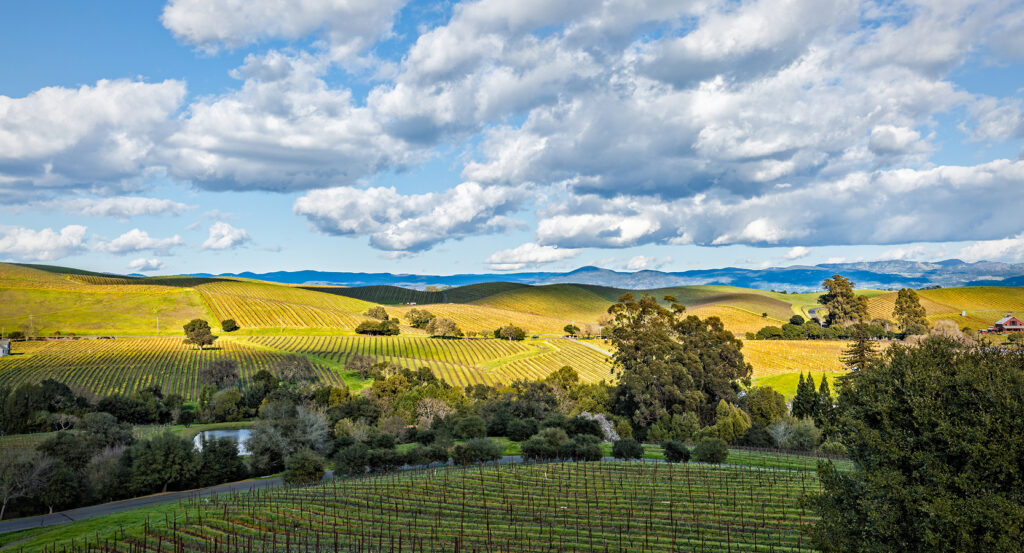
Stretching 30 miles from Napa to Calistoga, the trail runs parallel to the more crowded Highway 29, offering travelers a serene and intimate glimpse into the valley's soul. Here, the rhythm slows. Rolling hills shimmer in the sun, cypress trees line the road, and golden light dances across miles of vines that have defined the American wine dream for generations. Originally built in 1852 as a trade route for silver miners, the trail later became a pilgrimage path for vintners, an elegant escape for those who prefer winding backroads to tourist thoroughfares. Every turn reveals another landmark: from Stag's Leap Wine Cellars, where Napa Cabernet first conquered Bordeaux at the 1976 Judgment of Paris, to Quintessa's biodynamic estate, where nature and architecture blur into harmony. There's a stillness to the Silverado Trail that feels timeless, the hum of tires on asphalt blending with the soft rustle of grape leaves and the distant echo of a cork popping somewhere in the valley. Driving this road isn't just a means of getting from one winery to another; it's an act of immersion, a meditation on beauty, craftsmanship, and the California sun.
What defines Silverado Trail.
The Silverado Trail's elegance hides a history as rugged as the mountains that flank it.
Its origins trace back to the mid-19th century, when miners needed a route from Napa to the quicksilver mines near Calistoga. The road's name nods to that “silver” heritage, though the riches it later carried were liquid, not metal. When Prohibition hit in the 1920s, many of the valley's wineries shuttered, and the trail fell into near abandonment. It wasn't until the 1960s and '70s, when families like the Mondavis, Grgiches, and Stags' Leap pioneers revived Napa's global prestige, that the road found new purpose as the heartline of fine wine culture. Unlike its flashier counterpart, Highway 29, the Silverado Trail was intentionally left uncommercialized: no billboards, few traffic lights, and minimal signage. This restraint helped preserve its rural grace, allowing it to evolve into an experience of discovery. Many of Napa's most renowned estates, like Joseph Phelps, Mumm Napa, and Darioush, lie along this corridor, yet each feels like its own world. The trail's terrain tells a geological story too: its eastern edge, formed by volcanic rock and gravelly loam, produces wines with structure and intensity, while its western slopes, fed by alluvial deposits, give fruit its supple texture. Few visitors realize that the Silverado Trail was also one of the first roads in California to be designated as a scenic byway, a recognition that cemented its reputation as the connoisseur's route. It's a place where craftsmanship, history, and nature intersect, a living museum of Napa's evolution from humble farmland to international icon.
Why Silverado Trail matters.
Exploring the Silverado Trail is best done unhurried, a slow drive that unfolds like a tasting flight for the senses.
Start in Napa or Calistoga and give yourself half a day, though many travelers stretch it into two to savor each stop. Morning light is particularly striking, filtering through the vineyards like silk. Consider beginning your journey at Stag's Leap Wine Cellars, where you can sip history surrounded by the vines that changed the world's perception of American wine. From there, make your way north, stopping at Quintessa or Joseph Phelps for panoramic views and precision-driven tastings. If sparkling wine calls to you, Mumm Napa offers an art gallery alongside its signature effervescence. For a touch of architectural drama, Darioush's Persian-inspired estate provides a feast for both eye and palate. Between visits, roll down your windows, the scent of sun-warmed earth and crushed grape leaves is its own kind of intoxication. Picnic areas dot the route, and some wineries, like Rutherford Hill, welcome visitors to linger over lunch with valley views. Plan the drive to end in Calistoga, where the pace slows even further and mineral springs promise rejuvenation after a day of indulgence. The best way to experience the trail is without agenda, letting curiosity, not a schedule, guide your turns. Because on the Silverado Trail, every bend carries a story, every vineyard a legacy, and every view a reminder that some of life's greatest pleasures are found not in arrival, but in the journey itself.
Where your story begins.
Foresyte Travel reveals places that feel extraordinary long before you arrive.
Enjoy editorial crafted for luxury travelers.
Foresyte may earn a commission when you book.