
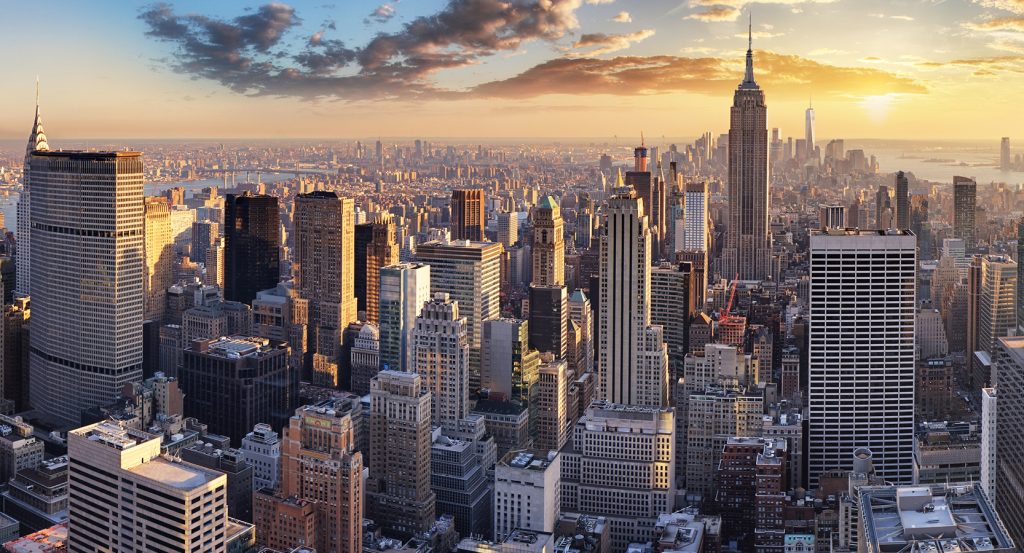
Why 38th Street matters.
38th Street is a spirited corridor where Midtown's commercial energy, architectural heritage, institutional legacy, and global character continue defining one of New York City's most influential urban landscapes.
Running through Midtown between Hudson Yards and Murray Hill, the street passes early twentieth-century office buildings, historic loft structures, civic institutions, hotels, and contemporary commercial towers that reflect more than a century of continuous development. The corridor preserves layers of Beaux-Arts, Art Deco, and modern architecture while adapting to the changing economic demands of one of the world's foremost business districts. Walking along 38th Street reveals a streetscape where commerce, design, and cultural diversity remain closely connected. The result is a corridor where historic development and contemporary Manhattan continue existing side by side.
What you should know 38th Street.
38th Street is best known for crossing Midtown, whose transformation accelerated after the completion of Penn Station in 1910 and the expansion of rapid transit systems that established the surrounding district as one of New York City's principal commercial centers. During the early twentieth century, warehouses, garment loft buildings, hotels, and office structures replaced earlier residential development as wholesale commerce, manufacturing, and corporate investment reshaped the neighborhood. Buildings surrounding 38th Street display an extensive collection of Beaux-Arts, Neo-Renaissance, Art Deco, and International Style architecture that documents successive phases of Midtown's economic growth. Continued redevelopment, adaptive reuse, and landmark preservation have enabled 38th Street to retain an architectural record spanning more than a century of New York City's commercial evolution.
Completed in 1930, the Lincoln Tunnel connected Midtown with New Jersey through one of the world's earliest large-scale underwater vehicular tunnels, fundamentally changing regional transportation and commuter patterns. The New York Public Library's Science, Industry and Business Library occupied the landmark B. Altman & Company Building for more than two decades, expanding public access to specialized business, technology, and research collections within Midtown. The Fashion Institute of Technology, established in 1944 by the New York State Board of Regents, helped formalize professional education for the apparel, textile, and design industries that have long defined the surrounding district. Together, these transportation, educational, and institutional developments demonstrate how 38th Street evolved within a neighborhood shaped by engineering innovation, commercial enterprise, and professional advancement.
How 38th Street fits.
38th Street is best experienced through an afternoon exploring Midtown's architecture, public spaces, and cultural institutions.
Begin at Bryant Park, where landscaped lawns, historic monuments, and year-round programming introduce one of Manhattan's most celebrated civic spaces. Continue to the New York Public Library Stephen A. Schwarzman Building, whose Beaux-Arts architecture, marble interiors, and renowned research collections reflect the city's enduring commitment to public knowledge. Conclude at Hudson Yards, where contemporary skyscrapers, public art, and modern urban planning demonstrate Midtown's continuing architectural evolution. The progression moves naturally from a historic public landscape to one of the world's great research libraries before concluding with Manhattan's newest commercial district, revealing how 38th Street connects New York City's past and future within a single walk.
Where your story begins.
Foresyte Travel reveals places that feel extraordinary long before you arrive.
Enjoy editorial crafted for luxury travelers.
Foresyte may earn a commission when you book.







































































































