
Why you should experience AC Hotel New York Downtown in New York, NY.
AC Hotel New York Downtown is a fluid hotel where the Financial District's maritime inheritance, glass-tower verticality, East River horizon and contemporary design culture converge at the threshold of the Seaport.
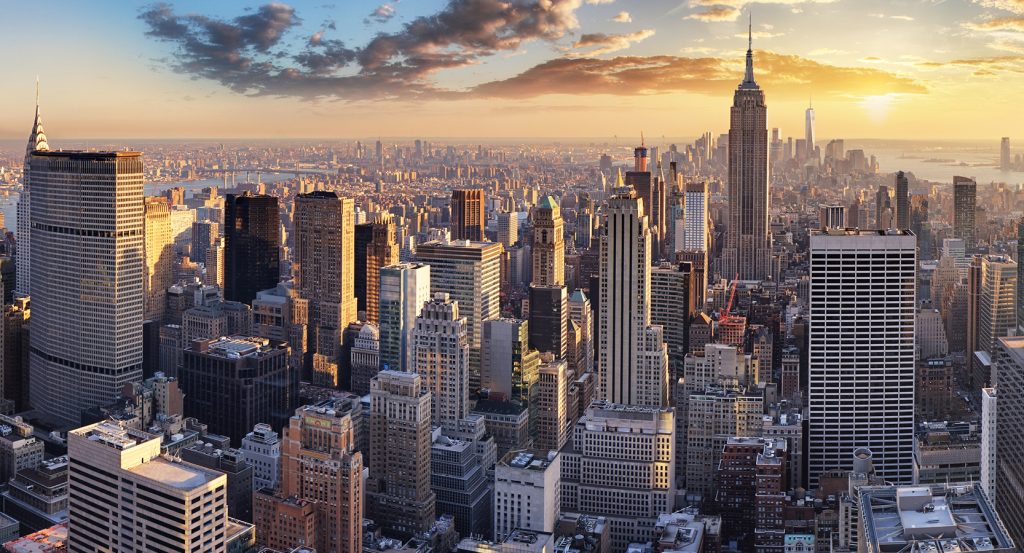
Set along Maiden Lane near South Street and just steps from the East River Waterfront Esplanade, the hotel rises from a slender riverfront parcel in a 33-story tower designed by PPA Architects with Andrew Wong as project architect and Philip Poon as project designer. PPA drew directly from Maiden Lane's forgotten geography as the course of a former stream, shaping the façade through successive angled, floor-to-ceiling bay windows that create an undulating glass surface while directing guestrooms toward Brooklyn and New York Harbor. Structural engineers GACE supported the tower on a six-foot-thick mat foundation and caissons extending to bedrock, while two 18-foot cantilevered slabs between the third and sixth floors negotiate the constrained footprint near the East River. The result is a hotel where rippling glass, cantilevered structure and harbor-facing geometry translate the water history beneath Maiden Lane into the architectural language of contemporary Lower Manhattan.
What you should know about AC Hotel New York Downtown.
AC Hotel New York Downtown is best known for completing in October 2018 as a 140,000-square-foot addition to Marriott's European-influenced AC Hotels portfolio, concentrating a substantial accommodation program into one of Lower Manhattan's narrowest hotel footprints. Marriott currently identifies 274 guestrooms across 30 operating floors, while the inventory divides into 181 king rooms, 10 King Executive rooms, 64 Double/Double rooms, six Double/Double Premium View rooms, nine King Accessible rooms, three Double/Double Accessible rooms and a single King Premium View suite. The property operates under a Marriott International franchise agreement extending through October 2048, giving the Maiden Lane tower a long contractual relationship with a brand whose origins trace to Spanish hotelier Antonio Catalán's founding of AC Hotels in 1998 before Marriott entered a joint venture with the company in 2011. The combination of 274 rooms, an exceptionally small 0.15-acre site and a highly differentiated room inventory demonstrates the density achieved inside a purpose-built downtown hotel completed during the post-recession development wave that reshaped the East River edge of the Financial District.
Lithos now gives the property a distinct culinary character through modern Greek cooking on the first floor, centering seafood, premium meats and seasonal ingredients within a Mediterranean program that operates from breakfast through dinner. The companion Lithos Lounge & Bar occupies the second floor, extending that Mediterranean style into evening cocktails and smaller plates while separating the restaurant and bar experiences vertically within the base of the tower. Marriott's current configuration consequently establishes two dedicated dining environments across successive floors, replacing the standardized food-and-beverage character associated with AC's broader hotel format with a restaurant concept specifically positioned around Greek cuisine. Lithos and its upstairs lounge create a contemporary hospitality layer beneath the 274 guestrooms, allowing Mediterranean cooking and cocktail culture to establish their own character within a building whose architecture above remains dominated by PPA's relationship with the East River.
How to fold AC Hotel New York Downtown into your trip.
AC Hotel New York Downtown works as the anchor for an afternoon tracing New York's maritime ascent, mercantile architecture and formation of the federal government through the oldest layers of Lower Manhattan.
Begin at The Seaport Museum, founded in 1967 as preservationists fought to rescue the declining port district, ultimately building a collection spanning maritime art, archival material, a working nineteenth-century print shop and vessels including the 1885 iron-hulled Wavertree, the 1908 lightship Ambrose and the 1893 schooner Lettie G. Howard. Continue through Schermerhorn Row, whose mercantile buildings form part of the museum's historic fabric and preserve the counting-house culture through which shipping, commodities and international trade helped convert New York Harbor into a global commercial power. Conclude at Federal Hall National Memorial, where George Washington took the presidential oath on April 30, 1789 and the new national government housed Congress, the Supreme Court and executive offices, before the present Greek Revival structure opened in 1842 as the nation's first purpose-built customs house. The progression moves from surviving ships and maritime collections through the architecture of New York's merchant economy into the Wall Street site where the constitutional government began operating, revealing the commercial and political forces that shaped the waterfront surrounding AC Hotel New York Downtown.
Where your story begins.
Foresyte Travel reveals places that feel extraordinary long before you arrive.
Experience premium editorial crafted for luxury travelers.







































































































