Why you should experience Tomb of Sultan Ahmed I in Istanbul, Turkey.
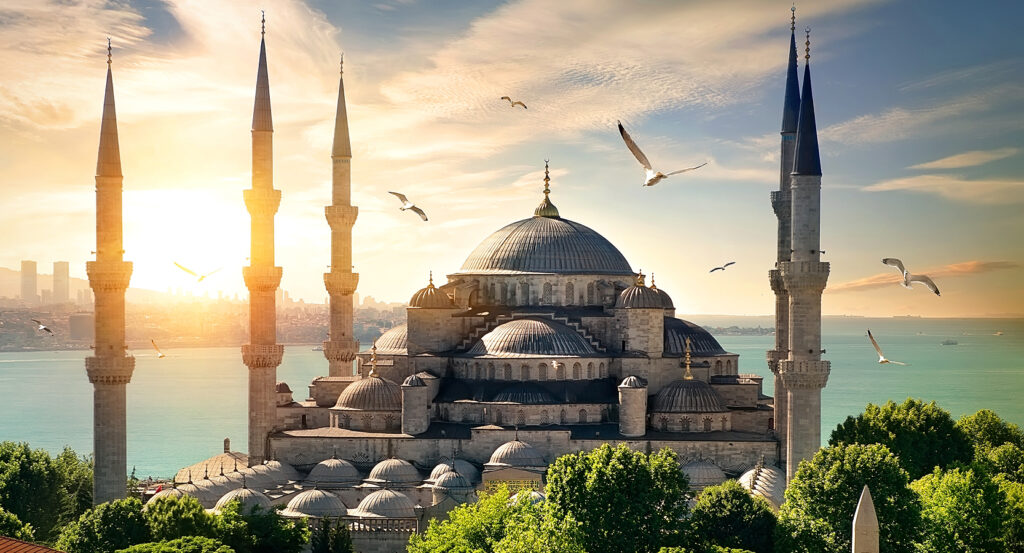
The Tomb of Sultan Ahmed I is the Blue Mosque's quiet echo, a sanctuary of stillness where the sultan who dreamed the impossible now rests beneath his masterpiece.
Set within a domed mausoleum beside the mosque's courtyard, this marble chamber glows with a reverent hush. Sunlight filters through latticed windows, illuminating İznik tiles in shades of turquoise and jade that mirror the mosque's inner beauty. In the center lies the sultan's sarcophagus, surrounded by those of his family, his wife Kösem Sultan and several of his children, all enclosed by delicate filigree screens. Though built for a ruler, the tomb radiates humility. Every line, every color, every verse inscribed along the walls speaks of surrender to the divine. It's not just a burial site, it's the final stanza of a life that began in glory and ended in grace.
What you didn't know about Tomb of Sultan Ahmed I.
The tomb was constructed in 1619, just two years after Sultan Ahmed's death at age 27, a young ruler who left behind both controversy and splendor.
Despite his short reign, Ahmed changed the face of Istanbul forever by commissioning the mosque that now bears his name. His tomb, designed by Sedefkâr Mehmed Ağa, the same architect who built the Blue Mosque, reflects a balance between imperial dignity and spiritual humility. The interior is adorned with over 100 panels of İznik tilework, their arabesques and floral motifs depicting paradise. Qur'anic inscriptions circle the dome, including verses on mercy and forgiveness, chosen by Ahmed's widow, Kösem Sultan, one of the most powerful women in Ottoman history. Unlike other imperial mausoleums, the sarcophagi here rest side by side. The calligraphy adorning the walls was completed by the court master Seyyid Kasim Gubari, whose gilded script glimmers like light caught in prayer. The tomb later became a royal precedent, a model for subsequent sultans' mausoleums across Istanbul.
How to fold Tomb of Sultan Ahmed I into your trip.
The tomb offers a moment of deep reflection, a counterpoint to the grandeur of the mosque beside it.
After visiting the Blue Mosque, exit through the courtyard's northwest corner, where the domed mausoleum sits beneath cypress trees. Step inside and remove your shoes; the hush is immediate. Visit in the late afternoon when sunlight drifts through the stained-glass windows, setting the tiles aglow with soft gold and aquamarine. Take time to read the inscriptions, or simply sit in silence, the air feels heavy with centuries of devotion. If you listen closely, you can hear the faint murmur of the muezzin from the mosque beyond, as if the sultan still prays with his people. From here, walk a few steps to view the mosque's exterior domes rising behind the tomb, an alignment of life, faith, and legacy that feels almost divine. The Tomb of Sultan Ahmed I is not a monument to death but a reminder that beauty, when created in faith, endures beyond its maker.
Hear it from the Foresyte community.
Just enough life around you not to be overwhelming. Right pace.
Where your story begins.
Start your planning journey with Foresyte Travel.
Experience immersive stories crafted for luxury travelers.